UnexplainedWeight Loss
Losing weight without trying is not a positive sign — it is a warning signal. Unintentional weight loss of 5% or more of body weight over 6 months warrants medical investigation. In India, the three most important causes are tuberculosis, cancer, and uncontrolled diabetes. A systematic specialist workup finds the diagnosis.
threshold to investigate
urgent workup
timeframe

Unintentional Weight Loss — When to Investigate
Weight loss becomes clinically significant when it is unintentional — not from deliberate dietary restriction or increased exercise — and when it crosses the 5% body weight threshold over 6 months. The reason this threshold matters is that at this level, the body has already drawn on its reserves in a way that suggests an underlying metabolic, infectious, or malignant process driving the loss.
The mechanism of unexplained weight loss differs by cause. Reduced intake: Cancer, TB, and depression suppress appetite through inflammatory cytokines and direct effects on appetite centres. Increased losses: Diabetes causes caloric loss through glucosuria. Malabsorption syndromes cause nutrient losses despite adequate intake. Increased metabolic demand: Active TB, hyperthyroidism, HIV, and cancer all increase the body’s metabolic rate, burning calories faster than intake can keep pace. Cachexia: In cancer and advanced HIV, inflammatory cytokines cause muscle wasting that cannot be reversed by eating more.
In India, the most common serious causes of unexplained weight loss are: tuberculosis (particularly extrapulmonary TB which may have a normal chest X-ray); undiagnosed or uncontrolled diabetes mellitus; cancer (lung, GI tract, lymphoma, liver); and HIV. All are diagnosable. Most are treatable. Delay in diagnosis allows progression.
The Most Dangerous Mistake
Attributing unexplained weight loss to “stress,” “reduced appetite,” or “ageing” without investigation. TB and cancer both progress silently during this delay. Every patient with unintentional weight loss of 5%+ deserves a systematic workup — not reassurance without diagnosis.
Clinical Weight Loss Thresholds
Investigate
Significant
Emergency
Track Before Your Visit
What Causes Unexplained Weight Loss?
Unexplained weight loss has a broad differential diagnosis. The four main categories below are investigated systematically — infectious causes first given India’s TB burden, followed by malignant, endocrine, and gastrointestinal causes.
Infectious Causes — Investigate First in India
Malignant Causes — Cancer Cachexia
Endocrine & Metabolic Causes
GI, Psychiatric & Other Causes
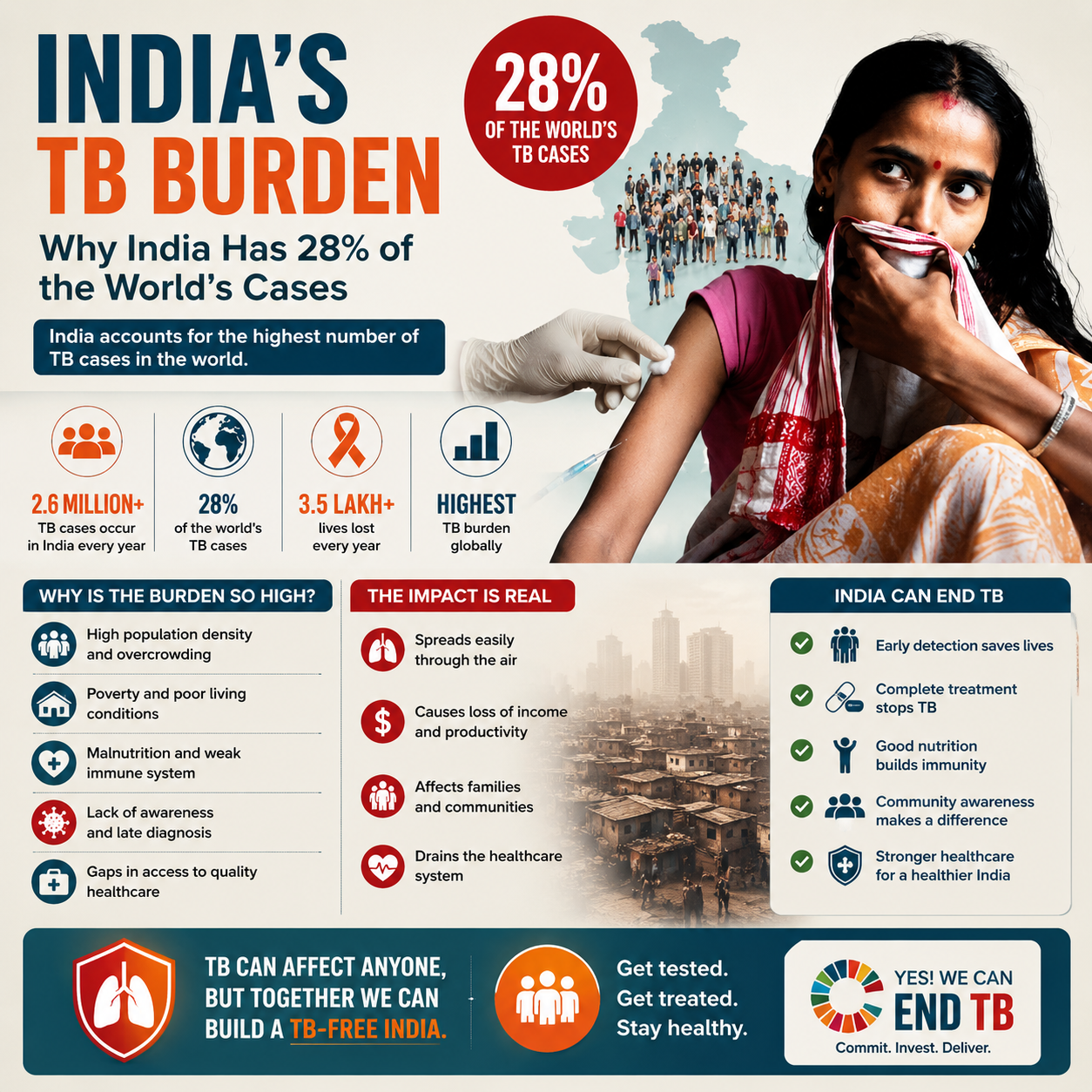
Tuberculosis — India’s Most Important Cause to Exclude First
Tuberculosis causes weight loss through multiple simultaneous mechanisms: increased metabolic demand from the chronic inflammatory state; reduced appetite from TNF-alpha and IL-1 (the same cytokines that cause fever and night sweats); malabsorption in intestinal and abdominal TB; and direct muscle wasting from the catabolic state of active infection. Weight loss in TB is progressive and can be severe — patients with advanced TB may lose 15–20% of body weight before diagnosis.
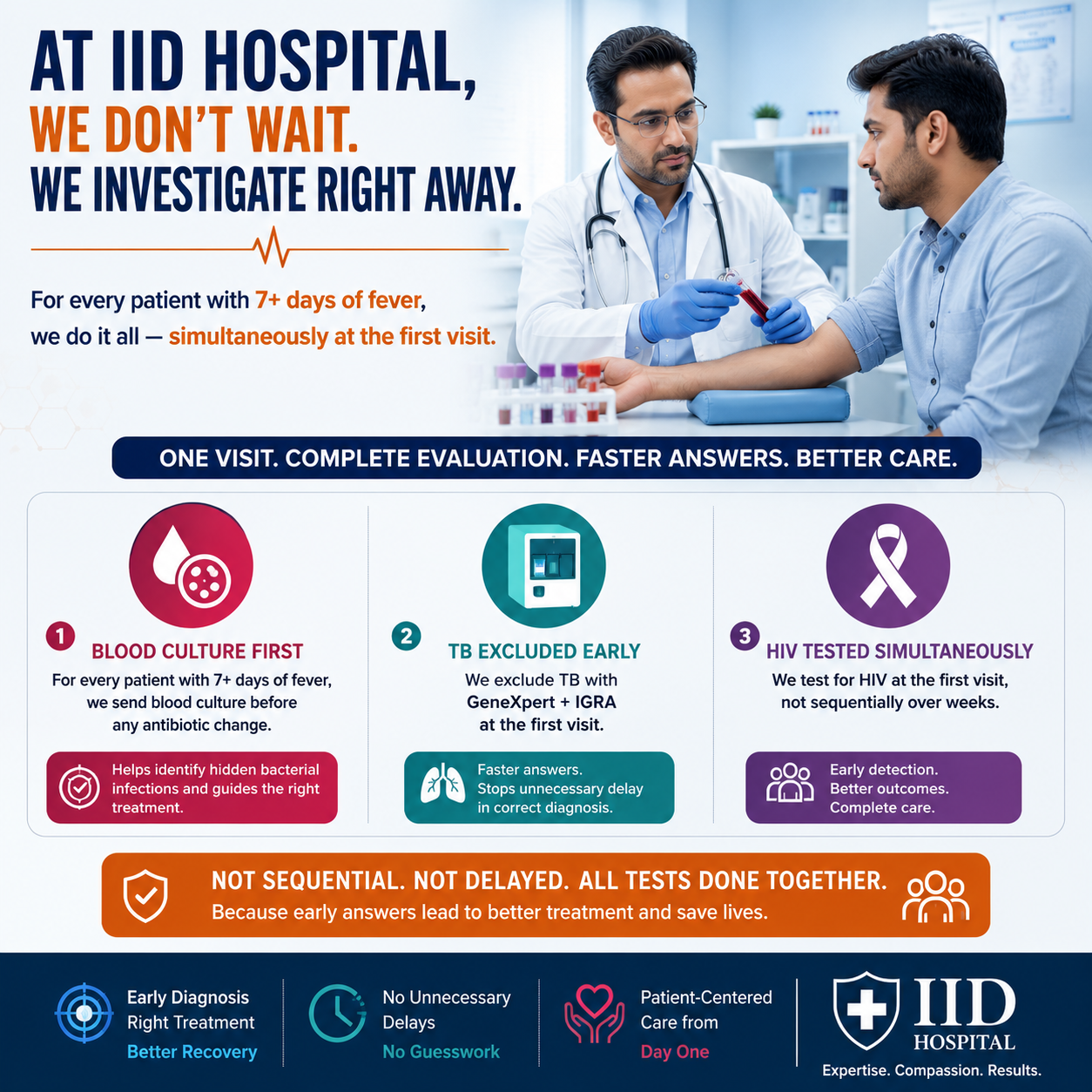
The crucial clinical point is that extrapulmonary TB causes significant weight loss without respiratory symptoms. Lymph node TB, abdominal TB, spinal TB, and miliary TB all produce the classic constitutional triad — weight loss + night sweats + fever — with a potentially normal chest X-ray. This is why TB is missed: the physician looks for cough, doesn’t find it, and moves on without sending a GeneXpert or IGRA.
How IID Hospital Excludes TB in Weight Loss
Weight Gain on TB Treatment = Confirmation of Diagnosis
In patients where microbiological diagnosis is difficult, one of the most reliable confirmatory signs is weight gain on anti-TB treatment. Patients with TB typically begin gaining weight within 4–6 weeks of starting HRZE therapy — before sputum culture results are available. This clinical response, combined with the initial clinical picture, is strong evidence of TB even when microbiological confirmation is pending.
Weight Loss That Needs Urgent Assessment — This Week
Certain combinations of weight loss with other symptoms indicate a high probability of serious underlying disease and require assessment within days — not weeks.
Weight loss + haemoptysis
Coughing blood with weight loss. Lung cancer or TB until proven otherwise. Urgent CT chest.
Weight loss + difficulty swallowing
Dysphagia with weight loss. Oesophageal or stomach cancer. Urgent upper GI endoscopy.
Weight loss + jaundice
Weight loss with yellowing of eyes or skin. Pancreatic cancer, liver cancer, or biliary obstruction.
Weight loss + lymph node swelling
Painless firm nodes in neck, axilla, or groin with weight loss. Lymphoma or TB. Biopsy needed.
Weight loss + abdominal mass
Palpable abdominal mass with weight loss. GI malignancy or intra-abdominal lymphoma. CT abdomen urgent.
Weight loss + rectal bleeding
Change in bowel habit + blood + weight loss. Colorectal cancer. Colonoscopy urgent.
Weight loss in HIV-positive patient
Any significant weight loss in HIV+ patient. TB co-infection, MAC, or wasting syndrome. Urgent specialist assessment.
Rapid weight loss >1 kg/week
Rate of loss regardless of percentage. Active cancer or severe TB. Do not wait for the 5% threshold to be reached.
How Unexplained Weight Loss Is Investigated
Investigation follows a structured, sequential protocol guided by clinical probability. The goal: find the diagnosis efficiently, in the right sequence, without wasting resources on low-probability tests before high-probability ones are excluded.
First-Line — All Patients (Day 1)
TB Workup — Always First Priority
Cancer & Lymphoma Workup
Endocrine, GI & Autoimmune
Depression Is a Diagnosis of Exclusion
Attributing weight loss to psychological causes without completing an organic workup is a diagnostic error. At IID Hospital, all organic causes are systematically excluded before psychological aetiology is considered primary. Missing TB or cancer because it was attributed to “stress” is preventable with a systematic approach.
What to Bring to Your Appointment
Patients Who Came With Unexplained Weight Loss
I lost 8 kg over 4 months with no explanation. My regular doctor said it was stress and recommended a diet review. Dr. Savaj sent a GeneXpert and IGRA on day 1 of my visit. The IGRA was strongly positive and CT abdomen showed mesenteric lymph nodes. Abdominal TB. No cough. Normal chest X-ray. He told me this is the most commonly missed TB presentation in India. He was right.
I had lost 6 kg over 3 months. I was eating normally, actually more than usual. Dr. Savaj picked up the key clue — I was eating more but still losing weight, which pointed to hyperthyroidism or diabetes. My TSH was nearly undetectable. Graves’ disease. Started treatment and gained 4 kg in 2 months. The increased appetite was the diagnostic clue he acted on.
My father lost 10 kg in 5 months with occasional night sweats. He is HBsAg positive since 2015. Dr. Savaj included AFP in the first-line panel — it was 4,200. MRI liver showed a 4 cm hepatocellular carcinoma. Early enough for TACE. The oncologist said early detection made a significant difference to his treatment options. Dr. Savaj’s routine inclusion of AFP in HBV patients saved his life.
I had unexplained weight loss and was told repeatedly it was depression and poor eating. Dr. Savaj did a full workup without dismissing my symptoms as psychological. He found coeliac disease — anti-tTG antibodies very high, confirmed on small bowel biopsy. I went gluten-free and gained 7 kg in 6 months. Years of misdiagnosis resolved in one systematic assessment.
Questions About Unexplained Weight Loss
Answered by Dr. Pratik Savaj, FNB Infectious Diseases, IID Hospital, Surat.
How much weight loss is considered 'unexplained' and concerning?
Is tuberculosis a common cause of weight loss in India?
Can diabetes cause unexplained weight loss?
Can weight loss be the first sign of cancer?
What is the difference between weight loss and cachexia?
Can depression or anxiety cause significant weight loss?
What tests are done for unexplained weight loss?
How quickly should I see a doctor for unintentional weight loss?
Losing Weight Without Trying? Find Out Why.
No referral needed. Bring any previous reports. Unexplained weight loss of 5% or more deserves a systematic specialist workup — not reassurance without investigation. Dr. Pratik Savaj, FNB Infectious Diseases, IID Hospital, Lal Darwaja, Surat provides a structured, sequential investigation protocol that finds the diagnosis.