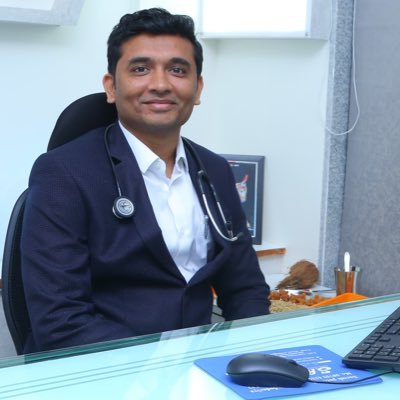
Infectious DiseaseSpecialist — Surat
IID Hospital is Surat’s dedicated infectious disease institute — the only single-speciality practice of its kind in the city. Dr. Pratik Savaj, FNB Infectious Diseases, provides specialist-level care for HIV, tuberculosis, dengue, malaria, typhoid, hepatitis B, and fever of unknown origin. No referral needed. Direct access.
MBBS · DNB Medicine
P.D. Hinduja Hospital, Mumbai
Every Infectious Disease — One Specialist
IID Hospital is Surat’s only single-speciality infectious disease institute. Dr. Pratik Savaj, FNB Infectious Diseases, manages the full spectrum below — with culture-guided protocols, subspecialty depth, and full legal confidentiality.
HIV & Sexual Health
ConfidentialHIV Testing, ART & Prevention
Confidential HIV testing with counselling, ART initiation and monitoring, CD4 and viral load tracking, PEP within 72 hours, PrEP, HIV-TB co-infection, PMTCT, and U=U counselling. All consultations legally confidential under the HIV Act 2017.
Full HIV Service →Tuberculosis & Drug-Resistant TB
MDR / XDRTB Diagnosis, DOTS & MDR-TB Management
Comprehensive TB management: GeneXpert-based diagnosis, DOTS supervision, drug-sensitive and drug-resistant TB (MDR-TB, Pre-XDR, XDR), TB-HIV co-infection including IRIS, extrapulmonary TB, isoniazid preventive therapy, and household contact tracing.
Full TB Service →Fever & Tropical Infections
Culture-GuidedDengue, Malaria, Typhoid, Chikungunya & FUO
Dengue with daily platelet monitoring (NS1 from day 1). Species-specific malaria treatment. Culture-guided typhoid addressing fluoroquinolone resistance. Systematic Fever of Unknown Origin workup. Post-chikungunya arthritis. Leptospirosis, scrub typhus, melioidosis.
Full Fever Service →Viral Hepatitis & Complex Infections
Rare PathogensHepatitis B, Antimicrobial Stewardship & Rare Infections
Hepatitis B: serology, viral load, tenofovir/entecavir therapy, liver cancer surveillance, HBV-HIV co-infection. Antimicrobial stewardship with culture-guided prescribing. Rare infections: leptospirosis, scrub typhus, melioidosis, healthcare-associated infections, immunocompromised host infections.
Hepatitis B Service →Travel Medicine & Vaccination
Pre & Post TravelPre-Travel Assessment & Infection Prevention
Pre-travel risk assessment, destination-specific vaccination advice, malaria prophylaxis, traveller’s diarrhoea prevention, and post-travel fever evaluation. Yellow fever certification for international travel requirements. Full travel medicine service.
Travel Medicine Service →STI Management
ConfidentialConfidential STI Assessment & Treatment
Confidential assessment and treatment of all sexually transmitted infections: syphilis, gonorrhoea, chlamydia, genital herpes, and HPV-related conditions. Integrated with HIV care. Culture-guided antibiotic selection to address resistance — particularly for gonorrhoea and chlamydia where empirical therapy frequently fails.
STI Service →Also Managed at IID Hospital
What Makes a Specialist Institute Different
One Speciality. No Dilution.
At IID Hospital, infectious disease is the only clinical focus — not one of fifty. Dr. Savaj manages infections every day, using protocols that are updated, evidence-based, and specific to the local resistance and disease patterns of Surat and Gujarat. Breadth in general medicine comes at the cost of depth in any single speciality. A dedicated infectious disease institute has no such trade-off. When you come with prolonged fever, drug-resistant infection, or a complex immunocompromised case — you are seeing someone who has done exactly this, every working day, for over a decade.
The FNB Difference
The Fellowship of National Board in Infectious Diseases — held by Dr. Savaj — is not a certificate course. It is a two-year full-time subspecialty fellowship at P.D. Hinduja Hospital, Mumbai, followed by a national board examination. Very few physicians in Gujarat hold this qualification. Read full credentials →

Culture-Guided. Not Empirical.
The standard of care in most general outpatient settings in Surat is empirical antibiotic prescribing — giving a broad-spectrum antibiotic based on clinical suspicion without laboratory confirmation. This works often enough in simple infections. It fails — sometimes catastrophically — when the organism is drug-resistant, when the diagnosis is wrong, or when the patient is immunocompromised. At IID Hospital, the approach is different: blood culture before the first antibiotic dose; NS1 on day 1 for suspected dengue; GeneXpert for suspected TB; antibiotic selection guided by sensitivity results. This requires more discipline and more patience from both doctor and patient — and it produces substantially better outcomes in complex cases.
Legal Confidentiality. Real Privacy.
Many infectious diseases — particularly HIV, hepatitis B, and sexually transmitted infections — carry significant social stigma that prevents patients from seeking care until their disease is advanced. At IID Hospital, confidentiality is not a courtesy — it is a legal right. The HIV and AIDS (Prevention and Control) Act 2017 mandates strict legal confidentiality of HIV status with criminal penalties for violation. All other patient information is protected by the same commitment.
Your Employer Will Never Know
Your HIV status, your hepatitis diagnosis, your treatment — none of this can be shared with your employer, your family, your insurer, or any institution without your explicit written consent. This is the law. Dr. Savaj takes it seriously.

What “Antimicrobial Intelligence” Actually Means
IID Hospital is dedicated to rational antibiotic prescribing — antibiotics only when necessary, only the right drug for the identified organism, for only as long as clinically required. India has among the highest rates of antibiotic overuse in the world. The consequences — XDR typhoid, MDR tuberculosis, untreatable hospital infections — are already here in Surat.
Culture Before Antibiotics
Blood culture must be collected before the first antibiotic dose. A single dose of antibiotics can render a blood culture negative for days. This single step is the most important and most commonly violated principle in outpatient infection management.
Right Drug, Right Duration
Antibiotic selection follows sensitivity results — not habit or convenience. In Surat where fluoroquinolone-resistant typhoid and XDR organisms are circulating, empirical ciprofloxacin prescribing for fever is no longer appropriate. Culture-guided treatment is not optional.
No Antibiotics for Viral Infections
Antibiotics have zero effect on viruses. Prescribing antibiotics for viral fever is not only ineffective — it selects for resistance in the patient’s gut flora, contributes to community-wide resistance, and exposes patients to unnecessary side effects. The correct treatment for viral fever is supportive care.
When Should You See an Infectious Disease Specialist?
Not every fever needs a specialist. But certain clinical situations are exactly where specialist input changes outcomes — earlier diagnosis, correct treatment, avoidance of serious complications, and appropriate management of complex co-morbidities.

See Dr. Savaj When
Fever lasting more than 5–7 days
Undiagnosed prolonged fever is the core indication for infectious disease referral — systematic FUO workup to find what others have missed.
Infection not responding to treatment
Typhoid not improving on ciprofloxacin. TB not clearing on standard DOTS. Fever persisting despite antibiotics. Drug resistance or wrong diagnosis.
Any HIV-related need — new diagnosis, post-exposure assessment, or ongoing ART management. Fully confidential under HIV Act 2017.
Any fever during monsoon in Surat
July–November: dengue, malaria, typhoid all circulate. Never assume fever is viral without excluding these specific infections first.
Immunocompromised with infection
HIV, chemotherapy, steroids, transplant — infections in immunocompromised patients present atypically and require specialist management.
IID Hospital Is Especially Suited For
Culture-guided treatment after failure
Bring your previous test reports and failed antibiotic courses. A blood culture and sensitivity-guided approach frequently succeeds where empirical prescribing has failed.
Post-chikungunya joint pain
Persistent joint pain months after chikungunya fever is post-chikungunya arthritis — an immune-mediated condition requiring hydroxychloroquine, not just paracetamol.
HBsAg positive — understanding your status
Most patients with hepatitis B have never had a specialist explain their serology, viral load, or what monitoring they need. IID Hospital provides this clearly.
Second opinion on complex diagnosis
Seen multiple doctors without a clear diagnosis? Bring all previous reports. A systematic specialist approach frequently identifies what earlier assessments missed.
Pre-travel infectious disease advice
Travelling to malaria-endemic or high-risk areas? Pre-travel consultation: chemoprophylaxis, vaccines, what to do if fever develops during or after travel.
How a Consultation at IID Hospital Works
Every consultation follows a structured, methodical approach — from the moment you arrive to the treatment plan you leave with.
History & Symptom Review
Complete history: travel, exposure, prior infections, medications, timeline of symptoms. History is the most powerful diagnostic tool in infectious disease.
Clinical Examination
Focused examination — lymph nodes, liver and spleen size, joint assessment, skin findings, temperature pattern. The examination directs investigation.
Targeted Investigation
The right tests — not all tests. Blood culture before antibiotics. NS1 on day 1. GeneXpert not Widal. Rational, sequence-driven diagnostic testing.
Diagnosis & Plan
A clear diagnosis and a written treatment plan. Culture-guided antibiotic selection where applicable. Specific monitoring schedule. What to watch for.
Follow-Up & Review
Results reviewed personally. Treatment adjusted to culture sensitivity. Ongoing monitoring for chronic conditions. Patient understands their own case.
Bring All Previous Reports
Your previous blood tests, culture results, imaging reports, and prescription records are invaluable — they tell us what has already been tried and what hasn’t. Do not take new antibiotics before your first appointment if at all possible, as this reduces the yield of blood cultures.
What Patients Say About IID Hospital
Manish K.
Extrapulmonary TB · Surat
“Three weeks of fever. Four doctors. No diagnosis. Dr. Savaj found extrapulmonary TB in 3 days using GeneXpert on a lymph node biopsy. My chest X-ray was completely normal — which is why everyone missed it. He knew exactly where to look.”
✓ Verified Google Review
Sumit K.
Drug-Resistant Typhoid · Surat
“My typhoid wasn’t improving on ciprofloxacin. Dr. Savaj explained about fluoroquinolone-resistant typhoid, sent a blood culture, and changed to the right antibiotic based on sensitivity. Recovered in 5 days. No other doctor had thought to test for resistance.”
✓ Verified Google Review
Ritu P.
Dengue Fever · Vesu, Surat
“During dengue, Dr. Savaj reviewed my daily CBC and told me exactly when to worry and when to wait. His monitoring meant I didn’t need hospitalisation. Incredibly reassuring during a stressful week.”
✓ Verified Google Review
Anonymous
HIV Care · Surat
“Dr. Savaj handled my HIV diagnosis with complete professionalism and dignity. He explained everything clearly — U=U, what ART means, what to expect. I am now undetectable. He gave me back my sense of a normal life.”
✓ Verified Google Review
Priya A.
Post-Chikungunya Arthritis · Surat
“I had joint pain for 4 months after chikungunya. I was told to wait. Dr. Savaj diagnosed post-chikungunya arthritis and started hydroxychloroquine. Within 2 months I was back to normal. Early treatment makes all the difference.”
✓ Verified Google Review
Dinesh M.
Chronic Hepatitis B · Surat
“I was HBsAg positive for years. No doctor had ever explained what my viral load meant or what monitoring I needed. Dr. Savaj spent a full consultation explaining everything. I now understand my own condition and know exactly what to do.”
✓ Verified Google Review
Frequently Asked Questions
Questions patients ask before their first visit to IID Hospital — answered directly.