Viral vs BacterialDo You Actually Need Antibiotics?
The most consequential clinical question in everyday medicine: is this infection viral or bacterial? Antibiotics cure bacterial infections and do nothing for viral infections — while causing real harm through side effects and resistance. The distinction matters every time you or a family member falls ill.
Antibiotics Can Be Life-Saving
Viral vs Bacterial — How They Differ in Every Way That Matters
The two types of infection differ in structure, mechanism, clinical features, and treatment. Understanding these differences is what allows a physician to decide whether antibiotics are needed — and which one.
Bacterial Infection
Caused by bacteria — independent living organisms
Which Common Infections Are Viral and Which Are Bacterial
Misclassifying these is the primary driver of unnecessary antibiotic use in India. Every viral infection treated with antibiotics is a missed opportunity to let the immune system work — and a contribution to resistance.
Common Cold
Rhinovirus, coronavirus. Runny nose, sore throat, mild fever. 7–14 days. No antibiotic effective.
Seasonal Influenza
Influenza A/B. High fever, severe myalgia, headache, dry cough. Oseltamivir within 48 hrs if high-risk. No antibiotics.
Dengue Fever
Flavivirus. Biphasic fever, severe body pain (“breakbone”), rash, low platelets. Paracetamol + fluids. No antibiotics.
COVID–19
SARS-CoV-2. Fever, cough, breathlessness. Antivirals (nirmatrelvir) for high-risk. Antibiotics have no effect.
Viral Gastroenteritis
Norovirus, rotavirus. Vomiting + diarrhoea, no blood. ORS + fluids. Antibiotics worsen norovirus illness.
Viral Hepatitis A & E
HAV/HEV. Jaundice, dark urine, fatigue. Supportive care only. No antivirals. No antibiotics.
Chickenpox (Varicella)
VZV. Vesicular rash + fever. Acyclovir for severe/immunocompromised. Otherwise supportive. No antibiotics.
HIV Infection
HIV. Not self-limiting. Lifelong ART (antiretroviral therapy). Antibiotics only for bacterial opportunistic infections.
Bacterial — Antibiotics May Be Needed
Culture before treating where possible
Typhoid Fever
Salmonella typhi. Step-ladder fever + abdominal pain + rose spots. Blood culture. Azithromycin or cefixime (ciprofloxacin resistance high).
Tuberculosis
M. tuberculosis. Cough >3 weeks + night sweats + weight loss. 6-month RNTCP regimen. Culture + DST for drug resistance.
Bacterial Pneumonia
Strep pneumoniae, Klebsiella. Productive cough + high fever + breathlessness + consolidation on CXR. Antibiotic guided by severity.
Urinary Tract Infection
E. coli (most common). Dysuria + frequency + pyuria. Urine C&S before antibiotic. Never empirical repeat treatment.
Streptococcal Pharyngitis
Group A Strep. Severe sore throat + exudate + no cough + high fever. Rapid strep test / throat swab. Penicillin or amoxicillin.
Bacterial Meningitis
Strep pneumoniae, Neisseria. Fever + neck stiffness + photophobia — EMERGENCY. IV antibiotics within the hour. LP for CSF culture.
Leptospirosis
Leptospira. Fever + myalgia + jaundice + flood water exposure. Doxycycline (mild) or IV penicillin (severe). Must know the exposure.
Hepatitis B (Chronic Active)
HBV (DNA virus). Not a classic “bacterium” but antivirals, not antibiotics, treat it. Tenofovir or entecavir. Culture not needed.
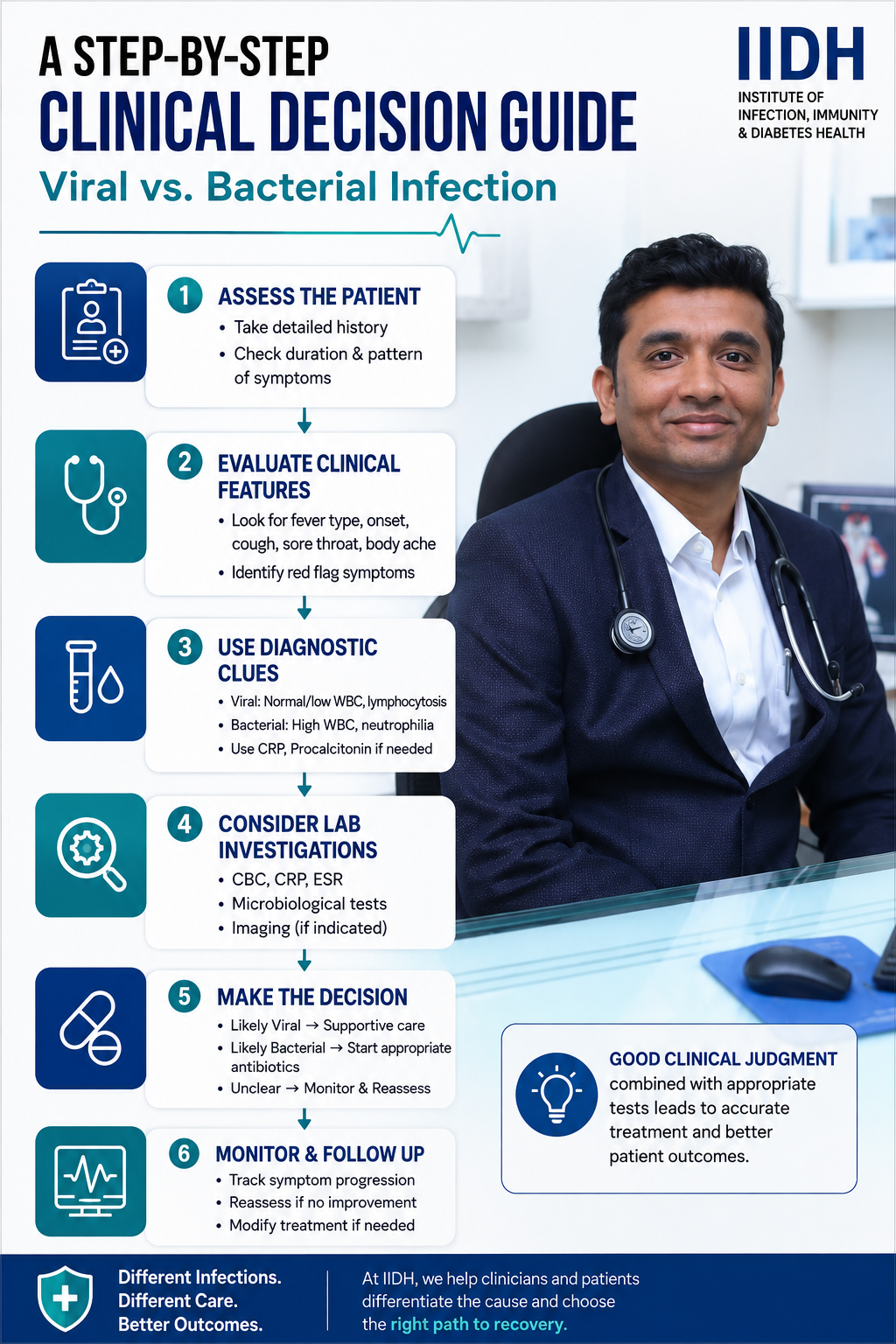
A Step-by-Step Clinical Decision Guide
Is this a known viral illness?
Common cold, influenza, dengue, COVID-19, viral gastroenteritis (vomiting + loose stools, no blood), chickenpox, viral hepatitis A/E — these are always viral. No antibiotics are indicated.
Are there localising signs of bacterial infection?
Painful swollen ear with discharge (otitis media). Purulent (green/yellow thick) productive cough with high fever (bacterial pneumonia). Painful urination + cloudy urine (UTI). Severe sore throat + white exudate + no runny nose (strep pharyngitis). Neck stiffness + photophobia (MENINGITIS — emergency).
Has a culture been sent before starting antibiotics?
Culture before antibiotics is the most important step — it identifies the organism, determines which antibiotic will actually work, and detects resistance. Starting antibiotics before culture makes subsequent cultures negative and removes the ability to know if the right antibiotic was chosen.
If you have been prescribed antibiotics — complete the full course.
Stopping antibiotics when you feel better is one of the primary drivers of antibiotic resistance. You feel better because the antibiotic has reduced the bacterial load — but the remaining bacteria are the ones that survived exposure to the drug. Completing the full course eliminates them.
Was fever not improving after 48–72 hours of antibiotics?
If fever and symptoms are not improving 48–72 hours after starting an antibiotic that should work, the organism may be resistant to that antibiotic, the diagnosis may be wrong, or there may be a complication. Return to Dr. Savaj — do not add more antibiotics empirically.
Antibiotic Resistance in India — A Crisis Driven by Misuse
India has among the highest rates of antibiotic resistance globally — and the primary driver is the use of antibiotics for viral infections and without culture guidance. Every unnecessary antibiotic course kills sensitive bacteria and creates selection pressure for resistant strains. These resistant strains spread through the community, hospitals, and food chain.
The consequence in Surat today: UTIs that were once cured with 3 days of oral ciprofloxacin now require 7–14 days of IV antibiotics because E. coli is resistant to fluoroquinolones in more than 50% of isolates. XDR typhoid (resistant to fluoroquinolones, ampicillin, chloramphenicol, and trimethoprim) now circulates in Surat — treatable only with azithromycin or carbapenems. This is a direct, measurable consequence of decades of antibiotic misuse.
At IID Hospital — Culture Before Every Antibiotic
Dr. Savaj’s practice: culture is sent before every antibiotic prescription where the clinical condition allows. This identifies the organism, detects resistance, selects the right drug, and contributes to the local resistance surveillance data. Empirical antibiotics without culture — never repeated if the same infection recurs without a new culture.

Never Do These
What Patients Say About Dr. Pratik Savaj
I had been given antibiotics for a week for fever without any testing. Dr. Savaj did blood cultures, confirmed viral fever with no bacterial component, and stopped the antibiotics. He explained exactly why antibiotics were useless here. I recovered without them and avoided unnecessary side effects.
I was told my fever was viral and sent home twice. Dr. Savaj ordered a blood culture which grew Salmonella Typhi — bacterial typhoid, not viral. The right antibiotic cleared the infection in days. The distinction between viral and bacterial changed my entire treatment.
My child had recurrent ear infections treated with multiple antibiotic courses. Dr. Savaj explained how antibiotic overuse drives resistance, cultured the organism, found it was resistant to the previous antibiotics, and chose an effective alternative. Understanding the bacterial vs viral distinction was crucial.
I was prescribed antibiotics for joint pain and fever. Dr. Savaj confirmed chikungunya — a viral infection where antibiotics do nothing. He explained the viral timeline, started anti-inflammatory treatment, and set realistic expectations for recovery. Accurate diagnosis saved me weeks of ineffective treatment.
After monsoon flooding I had fever and jaundice. I assumed it was viral hepatitis. Dr. Savaj diagnosed bacterial leptospirosis and started doxycycline immediately. The distinction between viral and bacterial infection was literally life-saving — viral hepatitis has no antibiotic treatment.
Three weeks of fever with no diagnosis. Dr. Savaj explained the systematic approach to distinguishing viral from bacterial causes — including when to use cultures, serology, and PCR. She diagnosed tuberculous lymphadenitis — bacterial, treatable, and completely cured with the right regimen.
Frequently Asked Questions
Viral vs. Bacterial Infections
Answered by Dr. Pratik Savaj, FNB Infectious Diseases — IID Hospital, Vesu, Surat.