Normal Sweating vs Pathological Night Sweats
Before the differential diagnosis, the clinical threshold must be established. Not all night sweating is pathological. Surat’s climate, heavy bedding, and inadequately ventilated rooms all cause sweating at night. The clinical definition of pathological night sweats requires specificity.
The Clinical Definition
Pathological night sweats: sweating severe enough to soak nightclothes and bedsheets, occurring on multiple nights, at normal room temperature, not explained by excessive bedding. This is the B symptom threshold used in oncology and infectious disease — the same threshold that defines lymphoma staging and TB constitutional symptoms. Light perspiration or damp skin after sleeping is NOT what this article is about.
The Four Main Causes of Pathological Night Sweats in India
Night sweats are produced by the hypothalamus resetting the body’s thermostat — usually in response to cytokines released during infection, inflammation, or malignancy. The four categories below cover the vast majority of clinically significant night sweats in India.
Tuberculosis
Most common serious cause in India — 20–40% of FUO
HIV Infection
Both acute and advanced HIV cause night sweats
Lymphoma
B symptom — drenching night sweats define staging
Other Causes
Menopause, medications, other infections
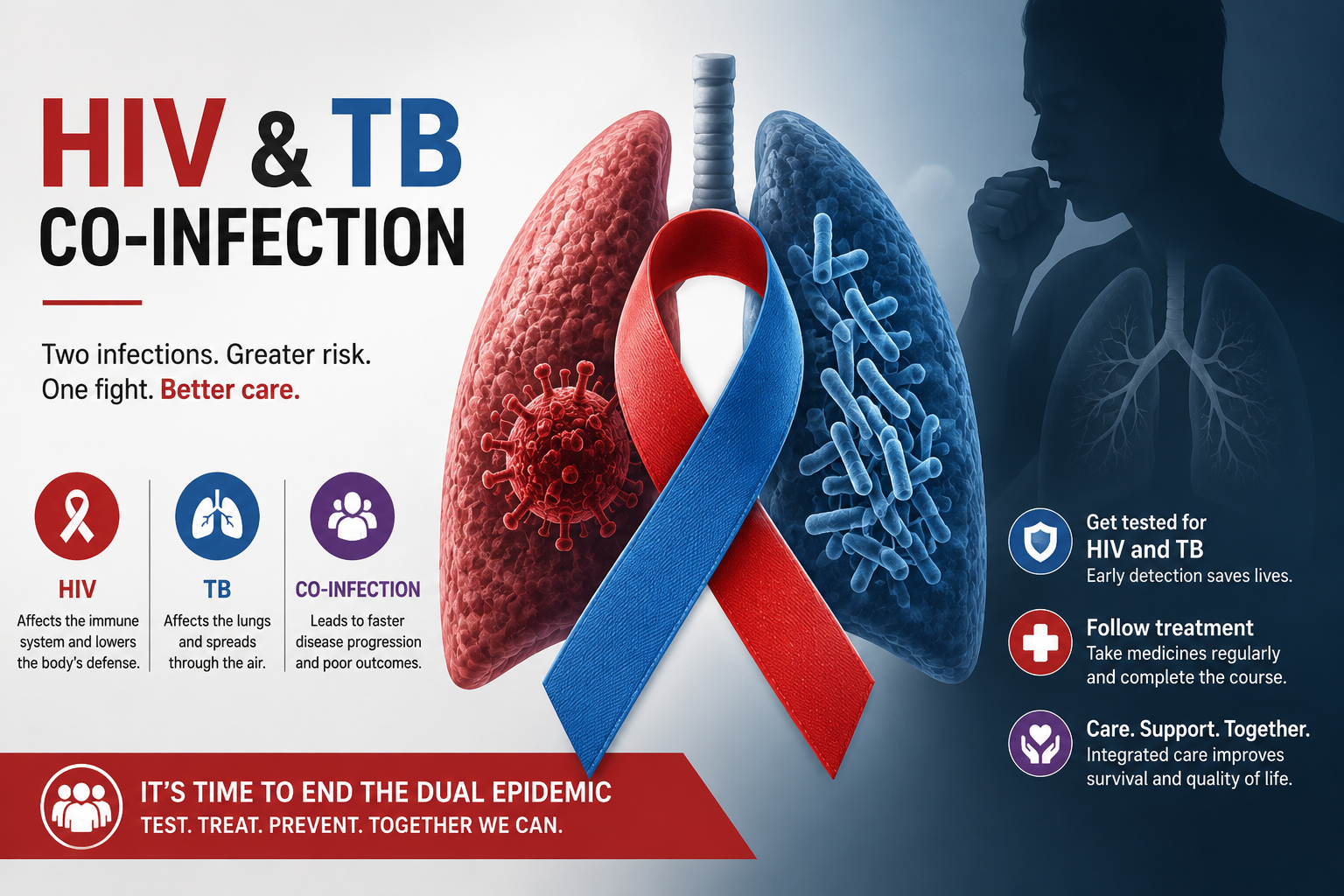
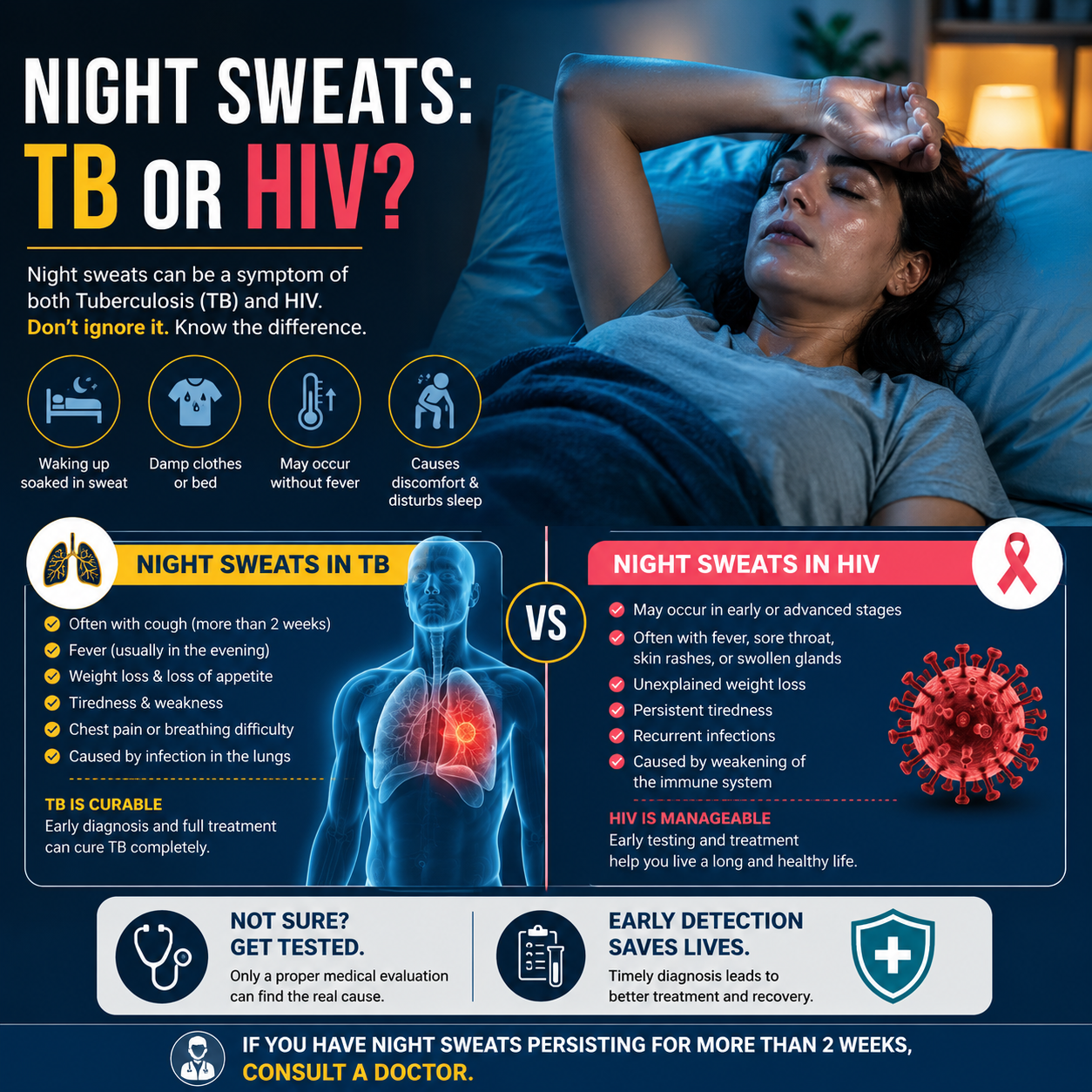
TB vs HIV — How to Tell the Difference Clinically
Both TB and HIV cause drenching night sweats, both circulate in Surat, and both are treatable — but they require completely different workups and treatments. The clinical features below help distinguish them, though both can coexist (TB-HIV co-infection), and testing for both is always required.
| Feature | Tuberculosis | HIV Infection | Lymphoma |
|---|---|---|---|
| Typical patient | Any age. TB contact, diabetes, crowded living. | Any age. Recent possible HIV exposure. | Young adults (Hodgkin's) or older (NHL). |
| Cough | YES — 3+ weeks, productive | Only if pulmonary opportunistic infection | Absent (unless mediastinal involvement) |
| Weight loss | Prominent — 5–10 kg | Present in acute & advanced HIV | Present — >10% body weight = B symptom |
| Lymphadenopathy | Firm, matted — cervical (TB lymphadenitis) | Generalised, soft, non-tender (AHI) | Firm, painless, rubbery — hallmark |
| Fever pattern | Evening low-grade fever | High fever in AHI; varies in advanced | Often present — B symptom if >38°C |
| Rash | Absent | AHI rash — maculopapular trunk | Absent usually |
| Key blood test | IGRA + GeneXpert on sputum | 4th-gen Ag/Ab or HIV RNA PCR | LDH + serum ferritin + LFT |
| Confirmatory test | GeneXpert on sputum / biopsy | Western blot / NAAT | Node biopsy (histology) |
| Treatment | 6-month RNTCP regimen | ART — lifelong | Chemotherapy (RCHOP, ABVD) |
Associated Symptoms That Change Everything
Night sweats alone have a broad differential. Associated symptoms narrow it dramatically. These are the combinations that mandate specific urgent action:
Night Sweats + Cough 3+ Weeks + Weight Loss
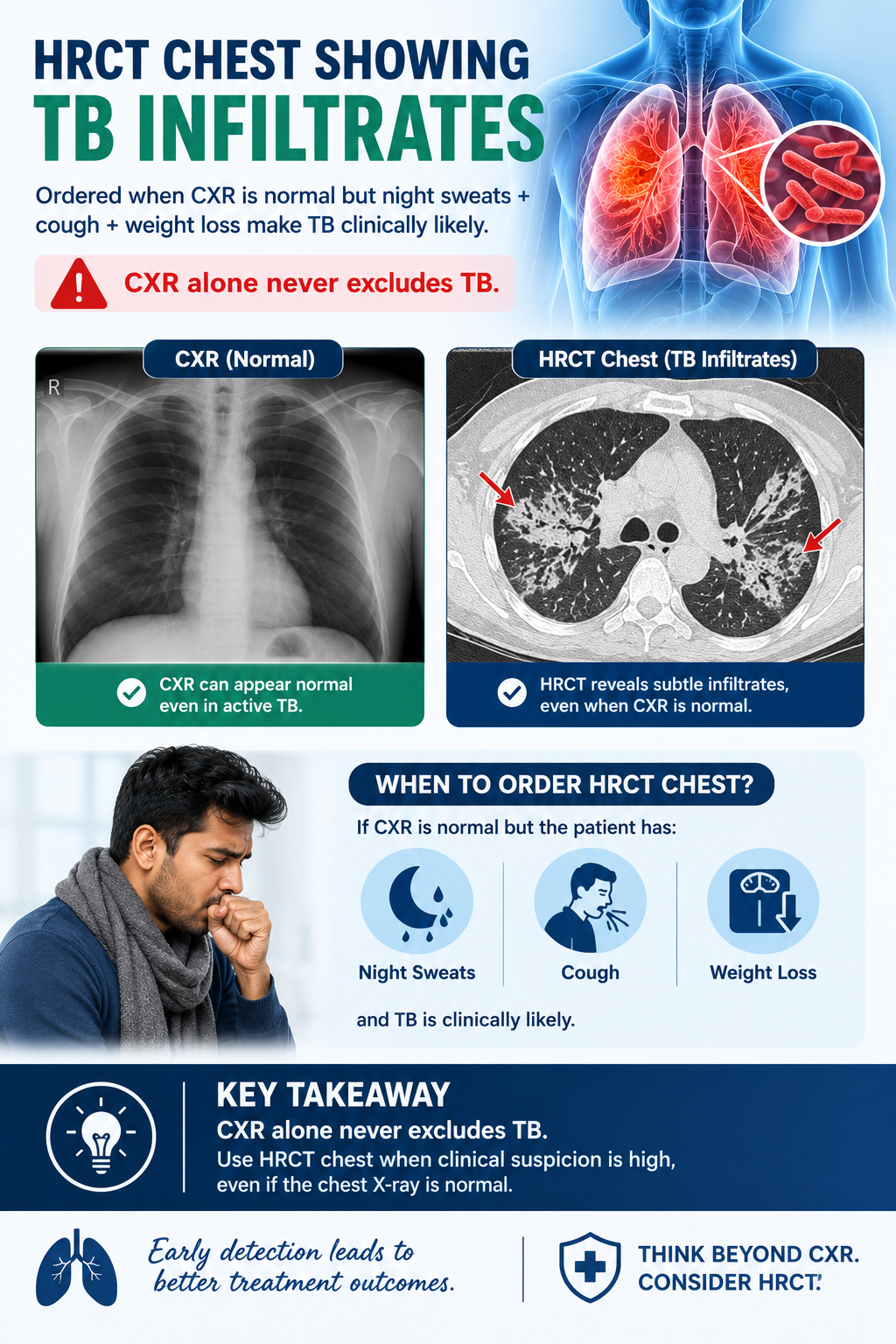
TB until GeneXpert is negative. Do not wait. Send GeneXpert on 3 morning sputum samples + IGRA + HRCT chest. A normal CXR does not exclude TB.
Night Sweats + Fever + Possible HIV Exposure
4th-generation Ag/Ab test immediately. If exposure was within 2–4 weeks, HIV RNA PCR is needed — standard antibody test is negative in the acute window.
Night Sweats + Firm Painless Lymph Nodes
Lymphoma must be excluded. Send LDH + ferritin + FNAC of the largest accessible node. Do not attribute to “viral infection” without histology.
The Systematic Workup for Night Sweats at IID Hospital
Every patient presenting with drenching night sweats at IID Hospital undergoes a staged evaluation. The principle: TB and HIV are excluded first, always. Only after both are negative does the workup expand to inflammatory, malignant, and hormonal causes.
TB + HIV Excluded Simultaneously
HIV test (4th-gen Ag/Ab ELISA): mandatory in every patient, regardless of perceived risk. IGRA (QuantiFERON-TB Gold): detects TB immune sensitisation. GeneXpert on 3 sputum samples if any respiratory symptoms. Chest X-ray + HRCT if CXR abnormal or TB clinically likely. Blood culture ×2 before any antibiotics.
Basic Systemic Evaluation
CBC with differential: leucocytosis (infection), lymphocytosis (viral/HIV), eosinophilia (parasitic), cytopenia (lymphoma, bone marrow disease). CRP + ESR. LFT + RFT. Fasting glucose: nocturnal hypoglycaemia mimics night sweats. TFT: hyperthyroidism causes sweating. Medication review: every drug the patient is taking.
Lymphoma + Inflammatory Screen
Serum LDH: elevated in lymphoma, haemolysis. Serum ferritin: very high (>5,000) in HLH; elevated in lymphoma, Still's disease. Serum protein electrophoresis. ANA + anti-dsDNA: SLE and connective tissue disease. FNAC of any accessible lymph node. Echocardiogram if murmur present (infective endocarditis).
Advanced Imaging + Hormonal Assessment
PET-CT scan: identifies occult lymphoma, sarcoidosis, vasculitis, and occult infections not visible on standard imaging. Bone marrow biopsy: if cytopenia or high clinical suspicion of lymphoma or HLH. FSH + LH + oestradiol: perimenopausal women. Brucella serology + blood culture: livestock/dairy exposure. Repeat HIV + TB testing if window period concerns.

Why HIV Is So Often Missed in Night Sweat Patients in India
HIV is the most commonly missed diagnosis in patients presenting with night sweats in India. The reason is not lack of testing capability — it is stigma. Patients do not disclose risk factors. Doctors do not ask about risk factors, or do not order HIV testing because “this patient doesn’t look like they would have HIV.” This clinical assumption has no basis. HIV does not select by appearance, profession, or social class.
At IID Hospital, HIV testing is part of every unexplained night sweat workup — it is not optional, not stigmatised, and not dependent on whether the patient volunteers a risk history. The HIV test is ordered for the same reason every other test is ordered: because it is clinically indicated.
Fully Confidential — Always
All HIV testing and HIV-related consultations at IID Hospital are fully confidential. HIV status is never shared with family members, employers, or insurance companies without explicit written consent. The consultation room is private. The clinical notes are private. Concern about confidentiality should never prevent someone from testing.
Night Sweat Assessment at IID Hospital
Dr. Pratik Savaj sees patients with unexplained night sweats at IID Hospital, Vesu, Surat. The assessment begins with a detailed history: severity and duration of sweating; associated symptoms (cough, weight loss, fever, lymphadenopathy); all medications; possible TB exposures; HIV risk history. Investigation is staged and targeted.
What to bring: all previous blood tests; any culture reports; all medications you are currently taking; a timeline of when the night sweats started and what other symptoms appeared around the same time.
The B Symptom Rule
Drenching night sweats are a B symptom — a clinical signal that the body is fighting something systemic. In India, TB and HIV are the first two diagnoses to exclude, always. A normal chest X-ray does not exclude TB. A previous negative HIV test does not exclude current infection. Both require specific, correct tests. Come to IID Hospital — the workup starts at the first visit.