What Happens Day by Day — Why Day 7 Is the Threshold
Understanding the expected timeline of different fevers helps explain why day 7 is clinically significant. Every disease has a natural history — and when a fever does not follow the expected pattern, it signals something else is happening.
Fever Begins — Viral Illness Most Likely
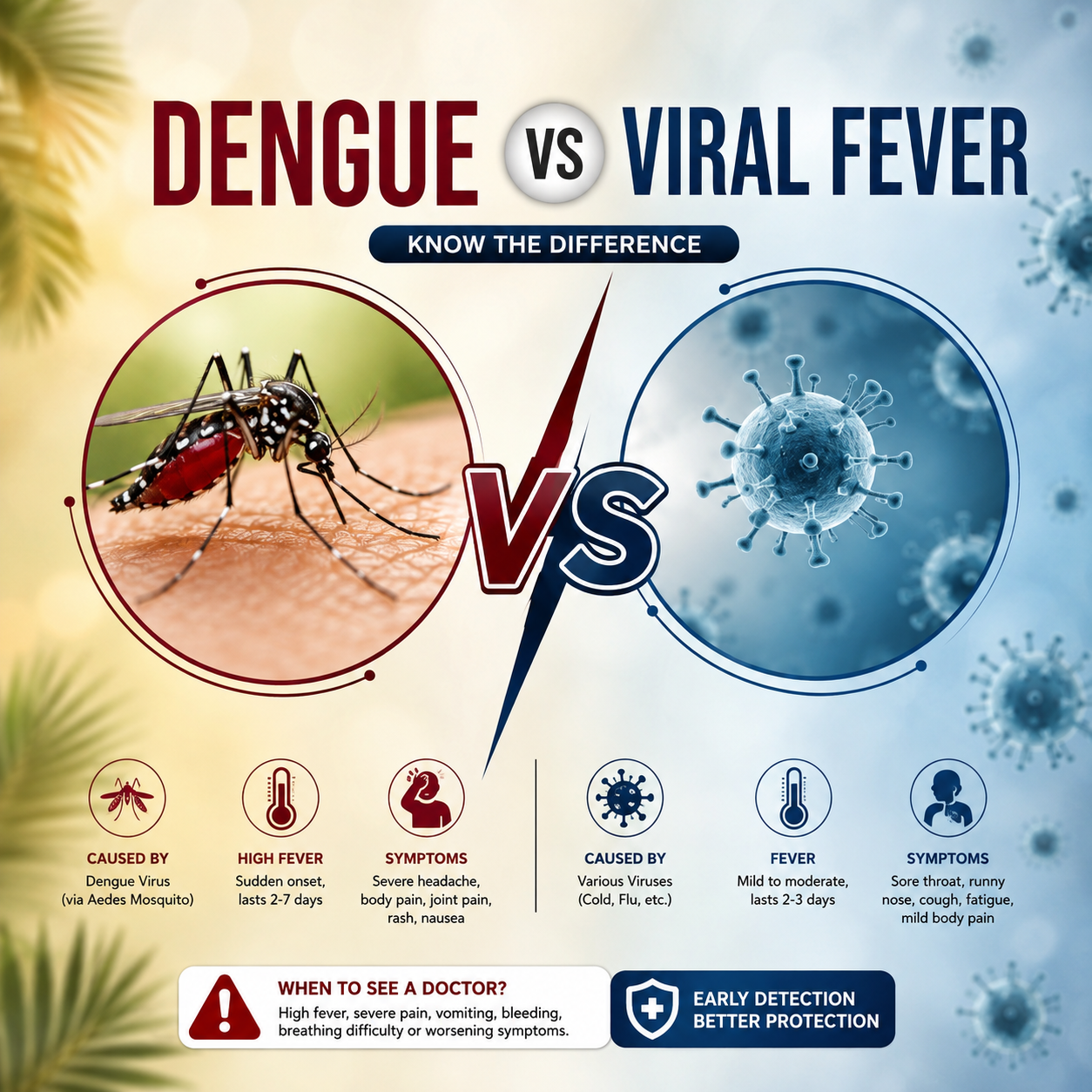
Most fevers in this window are self-limiting viral illnesses. Dengue: NS1 positive in this window — test on day 1. Malaria: blood smear + RDT on day 1 if Surat monsoon or travel to endemic area. If no specific cause found, supportive care and monitoring.
The Deceptive Improvement — Dengue Critical Phase
Dengue patients often feel “better” as fever drops on day 4–5. This is the critical phase — not recovery. Plasma leakage, bleeding risk, and dengue shock are highest here. Daily platelet count monitoring essential. Do not stop monitoring when fever drops. Typhoid: step-ladder fever still rising.
The 7-Day Threshold — This Is No Longer “Viral Fever”
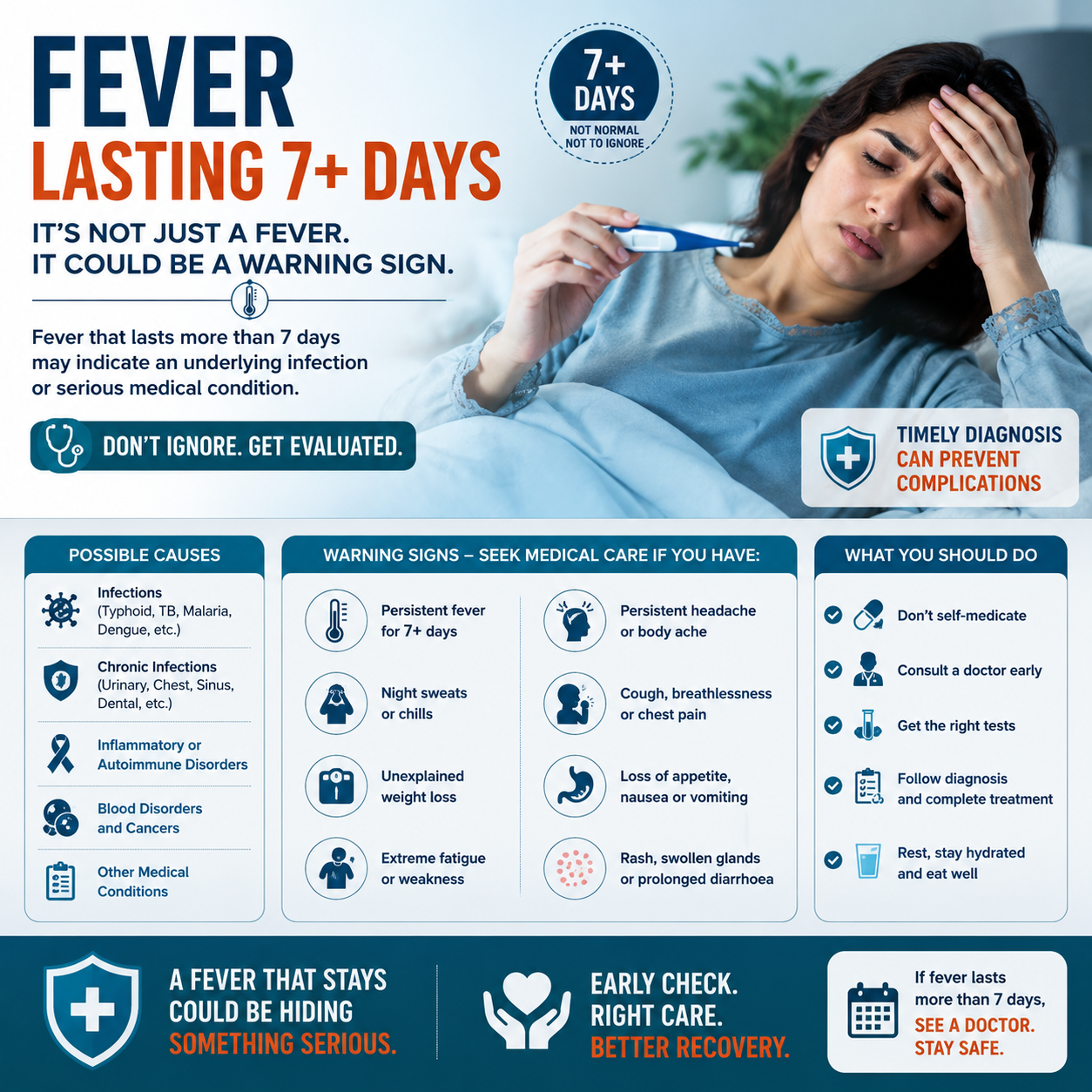
Self-limiting viral illnesses resolve by day 7 in most patients. Fever persisting at day 7 without a confirmed diagnosis is not viral fever — it is an undiagnosed condition. The three most common causes at this threshold in Surat: typhoid (blood culture), TB (GeneXpert), undrained infection. Come to IID Hospital today.
Weeks 2 — Formal Fever of Unknown Origin Territory
Fever beyond 10–14 days without diagnosis approaches FUO criteria. The workup expands: IGRA + GeneXpert for TB; blood culture ×2; HIV test; inflammatory markers; HRCT chest; echocardiogram if murmur. Do not add another antibiotic. Add a culture and a specialist.
Fever of Unknown Origin — Staged Investigation
Formally meets FUO criteria (fever >38.3°C, >3 weeks, no diagnosis after initial investigation). Non-infectious causes now more prominent: lymphoma, connective tissue disease, HLH. PET-CT, bone marrow biopsy, and specialist-directed second-line workup.
The Most Likely Causes in Surat — Ranked by Probability
In Surat, the probability of each cause varies by season, patient demographics, and clinical features. This ranking is for an adult with 7+ days of fever, no confirmed diagnosis, in or after the monsoon season.
Typhoid Fever (Enteric Fever)
Step-ladder fever rising daily. Relative bradycardia. Abdominal pain. Eaten from outside food sources.
Tuberculosis
Cough 2+ weeks + weight loss + night sweats. Evening fever. Any age, any social background.
Malaria (Plasmodium vivax)
Cyclical rigors every 48 hours. Travel to rural Gujarat, monsoon exposure. Cold–hot–sweat pattern.
Dengue (Late / Prolonged)
Persistent fever or secondary dengue with slow platelet recovery. Check NS1 + IgM + platelet trend.
Infective Endocarditis
New or changing heart murmur. Fever + joint pain + embolic signs. IV drug use or dental procedure.
HIV (Acute or Advanced)
Possible exposure 2–6 weeks ago. Rash, lymphadenopathy, mouth ulcers with fever.
Lymphoma or Other Malignancy
Firm painless lymph nodes. Weight loss >10%. Fever + night sweats + weight loss (B symptoms).
Drug Fever or Inflammatory Cause
Fever started after a new medication. Fever responds to NSAIDs but not antibiotics. Multi-system features.
Warning Signs — Go to Emergency Right Now
These signs mean the clinical situation has deteriorated and requires emergency department assessment immediately — not a clinic appointment, not a phone call first. If any of the following develop, go directly to the nearest emergency department.
Any Bleeding
Bleeding from nose, gums, red spots on skin (petechiae), blood in urine or stool — dengue haemorrhage or serious coagulopathy.
Confusion or Altered Consciousness
Confusion, drowsiness, slurred speech — cerebral malaria, encephalitis, septic encephalopathy. Do not wait.
Rapid or Difficult Breathing
Respiratory rate >25/min, difficulty breathing, oxygen saturation below 94% — pneumonia, PCP, sepsis.
Cold Clammy Skin + Rapid Pulse
Signs of shock: cold extremities, rapid weak pulse, low blood pressure — dengue shock, septic shock. Immediate IV access needed.
Temperature Above 40°C
Hyperpyrexia despite paracetamol — risk of direct cellular damage, febrile seizure, organ dysfunction.
Severe Abdominal Pain
Typhoid perforation, liver abscess, peritonitis — surgical emergency. Board-like abdomen, rebound tenderness.

The Most Dangerous Mistake — Another Antibiotic
The most common response to a fever that hasn’t resolved after 5–7 days is to add another antibiotic or switch to a stronger one. This is the most dangerous single error in management of persistent fever.
Each antibiotic course without a culture: sterilises the blood before the next culture can identify the organism; suppresses secondary bacterial infections while the primary cause (TB, lymphoma, viral infection) continues; selects for resistant organisms; and creates a false sense of “doing something.” The correct response to a fever that hasn’t resolved is culture, not escalation.
The Rule at IID Hospital
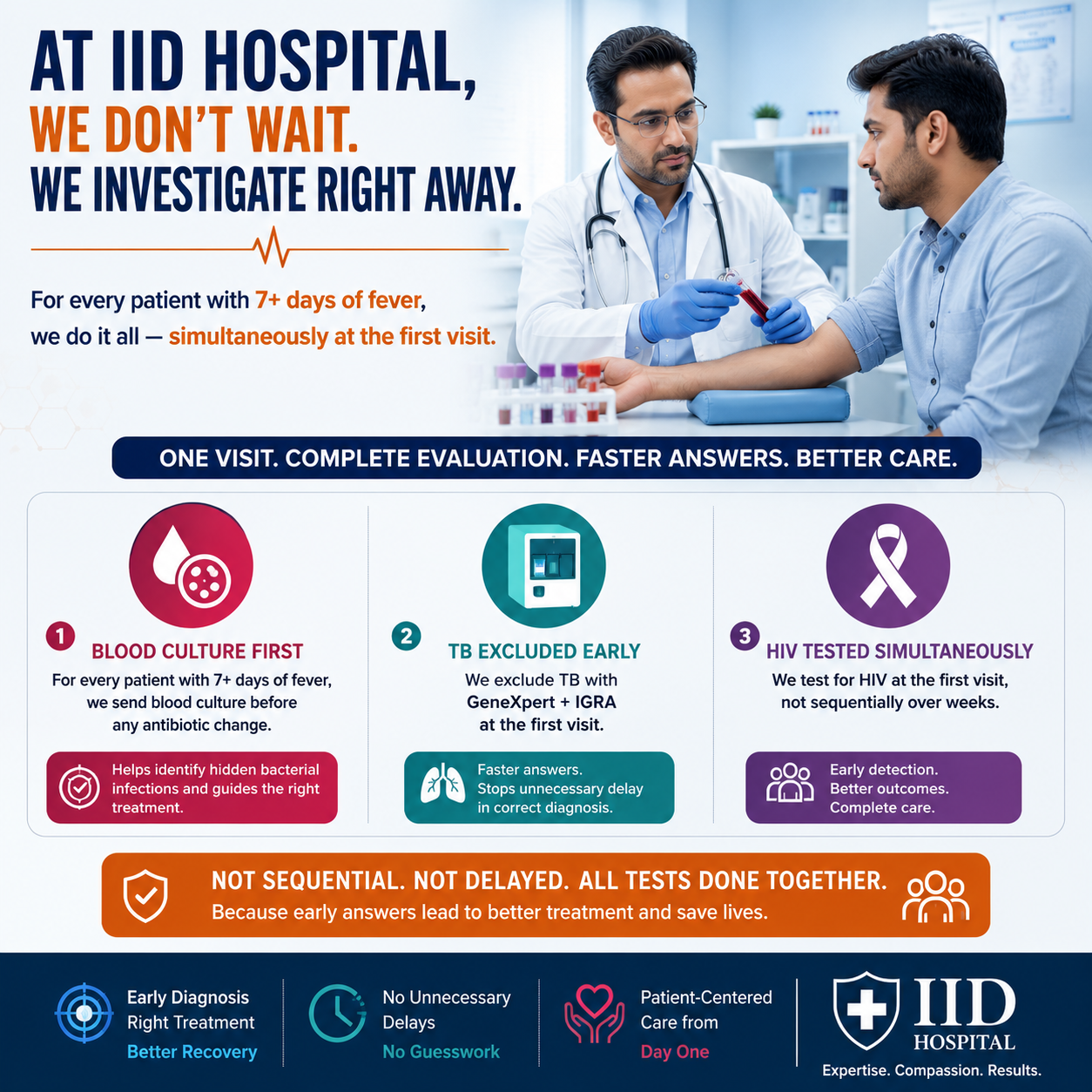
Blood culture is sent before any antibiotic is started or changed. No exceptions. Once an antibiotic has been given, the diagnostic window closes. Culture before treatment is not a preference — it is a clinical standard.
What to Bring to IID Hospital — Make the First Visit Count
A thorough history is 80% of the diagnosis. Bring everything you have so the first visit produces a plan, not just more questions.
Medical Documents
Your Fever History
Exposure History
Current Status
What Happens at IID Hospital — Your First Visit
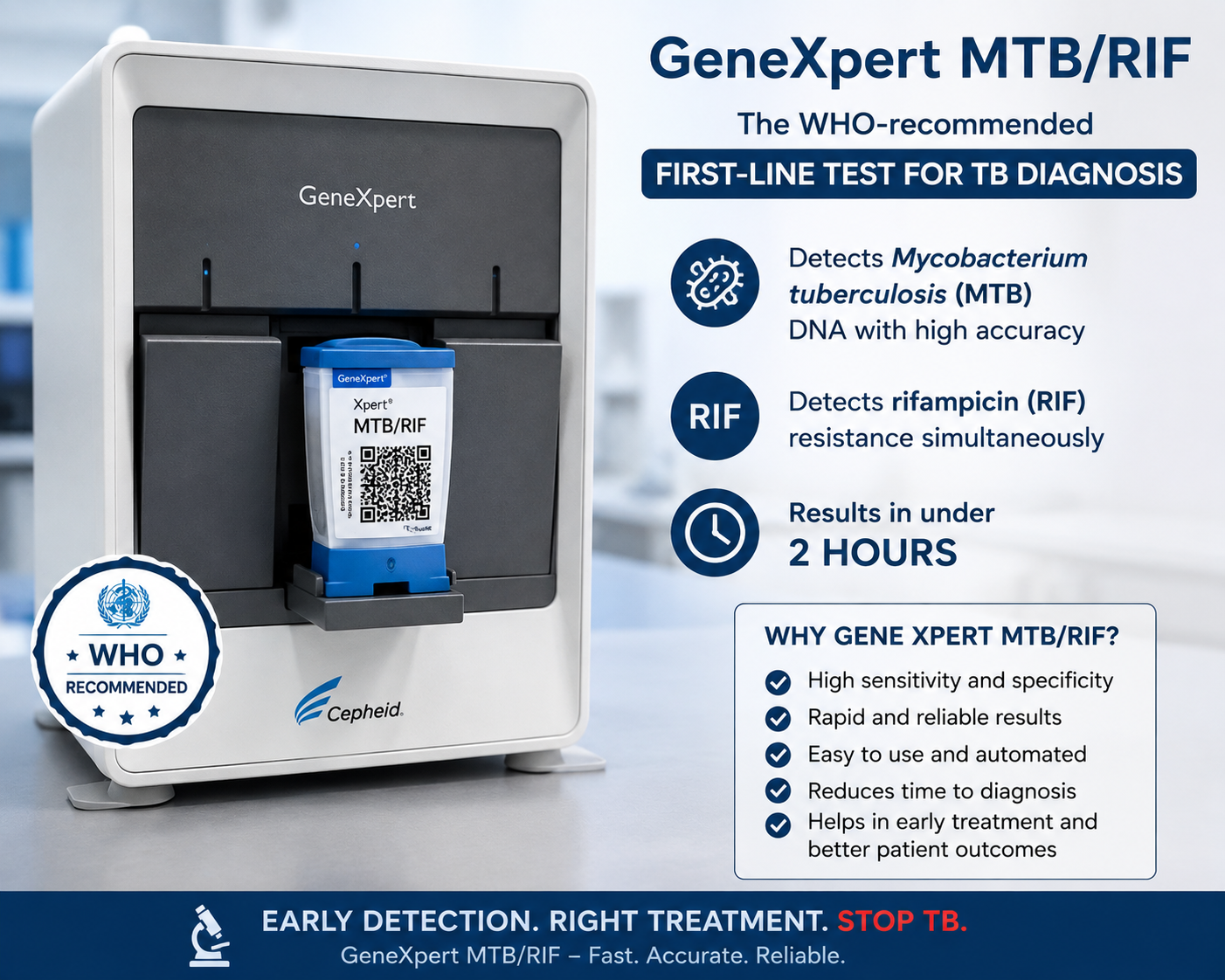
At IID Hospital, Dr. Pratik Savaj takes a structured approach to 7+ day fever. The consultation covers: full exposure and symptom history; clinical examination focusing on lymph nodes, liver, spleen, heart sounds, and skin; and a targeted investigation plan ordered at the same visit.
What you will leave with after the first visit: a specific test plan (blood culture before any antibiotics, IGRA, CBC, CRP, LFT); a working differential diagnosis with the most likely cause; a clear management plan including what to take and what to avoid; and a follow-up appointment within 48–72 hours when culture and test results return.
No Referral Needed — Come Directly
You do not need a referral to see Dr. Savaj at IID Hospital. Walk in during clinic hours or call +91 92747 93759 to confirm availability. IID Hospital is a specialist infectious disease clinic — persistent fever without a diagnosis is exactly the type of case that belongs here, not at another general practitioner who will add a fourth antibiotic.
The 7-Day Fever Rule
Fever beyond 7 days without a confirmed diagnosis is not “viral fever.” It is an undiagnosed condition that requires systematic evaluation. The answer is culture and investigation — not another antibiotic course. In Surat, typhoid and TB are the most commonly missed diagnoses. Both are curable. Both require specific tests that are only available if you come before the diagnostic window closes.