 Infection Prevention · Surat
most infections in Surat
Infection PreventionA Practical Guide for Surat
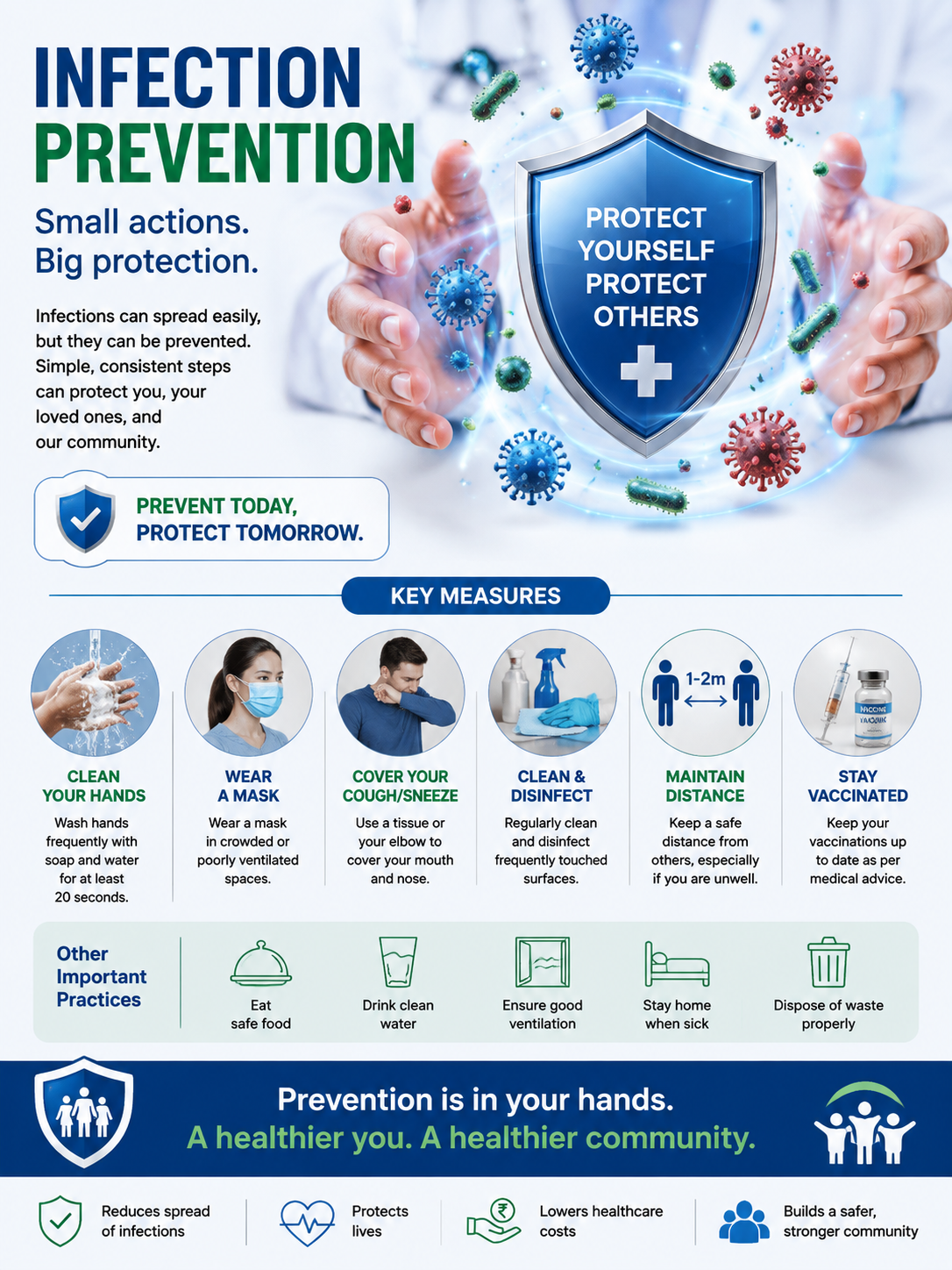
Most infections are preventable. In Surat’s specific environment — monsoon mosquitoes, contaminated water during floods, crowded indoor spaces, and a high TB burden — simple evidence-based practices dramatically reduce your risk of dengue, typhoid, TB, hepatitis A, and respiratory infections.
Prevention Is More Effective Than Treatment — and Far Cheaper
Most of the infections that cause serious illness in Surat — dengue, typhoid, hepatitis A, TB, leptospirosis — are entirely preventable with specific, evidence-based practices. These are not generic advice. They are targeted actions proven to prevent specific diseases that circulate in Surat’s particular environment.
In Surat, prevention is especially important during the monsoon season (July–November) when Aedes mosquito populations peak (dengue, chikungunya), Anopheles mosquitoes transmit malaria, flooding contaminates water supplies (typhoid, leptospirosis, hepatitis A), and crowded indoor spaces drive respiratory infections.
This guide covers five pillars: hand hygiene (the highest-impact single action), safe water and food, mosquito control, TB prevention, and vaccination. Each section gives specific, actionable steps — not vague recommendations.
Dr. Savaj’s Prevention Principle
At IID Hospital, prevention and treatment are equally important. A patient who avoids dengue by eliminating mosquito breeding sites has achieved more than a patient who is correctly treated for dengue. Prevention guidance is part of every consultation at IID Hospital — particularly for high-risk patients: diabetics, HIV-positive individuals, household TB contacts, and immunocompromised patients.
High-Risk Groups — Priority Prevention
Hand Hygiene — The Highest-Impact Single Action
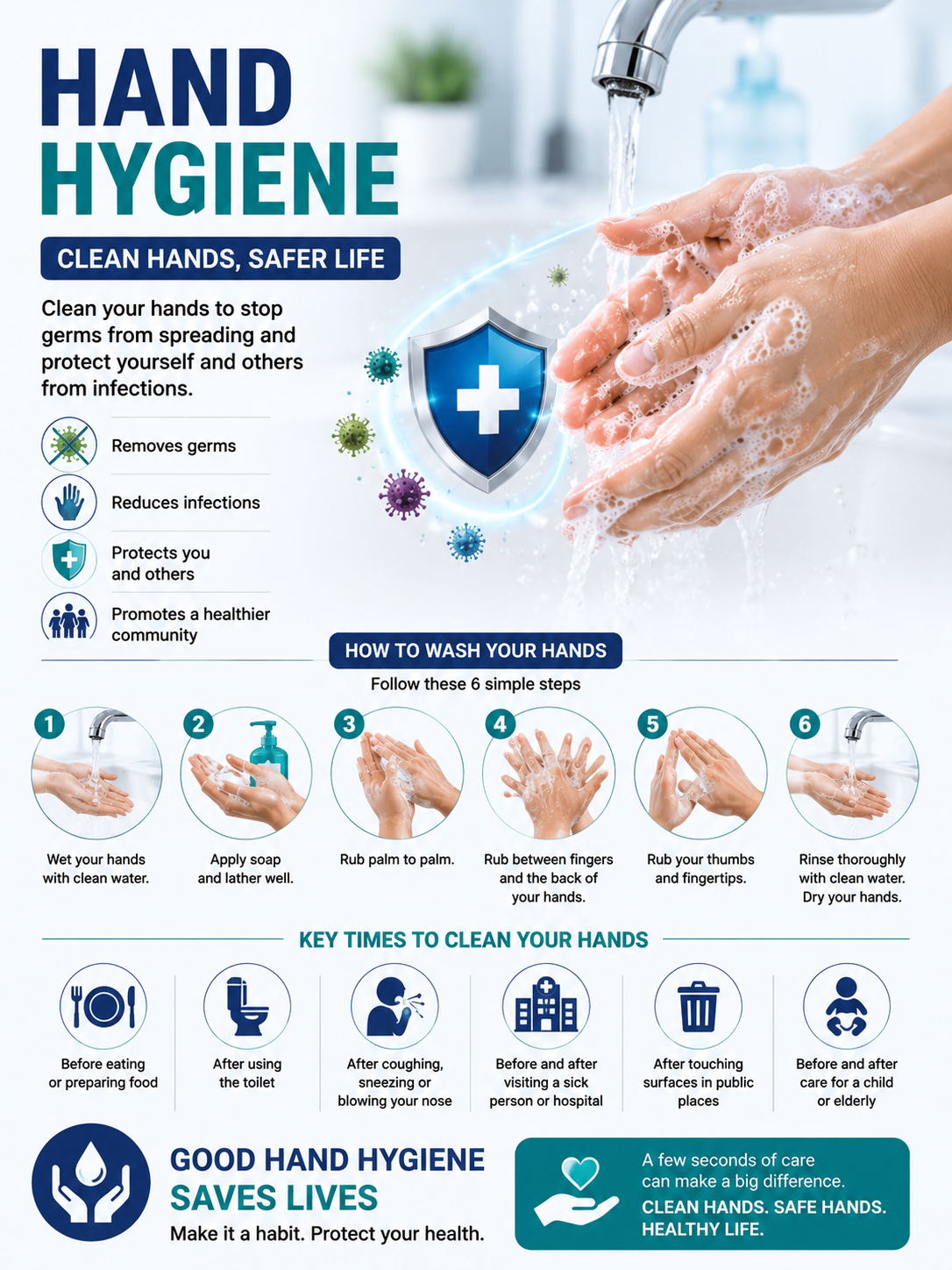
Handwashing with soap at critical moments reduces diarrhoeal disease by 40–48% and respiratory infections by 16–21%. It is the single most effective infection prevention measure — more effective than any antibiotic at preventing typhoid, hepatitis A, and gastrointestinal infections before they occur. The key is timing and technique, not frequency.
Wash before eating and food preparation
Apply soap, rub all surfaces including between fingers and under nails for 40–60 seconds, rinse under running water, dry with a clean towel. This single moment prevents typhoid, hepatitis A, and most gastrointestinal infections.
Wash after using the toilet
The highest contamination event. Wash immediately with soap before touching any surface or food. 60% of typhoid transmission is prevented by this single action alone.
Wash after contact with sick people
After touching a sick household member, their bedding, or utensils. Respiratory viruses survive on surfaces for 2–72 hours. Touching contaminated surfaces then touching your face is the primary transmission route.
Use 60–70% alcohol sanitiser when soap is unavailable
Apply 3–5 ml and rub all hand surfaces for 20–30 seconds until dry. Effective against most viruses and bacteria when hands are not visibly soiled. Does not replace soap and water before food preparation.
Avoid touching your face
The average adult touches their face 23 times per hour. This transfers respiratory viruses from contaminated hands to mucous membranes. Conscious avoidance in crowded public spaces reduces respiratory infection risk significantly.
Safe Water & Food — Typhoid, Hepatitis A, Cholera
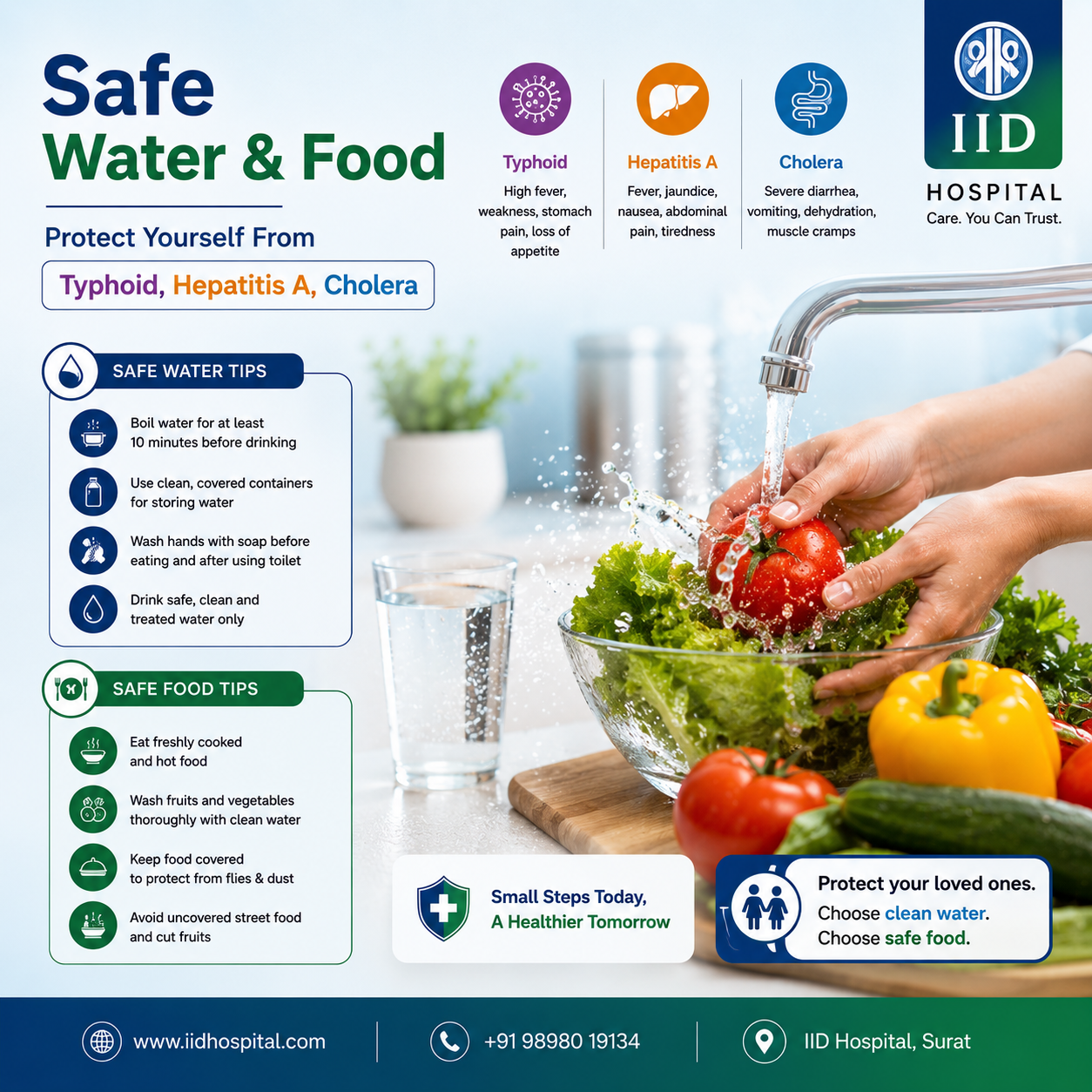
Typhoid and hepatitis A are both transmitted by the faecal-oral route through contaminated water and food. Surat’s infrastructure is under the greatest stress during monsoon — when XDR typhoid cases peak and hepatitis A outbreaks occur in flooded areas. Safe water and food practices are essential year-round, not just during monsoon.
Treat all drinking water
Boiling: rolling boil for 1 full minute — kills all pathogens including cryptosporidium. RO+UV purifier: certified combination removes bacteria, viruses, and protozoa. Change filters every 6 months. UV alone is insufficient without RO.
Eat only fully cooked food served hot
Raw salads and unpeeled fruits from vendors are washed with municipal water that may be contaminated. During monsoon (July–November): be strictly cautious. Peel fruits yourself at home after washing hands.
Avoid ice from unknown sources
Ice cubes are frequently made from untreated water. Never add ice to drinks outside home unless certain of the source. At home, make ice from treated water only. Check sealed caps on bottled water.
Clean water storage tanks every 3–6 months
Bacteria and algae grow in tanks not regularly cleaned. Empty, scrub, and disinfect your overhead tank and sump every 3–6 months. Keep tanks covered at all times to prevent mosquito breeding and contamination.
XDR Typhoid in Surat — Culture Before Antibiotics
Extensively drug-resistant typhoid is increasingly common in Surat. Empirical ciprofloxacin will fail in many cases. Blood culture before any antibiotic is essential. See Dr. Savaj for any fever with step-ladder pattern + abdominal symptoms — do not self-treat.
Mosquito Control — Dengue, Malaria, Chikungunya
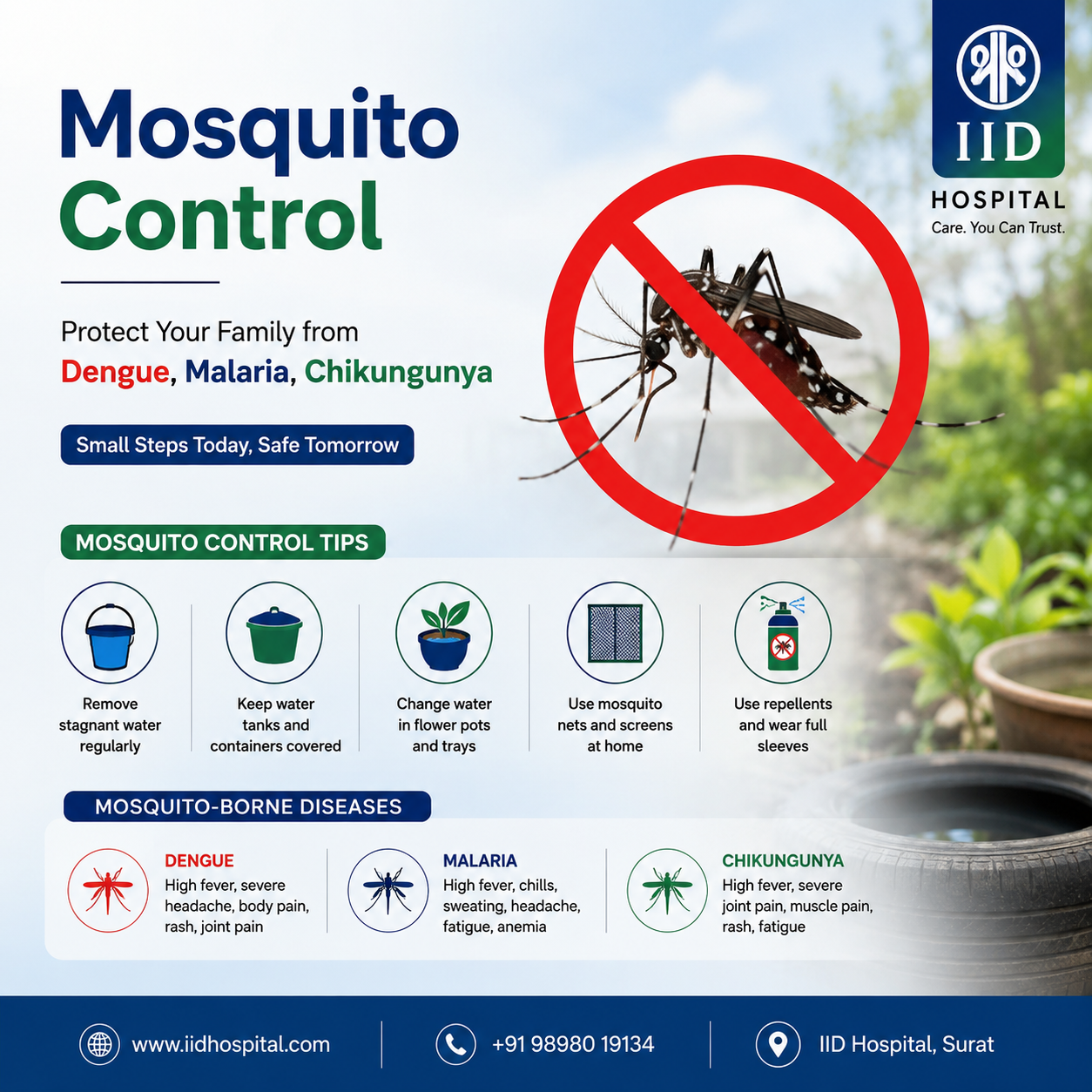
Two mosquito species drive vector-borne disease in Surat: Aedes aegypti (dengue + chikungunya — bites during the day, breeds in clean stagnant water in homes) and Anopheles (malaria — bites at dusk and night). Prevention requires different strategies for each species.
Empty and scrub all water containers every 3–5 days
Dengue eggs stick to container walls — emptying alone is insufficient, scrubbing removes the eggs. Check: cooler trays, flower pot saucers, overhead tank lids, discarded tyres, blocked gutters. One cup-sized container produces 200–300 mosquitoes.
Apply DEET 20–30% repellent on exposed skin
Most effective repellent; lasts 4–8 hours; safe for children over 2 months. Apply after sunscreen. Reapply after swimming or heavy sweating. Apply particularly at dawn (6–8 AM) and dusk (4–6 PM) — peak Aedes biting times.
Wear full-coverage clothing at peak biting times
Loose, long-sleeved clothing and long trousers. Light-coloured clothing preferred — mosquitoes are attracted to dark colours. Pre-treat with permethrin for outdoor activities near scrub or vegetation.
Use mosquito nets and window screens
Insecticide-treated nets (ITNs) for sleeping protection. Properly fitted window and door screens without holes. Electric mosquito repellents (liquid vaporisers) for indoor overnight protection.
Avoid wading in flood water barefoot
Leptospirosis risk — Leptospira bacteria in flood water penetrate skin through cuts or intact mucosa. Use waterproof footwear in flood water. Shower and wash exposed skin after flood water contact.
Monsoon Fever Protocol — July to November
Any fever during Surat monsoon: NS1 antigen + blood smear on day 1 — not day 5. Paracetamol only — never ibuprofen until dengue is excluded. See Dr. Savaj for any fever lasting more than 2 days.
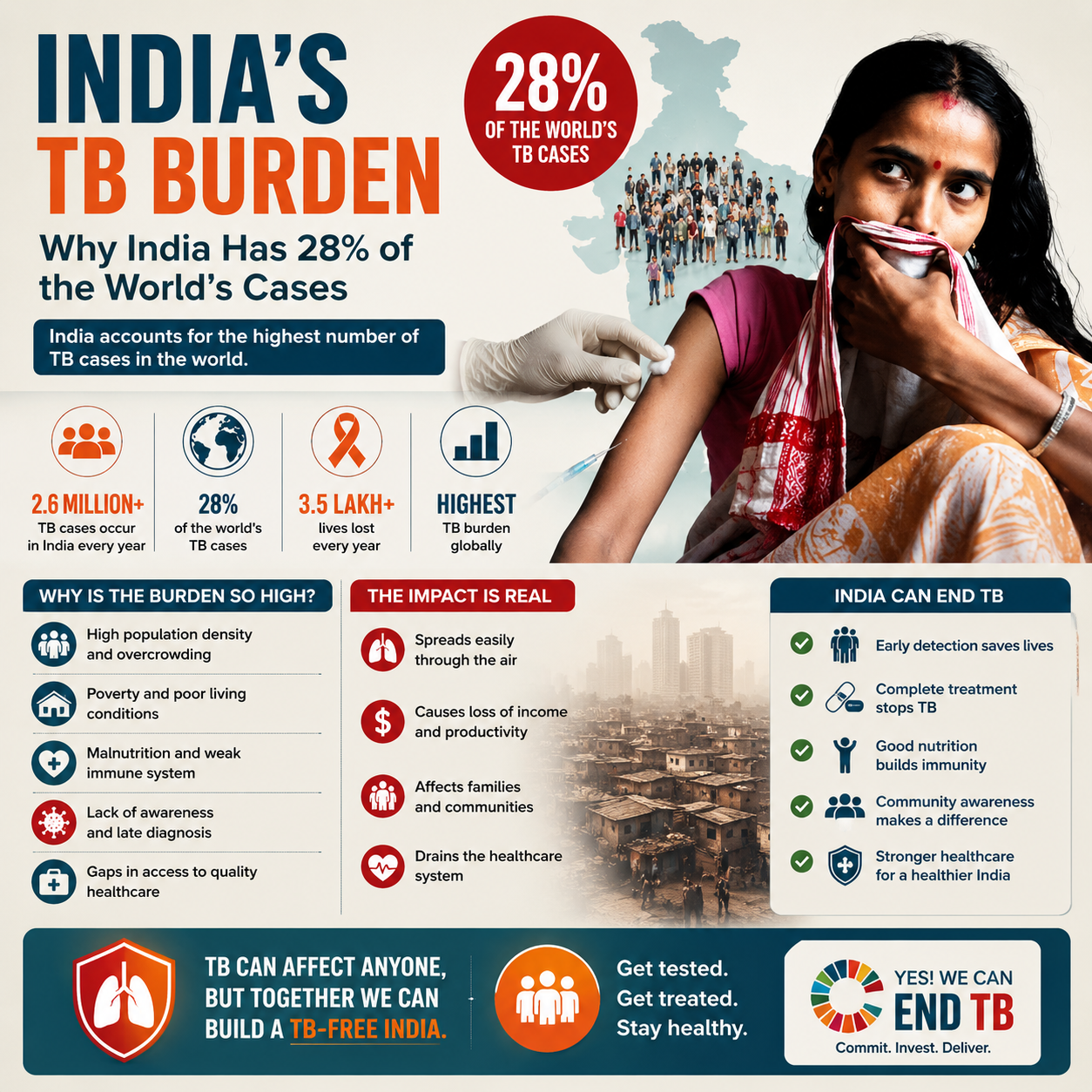
TB Prevention — India’s Most Important Infection
India has 2.8 million new TB cases per year — the highest burden globally. Unlike mosquito-borne diseases, TB spreads through the air by breathing the same air as someone with active pulmonary TB. Prevention operates at multiple levels: vaccination, contact investigation, preventive therapy, and ventilation.
BCG vaccination for all newborns within 24 hours of birth
Under India’s Universal Immunisation Programme. Provides strong protection against TB meningitis and miliary TB in children. Verify BCG scar at the first well-baby visit.
Evaluate all household contacts after a TB diagnosis
If anyone in the household has TB: all members must be assessed at IID Hospital — IGRA + CXR for adults; clinical assessment for children. Household contacts have 5–10× higher risk than the general population.
Isoniazid preventive therapy (IPT) for IGRA-positive contacts
6 months of daily isoniazid reduces TB reactivation by 60–90%. Indicated for: children under 5 in TB contact households; all HIV-positive individuals (after excluding active TB); immunocompromised individuals with positive IGRA. Prescribed and monitored at IID Hospital.
Ensure adequate ventilation in sleeping and living areas
TB infectious droplet nuclei remain airborne for hours in poorly ventilated rooms. Open windows, cross-ventilation, and adequate air circulation dramatically reduce transmission. Active TB patients: sleep in a separate room until sputum converts negative (typically 2–4 weeks of treatment).
TB patients must wear a surgical mask indoors during infectious period
Until sputum smear converts negative on treatment. Avoid crowded indoor environments and hospital visits except for own care. Patients become non-infectious within 2–4 weeks of effective treatment.
Adult Vaccination — What You Actually Need
Most adults in India are significantly under-vaccinated. Childhood vaccines wear off. Adult-specific vaccines are rarely offered. At IID Hospital, Dr. Savaj provides a personalised adult vaccination schedule based on age, occupation, travel plans, medical conditions, and vaccination history.
Vaccines are the most cost-effective medical intervention — preventing disease entirely rather than treating it. Particularly important for adults with diabetes, HIV, chronic lung or heart disease, and everyone over 65.
Influenza — Annual
All adults; especially those over 50, diabetics, healthcare workers, and people with chronic disease. New formulation each year. Most effective when taken before October.
Hepatitis B — 3-dose series
All unvaccinated adults. Healthcare workers: mandatory. 3 doses at 0, 1, and 6 months. Check anti-HBs titre after completion to confirm immunity. Critical for preventing liver cancer in the long term.
Typhoid Vi — Every 3 years
All adults in Surat and other endemic cities. Particularly important before monsoon season. Does not protect against XDR typhoid — safe food and water practices remain essential alongside vaccination.
Book a Vaccine Consultation
Dr. Savaj reviews your vaccination history and provides a complete personalised schedule at IID Hospital. Bring any vaccination records you have. Book an appointment or WhatsApp +91 92747 93759.
Adult Vaccine Schedule — India
| Vaccine | Who Needs It | Frequency |
|---|---|---|
| Influenza | All adults; 50+, diabetics, HCW priority | Annual |
| Hepatitis B | All unvaccinated adults; HCW | 3 doses: 0, 1, 6 months |
| Hepatitis A | All adults without prior immunity | 2 doses: 0, 6–12 months |
| Typhoid Vi | All adults in Surat (endemic) | Every 3 years |
| COVID-19 | All adults — boosters per NTAGI guidelines | Per national schedule |
| Pneumococcal | 65+; diabetics; chronic lung/heart/kidney | Specialist guidance |
| Td/Tdap booster | All adults | Every 10 years |
| Varicella | Adults without prior chickenpox | 2 doses: 0, 4–8 weeks |
| HPV | Women 9–45 years | 2–3 doses by age |
What to Do Before and During Surat Monsoon
Surat’s monsoon season (July–November) dramatically changes the infection risk landscape. Preparing before the season and following these practices during it prevents the majority of monsoon-related illness.
Before Monsoon — June
Do this before the rains arrive
During Monsoon — July to November
Practise every day during the season
High-Risk Groups — Year-Round
Extra measures for vulnerable individuals
What Patients Say About Prevention Guidance at IID Hospital
My son got dengue two years in a row. I thought it was just bad luck. When I brought him to Dr. Savaj after the second episode, he asked me where the mosquitoes were breeding. We found a small dish under a pot on our terrace. He explained scrubbing, not just emptying. My son has not had dengue since. Such a small change, such a big difference.
After my wife was diagnosed with TB, Dr. Savaj tested all four of our family members. My IGRA was positive — latent TB. He gave me 6 months of isoniazid. Two years later, no TB. He told me that contact investigation is a completely neglected step in TB care in India. I had no idea I was at risk.
As a diabetic, Dr. Savaj gave me a specific prevention plan: HbA1c target, daily foot inspection, which vaccines I needed (influenza and pneumococcal I had never had), and what to do during monsoon. No one had ever given me this level of specific guidance. I have not been hospitalised for infection in 18 months.
Frequently Asked Questions About Infection Prevention
Answered by Dr. Pratik Savaj, FNB Infectious Diseases, IID Hospital, Surat.
Is tap water in Surat safe to drink directly?
How long should I wash my hands to prevent infection?
Which vaccines do adults in India need?
How do I prevent dengue mosquito breeding at home?
What food practices prevent typhoid and hepatitis A?
Should I wear a mask to prevent respiratory infections?
How can I protect my family from TB?
Does wearing footwear outdoors prevent infection?
Want a Personalised Prevention Plan?
No referral needed. Dr. Pratik Savaj, FNB Infectious Diseases, IID Hospital, Lal Darwaja, Surat provides personalised infection prevention advice: adult vaccination schedules, TB contact investigation, IPT, monsoon preparedness for high-risk families, and prevention planning for diabetics, HIV-positive individuals, and immunocompromised patients.

MBBS · DNB Medicine · Fellowship ID
P.D. Hinduja Hospital, Mumbai