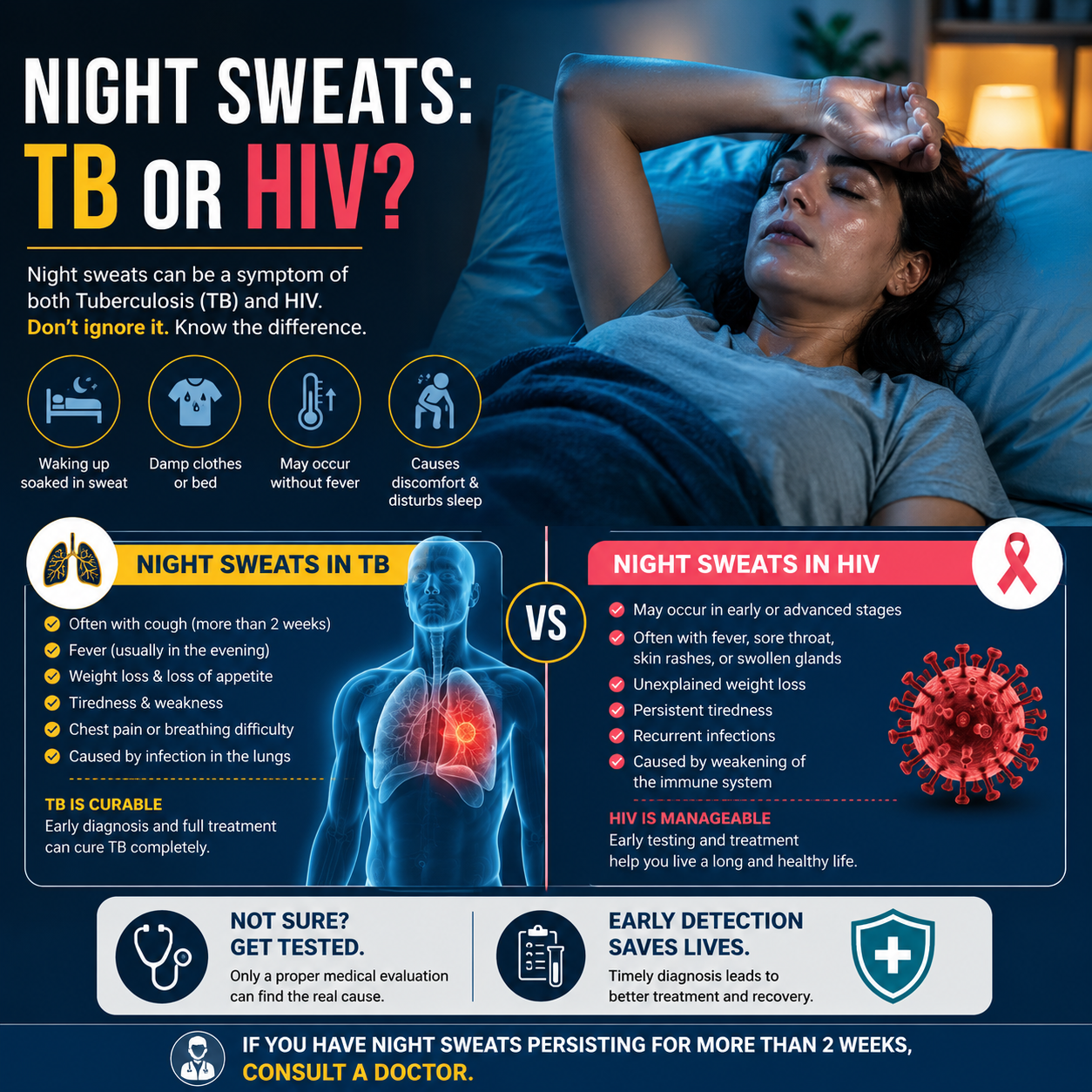
Night SweatsWhen Drenching Sweats Need Investigation
Night sweats are common and usually benign. But drenching night sweats — soaking through clothing and bedding — occurring repeatedly over weeks without an obvious cause are a clinical warning sign. In India, the three most important causes to exclude are tuberculosis, HIV, and lymphoma.
Tuberculosis
Most common serious cause in India
HIV
Frequently missed, always testable
Lymphoma
B symptoms: sweats + fever + weight loss
What Are Night Sweats — and When Are They Concerning?
Night sweats are episodes of excessive sweating during sleep. The key clinical distinction is not simply that sweating occurred — but its severity, persistence, and associated symptoms. Everyone sweats at night to some degree. The clinically significant threshold is “drenching” night sweats — sweating so severe that it soaks through clothing and bedding, requiring a change, occurring on most nights over weeks, in a cool sleeping environment.
The mechanism behind pathological night sweats is the same as fever: pyrogens — inflammatory chemicals released by immune cells in response to infection, malignancy, or autoimmune inflammation — raise the hypothalamic temperature setpoint. The body then sweats to dissipate heat. This cycle happens naturally during the temperature fluctuations of sleep, which is why infections like TB cause night sweats — the fever-and-sweat cycle is exaggerated during sleep but may not be noticed as “fever” during the day.
The Key Clinical Question
Not “do you sweat at night” but: “Do you wake up soaking wet, needing to change your clothes or bedding?” If yes, and it is happening most nights over the last 2–3 weeks without an obvious explanation — this warrants assessment. Particularly if accompanied by weight loss, persistent fever, swollen glands, fatigue, or cough.
Night Sweat Severity Scale
Mild — Normal
Slight dampness on skin or pillow. Resolves with cooler room, lighter bedding. No medical concern.
Moderate — Monitor
Clothing damp but not soaked. May be triggered by anxiety, medication, or mild illness. Assess if persistent.
Drenching — Investigate
Soaks through clothing and bedding. Requires change at night. Occurs in cool environment. Seek specialist assessment.
Drenching + Symptoms — Urgent
Drenching sweats + weight loss + fever + fatigue + swollen glands. See Dr. Savaj as soon as possible.
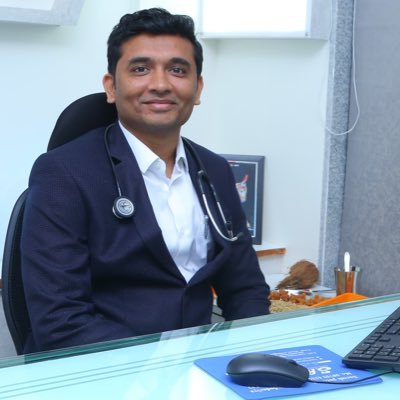
Dr. Pratik Savaj
FNB Infectious Diseases · IID Hospital, Surat
Night sweats & FUO specialist
Physiological vs Pathological Night Sweats
Night sweats divide into two broad categories: physiological (benign, environment or lifestyle causes) and pathological (caused by underlying medical conditions requiring investigation). The distinction is made on the basis of severity, persistence, and associated symptoms.
Physiological — Usually Benign
Caused by environment, lifestyle, or hormones
Warm room or heavy bedding
Commonest cause. Night sweats resolve immediately when bedding is reduced or room cooled. No medical significance.
EnvironmentAnxiety and stress
Autonomic nervous system activation causes sweating. Associated with racing thoughts, restlessness, and psychological stress.
PhysiologicalAlcohol or spicy food before bed
Both cause vasodilation and sweating within 1–3 hours of consumption. Episodic, not nightly if trigger is avoided.
Dietary triggerMenopausal hot flushes
Episodic surges of heat + flushing + sweating from declining oestrogen. Usually accompanied by daytime hot flushes. FSH confirms menopausal status.
HormonalMedication side effects
Antidepressants (SSRIs, SNRIs), tamoxifen, GnRH agonists, niacin, and some blood pressure medications cause sweating. Onset correlates with starting the drug.
Drug-relatedViral illness
Fever from any viral infection causes night sweats. Resolves with the illness. Night sweats lasting beyond 2 weeks after a viral illness warrant reassessment.
Acute illnessPathological — Need Investigation
Caused by underlying medical conditions
Tuberculosis
Classic B symptom of TB. Occurs in pulmonary AND extrapulmonary TB. Normal chest X-ray does not exclude TB. Most important cause of pathological night sweats in India.
Most common in IndiaHIV infection
Both primary HIV and advanced HIV (low CD4) cause night sweats. Primary HIV: sweats + fever + rash + swollen glands 2–4 weeks after exposure. Always testable, always confidential.
Test immediatelyLymphoma
Hodgkin’s and Non-Hodgkin’s lymphoma present with B symptoms: drenching night sweats + unexplained fever + >10% weight loss. LDH elevated. CT and PET-CT for staging.
B symptoms — urgentInfective endocarditis
Heart valve infection causing persistent low-grade fever, night sweats, embolic phenomena. Requires echocardiogram + blood cultures ×3.
Specialist workupBrucellosis
Undulant fever with drenching night sweats, joint pain, hepatosplenomegaly. History of unpasteurised milk or animal contact. Brucella serology + culture.
Often missedHyperthyroidism
Excess thyroid hormone increases basal metabolic rate, causing heat intolerance, palpitations, weight loss, and sweating — often at night. TFTs are diagnostic.
HormonalTB, HIV, and Lymphoma — The Night Sweats Triad
In India, these three conditions account for the majority of serious pathological night sweats. All three are diagnosable with available tests. All three are treatable. Missing any of them — particularly TB or HIV — allows preventable progression to advanced disease.

Tuberculosis
Night sweats are a classic TB symptom — occurring in both pulmonary and extrapulmonary TB. A normal chest X-ray does not exclude TB. Lymph node TB, spinal TB, and abdominal TB all cause drenching night sweats without respiratory symptoms.
HIV
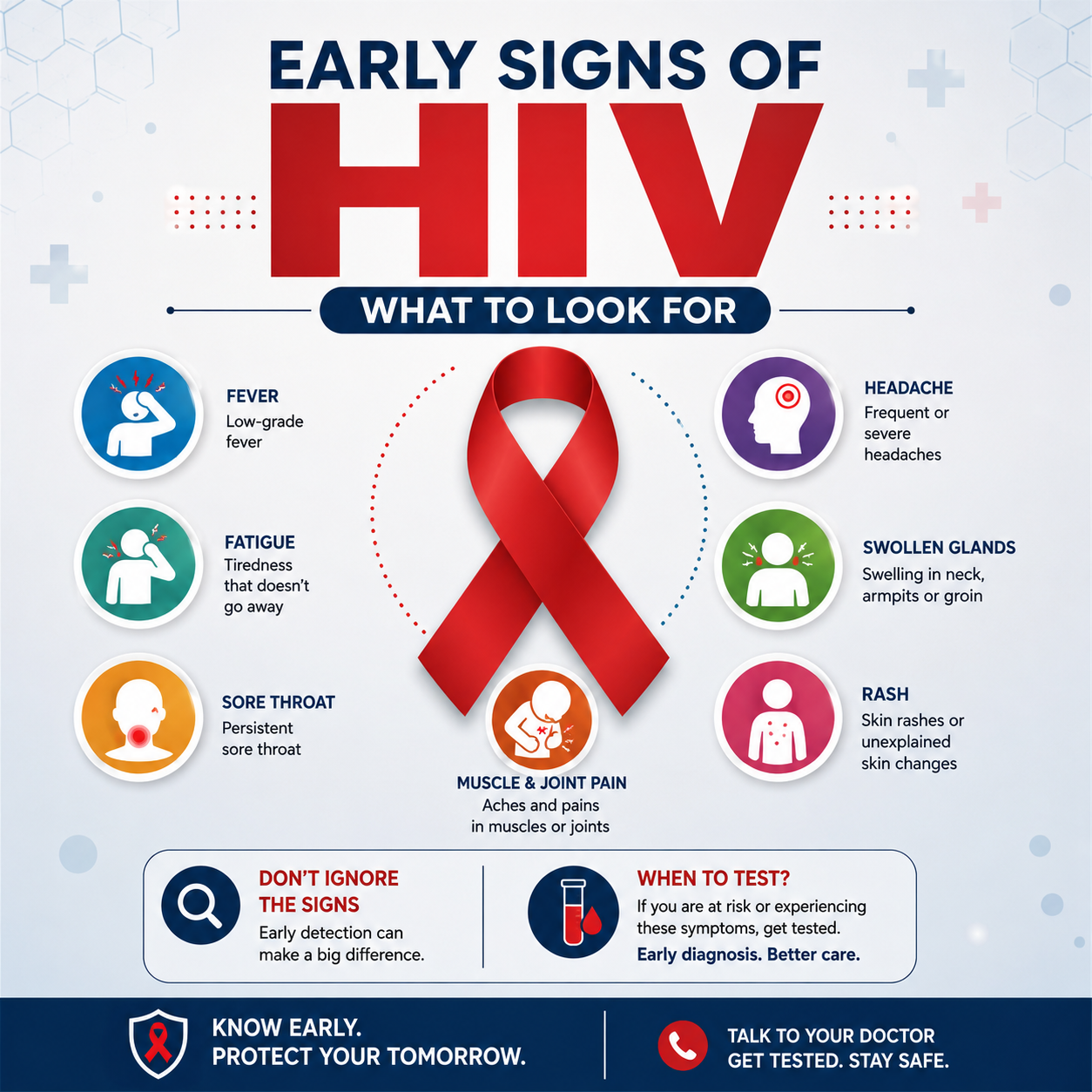
HIV causes night sweats at two stages: primary infection (2–4 weeks after exposure: sweats + fever + rash + swollen glands that resolve spontaneously and are labelled “viral fever”) and advanced HIV with low CD4 (sweats from opportunistic infections or direct viral immune activation).
Lymphoma
Drenching night sweats are a formal staging criterion in lymphoma (“B symptoms”). The classic triad: drenching night sweats + unexplained fever + unexplained weight loss of more than 10%. Hodgkin’s lymphoma often presents in young adults. Pel-Ebstein fever — cyclical weekly fever — is pathognomonic.
TB + HIV Co-Infection — Both Must Be Excluded Together
In a patient with drenching night sweats in India, TB and HIV must always be investigated simultaneously. HIV significantly increases TB risk (20-fold). TB is the leading cause of death in HIV-positive patients. A patient investigated for TB night sweats without HIV testing — and found to have TB — may be missing the underlying HIV that is allowing the TB to flourish. At IID Hospital, both are always excluded together.
Night Sweats That Need Specialist Assessment
Not all night sweats need investigation. But when any of the following apply, assessment at IID Hospital is warranted — the earlier the diagnosis, the better the outcome for TB, HIV, and lymphoma.
Drenching night sweats on most nights for 2+ weeks
Soaking through clothing and bedding, in a cool environment, without an obvious trigger — the clinical threshold for investigation.
Night sweats + unexplained weight loss
This combination — particularly with fever — is the B symptom triad of TB and lymphoma. Requires urgent assessment.
Night sweats + swollen lymph nodes
Firm, painless, non-tender lymph node enlargement with night sweats raises serious concern for TB, lymphoma, or HIV. Do not delay.
Night sweats + HIV risk exposure
Any potential HIV exposure in the past + night sweats = HIV test as the first step. Simple, confidential, and diagnostic.
Night sweats + persistent fever
Combined drenching sweats and fever persisting beyond 2 weeks = FUO-level investigation needed.
Night sweats in a household TB contact
If anyone in your household has TB and you are having night sweats: IGRA + GeneXpert assessment is mandatory, not optional.
Night sweats in immunocompromised patients
HIV, diabetes, steroids, chemotherapy — any night sweats in an immunocompromised patient need specialist assessment urgently.
Night sweats not explained by environment or menopause
If simple measures (cooler room, lighter bedding, stopping alcohol before bed) do not resolve the sweating — it is not physiological.
How Night Sweats Are Investigated
History — Characterise the Sweats
First consultationDuration, frequency, severity (drenching vs mild), sleeping environment (room temperature, bedding), associated symptoms (fever, weight loss, cough, fatigue, swollen glands), medications, alcohol use, anxiety, and most importantly — any potential TB exposure (household contact) or HIV risk exposure. The history directs the investigation.
First-Line Blood Tests and Imaging
Day 1CBC + differential (anaemia, lymphocytosis, atypical lymphocytes); ESR + CRP (elevated in TB, lymphoma, infection); LFT + RFT; HIV test (mandatory); Blood culture ×2 (if fever present); TSH + T3/T4 (hyperthyroidism); LDH + uric acid (lymphoma screen); Chest X-ray. These tests cover the most common and most important causes simultaneously.
TB Exclusion Protocol
TB: always first priorityGeneXpert MTB/RIF on two sputum samples — even without cough; IGRA (Interferon-Gamma Release Assay — blood test for TB sensitisation, more specific than TST in BCG-vaccinated patients); CT chest and abdomen (mediastinal lymphadenopathy, miliary TB, pleural/pericardial effusion, abdominal TB); FNAC or biopsy of enlarged lymph nodes with GeneXpert on the specimen if nodes are present. Normal CXR + negative GeneXpert sputum does NOT exclude TB — IGRA and CT are still needed.
Lymphoma and Malignancy Workup
If lymphadenopathy or B symptomsCT chest/abdomen/pelvis (lymphadenopathy, organomegaly, masses); serum protein electrophoresis + immunofixation (myeloma); peripheral blood film (leukaemia); PET-CT if lymphoma is suspected on clinical or CT grounds; lymph node biopsy for histological diagnosis (excisional biopsy preferred over core needle for lymphoma). LDH above 300 + night sweats + weight loss is lymphoma until proven otherwise.
Hormonal and Autoimmune Causes
Parallel assessmentWomen over 45: FSH, LH, oestradiol (menopausal status). All patients: ANA, anti-dsDNA (SLE); ferritin (very high >1000 in AOSD); RF + anti-CCP (RA with systemic features); ANCA panel (vasculitis). Brucella serology if animal or unpasteurised milk exposure. Autoimmune workup runs in parallel with infectious investigation — not sequentially.

What to Track Before Your Appointment
Tracking these for 1–2 weeks gives Dr. Savaj the clinical pattern that guides the investigation:
Bring All Previous Reports
Previous blood tests, imaging, and antibiotic prescriptions prevent repetition and provide context. Do not take new antibiotics before your appointment if fever is also present.
Patients Who Came With Night Sweats
I had drenching night sweats for 6 weeks. I thought it was the summer heat — but it continued even in an air-conditioned room. My family doctor said it was stress. Dr. Savaj sent a GeneXpert and IGRA on day 1. GeneXpert was positive — TB in a lymph node. I had no cough. My chest X-ray was normal. Without Dr. Savaj’s systematic approach I would have been told to manage stress indefinitely.
Night sweats, weight loss, and swollen glands for 2 months. Three doctors thought it was viral. Dr. Savaj ordered LDH, CT, and PET-CT alongside the TB workup. Hodgkin’s lymphoma — diagnosed at stage 2. I started chemotherapy within a week. Dr. Savaj told me early diagnosis made all the difference for my prognosis. He was right.
I had night sweats that I assumed were menopause. Dr. Savaj took a complete history, noted that I also had unexplained fatigue and a slightly swollen neck gland, and included TB and lymphoma workup alongside the hormonal tests. Found early-stage Non-Hodgkin’s lymphoma. The FSH confirmed I was perimenopausal — but that wasn’t the cause of the sweats. His thoroughness was life-saving.
Questions About Night Sweats
Answered by Dr. Pratik Savaj, FNB Infectious Diseases, IID Hospital, Surat.
Are night sweats always a sign of something serious?
How is TB related to night sweats?
Can night sweats be a sign of cancer?
Should I test for HIV if I have night sweats?
What is the difference between normal sweating and pathological night sweats?
What tests are done for unexplained night sweats?
Do menopausal hot flushes count as night sweats?
Are night sweats in children different from adults?
Drenching Night Sweats? Get Investigated.
No referral needed. Drenching night sweats over weeks — with or without fever, weight loss, or swollen glands — need structured specialist investigation. Dr. Pratik Savaj, FNB Infectious Diseases, IID Hospital, Lal Darwaja, Surat will systematically exclude TB, HIV, lymphoma, and other treatable causes.
MBBS · DNB Medicine · Fellowship ID
P.D. Hinduja Hospital, Mumbai