Dengue FeverCauses, Symptoms & Treatment
Dengue fever is a viral infection spread by the Aedes mosquito. It presents with sudden high fever, severe body and joint pain, a characteristic rash, and a falling platelet count. Most patients recover fully — but the critical phase (days 3–7) requires daily specialist monitoring to prevent severe dengue, which can be life-threatening without timely care.
What Is Dengue Fever?
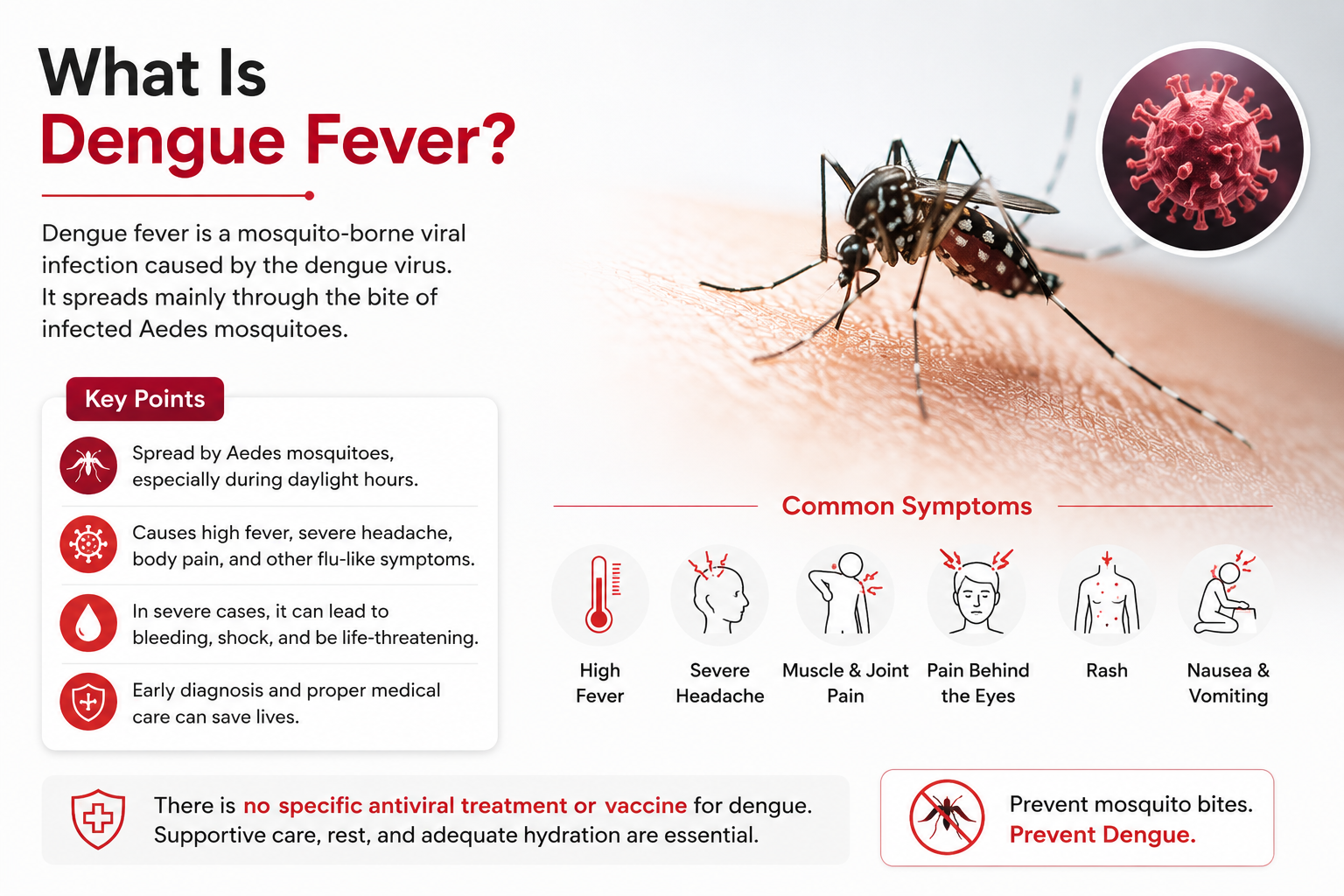
Dengue fever is caused by the dengue virus (DENV) — a flavivirus with four distinct serotypes (DENV-1, DENV-2, DENV-3, DENV-4). It is transmitted to humans through the bite of an infected Aedes aegypti or Aedes albopictus mosquito. Unlike the Anopheles mosquito that transmits malaria, the Aedes mosquito bites primarily during the day — especially in the early morning and late afternoon.
Dengue is the world’s fastest-spreading mosquito-borne viral disease. An estimated 390 million dengue infections occur annually worldwide — of which approximately 96 million are clinically apparent. India is one of the highest-burden countries, with large outbreaks occurring regularly during and after the monsoon season in Surat and Gujarat.
Having dengue once does not protect you from all four serotypes. A second dengue infection with a different serotype carries a higher risk of severe dengue — a phenomenon called antibody-dependent enhancement (ADE), where antibodies from the first infection can paradoxically worsen the second. This is why dengue vaccines are not recommended for dengue-naïve individuals.
Dengue Is NOT Contagious Between People
Dengue cannot spread directly from person to person. It requires a mosquito vector — specifically Aedes — to transmit between humans. However, a mosquito biting a dengue patient can then infect others, so mosquito control around the patient is important.

Dr. Pratik Savaj
FNB Infectious Diseases · IID Hospital, Surat
Dengue fever & tropical infection specialist
The 3 Phases of Dengue — Day by Day
Understanding which phase of dengue the patient is in determines what monitoring is needed and when to escalate to hospital. The fever breaking does not mean dengue is over — the critical phase often begins as the fever resolves.
Dengue illness timeline by day
Sudden high fever (39–40°C), severe headache, retro-orbital pain, severe myalgia and arthralgia (break-bone fever), nausea. Rash may appear. Platelet count begins to fall. Take only paracetamol — never aspirin or ibuprofen.
Fever often resolves — but this is the most dangerous phase. Platelet count drops fastest. Vascular leak may cause fluid in chest or abdomen. Risk of severe dengue and haemorrhage highest. Daily platelet monitoring mandatory.
Reabsorption of leaked fluids. Platelet count recovers. Characteristic recovery rash may appear (“islands of white in a sea of red”). Patient feels significantly better. Fluid overload is possible in this phase if excessive IV fluids were given earlier.
Typical Platelet Count Trend in Dengue (Schematic)
Note: This is a schematic representation. Actual platelet trends vary between patients. Daily monitoring with a specialist is essential during the critical phase.

Symptoms of Dengue Fever — What to Watch For
Dengue symptoms typically begin 4–10 days after the mosquito bite. The onset is usually sudden — patients often recall the exact day they felt unwell. Symptoms are caused by a combination of the virus itself and the body’s immune response to it.
Classic Dengue Symptoms (Days 1–3)
Why Dengue Is Called “Break-Bone Fever”
The severe muscle and joint pain in dengue is so intense that it feels as though bones are breaking — hence the historic name. This pain is one of the most reliable distinguishing features of dengue from other viral fevers. It is caused by the virus infecting muscles and by the immune response triggering inflammation throughout the body.
The Most Common Mistake in Dengue
When the fever breaks (usually around day 4–5), many patients feel they are recovering and stop monitoring. This is when the critical phase begins. The platelet count continues to fall for 24–48 hours after the fever resolves, and vascular leak peaks during this window. Never stop daily platelet monitoring just because the fever has broken.
Warning Signs of Severe Dengue — Seek Care Immediately
These warning signs indicate that dengue may be progressing to severe dengue (dengue haemorrhagic fever or dengue shock syndrome). Do not wait for these to worsen. Go to a specialist or emergency immediately.
Severe abdominal pain or tenderness
Intense stomach pain indicates fluid accumulation in the abdominal cavity (ascites) — a sign of severe dengue with significant plasma leakage.
Persistent vomiting (3+ times in 24 hours)
Prevents adequate oral hydration and may indicate worsening abdominal involvement. Can lead to dangerous dehydration during the critical phase.
Bleeding — from nose, gums, or in urine or stool
Bleeding from any site indicates severe thrombocytopenia or vascular compromise. Blood in vomit (haematemesis) or black tarry stool is particularly serious.
Platelet count below 20,000/mm³
At this level, spontaneous bleeding can occur. Hospitalisation is typically required for close monitoring and potential platelet transfusion if there are signs of active bleeding.
Cold or clammy skin, rapid breathing
Signs of dengue shock syndrome — a medical emergency. Indicates severe plasma leakage causing circulatory compromise. Requires immediate IV fluid resuscitation.
Extreme fatigue, restlessness, or confusion
Altered consciousness or unusual behaviour indicates cerebral involvement or severe haemodynamic compromise. Both require immediate assessment.
Difficulty breathing or chest pain
Fluid in the pleural cavity (pleural effusion) around the lungs causes breathlessness and chest pain — a sign of significant plasma leakage in dengue.
Reduced urine output
Oliguria (less than 0.5 mL/kg/hour of urine) indicates inadequate circulating blood volume due to plasma leakage — a pre-shock sign requiring urgent fluid management.
Any of these warning signs? Call immediately.
Do not wait for your next scheduled appointment. Call +91 92747 93759 or go directly to the nearest emergency. Severe dengue can deteriorate within hours. Early intervention is life-saving.
Dengue vs Malaria vs Chikungunya — How to Tell the Difference
All three are mosquito-borne fevers common in Surat and Gujarat. They can look similar clinically — but require completely different treatments. Accurate diagnosis with the right test is essential before any medication is given.
| Feature | Dengue Fever | Malaria | Chikungunya |
|---|---|---|---|
| Cause | Dengue virus (DENV 1–4) | Plasmodium parasite (P. falciparum, P. vivax) | Chikungunya virus (CHIKV) |
| Mosquito vector | Aedes aegypti / albopictus (day-biting) | Anopheles (night-biting) | Aedes aegypti / albopictus (day-biting) |
| Fever pattern | Continuous high fever for 5–7 days | Cyclical (every 48–72 hrs) with rigors and chills | High fever for 2–4 days, then resolves |
| Joint and muscle pain | Severe — “break-bone fever” | Moderate muscle aches | Very severe joint pain — may persist for months |
| Rash | Characteristic maculopapular rash (days 2–5) | Rare | Maculopapular rash common |
| Platelet drop | Yes — significant, key diagnostic feature | Anaemia more prominent than thrombocytopenia | Mild platelet drop only |
| Main danger | Severe dengue, haemorrhage, shock | Cerebral malaria (falciparum), multi-organ failure | Prolonged debilitating joint pain (post-CHIK arthritis) |
| Diagnostic test | NS1 antigen (days 1–5), IgM (from day 5) | Blood smear microscopy, RDT | Chikungunya IgM serology |
| Treatment | Supportive care, platelet monitoring. No antivirals. | Anti-malarial drugs (based on species and sensitivity) | Supportive care. NSAIDs for joint pain (after dengue excluded). |
| Travel history changes? | Less dependent on travel | Yes — always assess travel to endemic region | Less dependent on travel |
| Key mistake | Taking aspirin or ibuprofen — increases bleeding risk | Delaying diagnosis — falciparum can be fatal within 24–48 hours | Confusing with dengue — giving wrong treatment |
Co-infection Is Possible
Dengue and malaria can co-exist in the same patient — and in Surat during monsoon season, both are circulating simultaneously. A positive NS1 for dengue does not rule out malaria. If a patient has travelled to a malaria-endemic area, both tests must be performed regardless of the NS1 result.
How Dengue Is Diagnosed — The Right Test at the Right Time
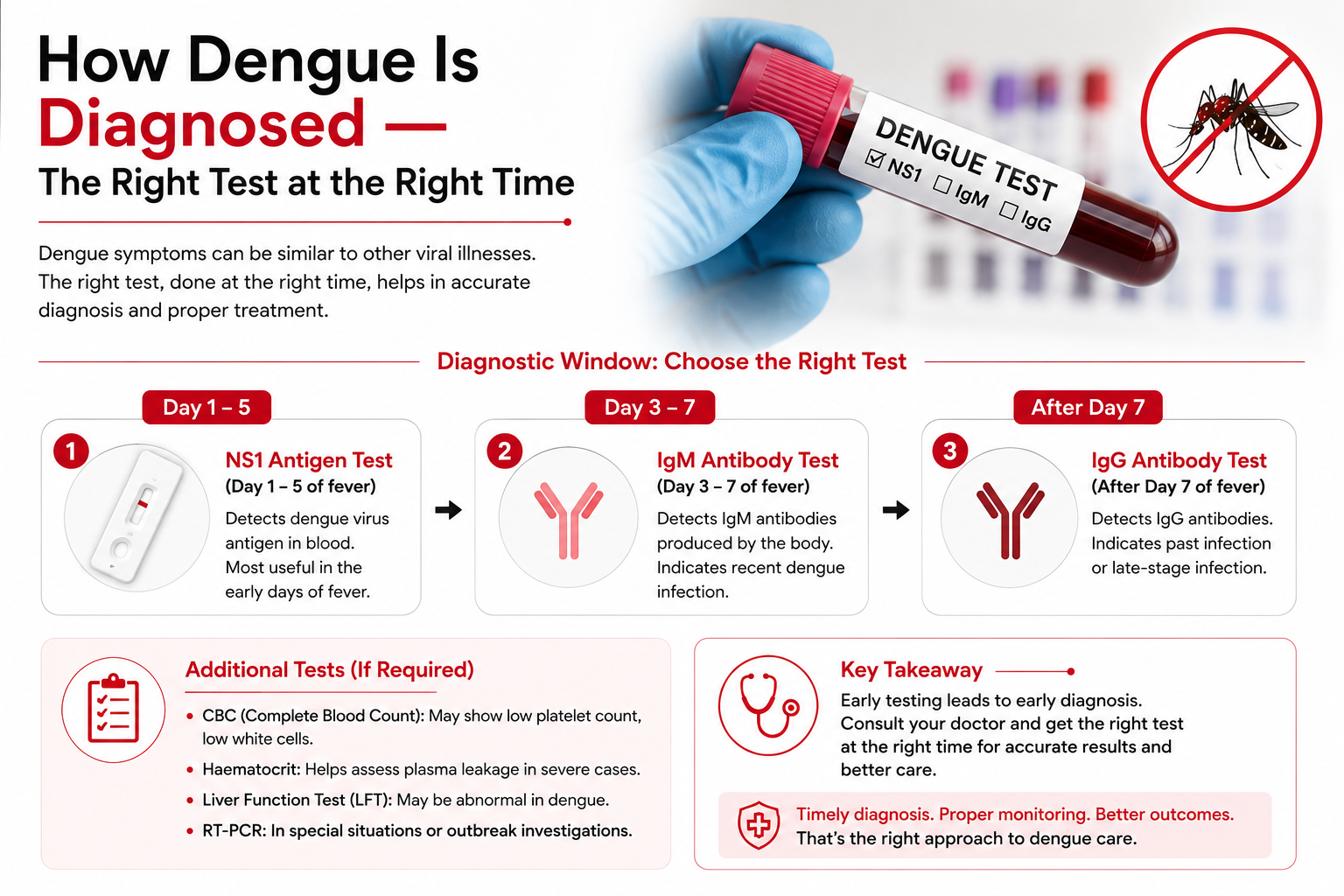
NS1 Antigen Test (Days 1–5)
Best early testThe NS1 (Non-Structural Protein 1) antigen is released by the dengue virus into the blood during active viral replication. It is detectable from day 1 of fever and remains positive for approximately 5 days. NS1 is the most sensitive and specific test in the early febrile phase. A positive NS1 confirms dengue — no further dengue tests are needed. A negative NS1 after day 5 does not rule out dengue — switch to IgM. Available as rapid test (result in 20 minutes) or ELISA (more sensitive, laboratory-based).
Dengue IgM Antibody (From Day 5)
From day 5 onwardsIgM antibodies against dengue virus appear in blood from approximately day 5 of illness and persist for several months. IgM becomes the test of choice after NS1 may have turned negative. A positive dengue IgM confirms recent dengue infection. IgM may also be weakly positive in primary dengue from day 3–4 — so sometimes both NS1 and IgM are run together for maximum sensitivity in borderline cases.
Dengue IgG Antibody
Past infection / secondary dengueIgG antibodies appear later (from day 7–10 in primary infection, from day 1–2 in secondary infection) and persist for life. A high IgG alongside IgM indicates secondary dengue (a second dengue infection with a different serotype) — which carries a higher risk of severe dengue than primary infection. IgG alone (without IgM) indicates past dengue, not current infection.
Daily Complete Blood Count (CBC)
Mandatory during critical phaseDaily CBC during the critical phase (days 3–7) is not a diagnostic test — it is a monitoring tool that determines management decisions. The platelet count and haematocrit (haemoconcentration) are the two most important values. Rising haematocrit alongside falling platelet count signals plasma leakage — the hallmark of dengue haemorrhagic fever. Dr. Savaj reviews daily CBC results at IID Hospital to guide whether hospital admission is needed.
Dengue RNA PCR (Molecular Testing)
Most sensitive, specialist useDengue RT-PCR detects dengue viral RNA in blood and can confirm the diagnosis from day 1 — earlier than any antigen or antibody test. It can also identify the specific serotype (DENV 1–4), which has implications for prognosis (secondary dengue with a different serotype = higher severe dengue risk). PCR is more expensive and less widely available than NS1/IgM tests, so it is used selectively in uncertain cases or for epidemiological surveillance.
Test Detection Windows in Dengue
Which test to order?
Days 1–5: NS1 antigen first. After day 5: Dengue IgM. If in doubt: order both NS1 and IgM together. Never rely on IgG alone for acute diagnosis.
How Dengue Is Treated — Do’s and Don’ts
There is no specific antiviral treatment for dengue. Management is supportive — maintaining fluid balance, controlling fever safely, monitoring platelet count daily, and recognising warning signs early enough to prevent severe dengue. The treatment decisions are driven by the phase of dengue, the platelet count trend, and the presence or absence of warning signs.
When Is Hospitalisation Needed?
Hospitalisation is indicated for: any warning sign present, platelet below 20,000/mm³, rising haematocrit (haemoconcentration), significant vomiting preventing oral hydration, or if the patient cannot reliably follow up daily. Dr. Savaj makes this decision based on the clinical picture and daily CBC — not platelet count alone.

How to Prevent Dengue — Mosquito Control and Personal Protection
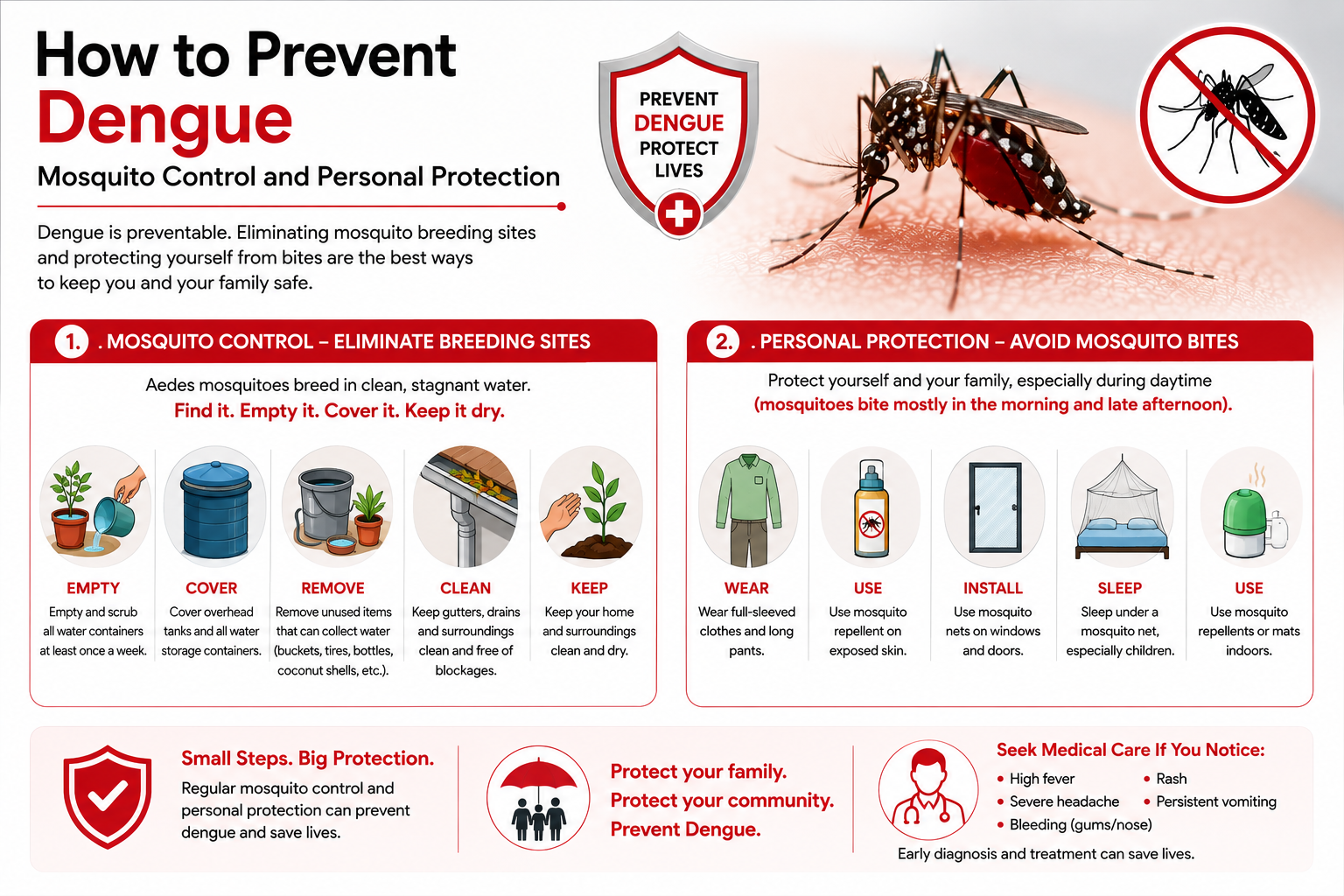
There is no dengue-specific antiviral treatment — prevention is critical. The Aedes mosquito breeds in clean, stagnant water and bites during the day. Prevention requires a combination of personal protection and eliminating mosquito breeding sites.
Eliminate Breeding Sites Weekly
Aedes mosquitoes breed in clean, stagnant water. Empty, clean, or cover all water containers around the home every week — coolers, flower pots, tyres, buckets, birdbaths. A single small container of stagnant water is sufficient for breeding. This is the single most effective community prevention measure.
Personal Protection — Clothing and Repellent
Since Aedes bites during the day, wear full-sleeved clothes, long trousers, and socks during peak biting hours (morning and late afternoon). Use DEET-based mosquito repellents on exposed skin and clothing. Repellents with at least 20% DEET provide several hours of protection.
Mosquito Nets and Screens
Sleep under mosquito nets — particularly for children and during rest periods in the day. Install fine-mesh wire screens on windows and doors to prevent mosquito entry. Insecticide-treated nets (ITNs) provide additional protection. This is particularly important for dengue patients to prevent mosquitoes biting them and infecting others.
Community Mosquito Control
Participate in municipal dengue prevention drives. Report standing water in common areas (drains, construction sites) to local authorities. During outbreak periods in Surat, municipal fogging operations help reduce adult mosquito populations — keep windows open during fogging to allow insecticide to enter.
Early Diagnosis Protects Others
A person with dengue is infectious to mosquitoes for about 5 days after fever onset. Dengue patients should use mosquito nets and repellents to prevent Aedes mosquitoes from biting them and then transmitting the virus to household members or neighbours. Isolating the patient from mosquitoes is a crucial community protection measure.
Dengue Vaccine — Consult Your Specialist
Dengvaxia (CYD-TDV) is approved for ages 9–45 years with confirmed prior dengue infection. It is not recommended for dengue-naïve individuals. TAK-003 (Qdenga) is a newer vaccine with better safety in dengue-naïve individuals, approved in some countries. Discuss vaccine options with Dr. Savaj if you live in or travel frequently to dengue-endemic areas.
Estimated dengue infections worldwide every year
India is one of the highest dengue-burden countries in the world. Dengue is endemic in India — occurring year-round in the south and west, with a major seasonal peak during and after the monsoon (July–November) when Aedes mosquito breeding reaches its maximum. Surat and the rest of Gujarat experience significant dengue outbreaks every monsoon season.
In Surat, the combination of dense urban housing, significant standing water during monsoon, and warm humid temperatures creates ideal conditions for Aedes mosquito proliferation. The months of August through October carry the highest dengue risk in Surat. During outbreak periods, dengue should be the first diagnosis considered in any patient with fever in Surat.
High-Risk Periods in Surat
After any significant rainfall in Surat, dengue cases increase 2–3 weeks later as mosquito populations peak. Any fever during monsoon season in Surat should be tested for dengue on day 1 — NS1 antigen testing from the first day of fever allows early diagnosis and early monitoring before the critical phase begins.

What Patients Say About Dr. Pratik Savaj
My platelet count crashed to 18,000 on day 5. Dr. Savaj monitored me daily, called personally, and told me exactly when I needed hospitalisation and when I didn't. His precision got me through dengue without unnecessary admission.
Severe abdominal pain on day 4. Dr. Savaj saw me the same day, identified warning signs immediately, and arranged admission. His speed was critical. I recovered fully under his monitoring.
My wife had dengue in her second trimester. Dr. Savaj coordinated with our OB and managed both mother and baby safely. His knowledge of dengue in pregnancy gave us enormous reassurance.
Three of us had dengue the same week. Dr. Savaj managed all three simultaneously with individualised monitoring, always available on WhatsApp. The personalised care was exceptional.
Two doctors said viral fever. Dr. Savaj ran NS1 on day 3, confirmed dengue, and started proper monitoring immediately. The correct early diagnosis made all the difference.
Dr. Savaj explained the dengue phases clearly — febrile, critical, recovery. Knowing what to expect removed the anxiety. His communication is as good as his clinical care.
Frequently Asked Questions
About Dengue Fever
Answered by Dr. Pratik Savaj, FNB Infectious Diseases — IID Hospital, Vesu, Surat.