MalariaCauses, Symptoms, Diagnosis & Treatment
Malaria is a life-threatening parasitic infection transmitted by the Anopheles mosquito. Unlike dengue, malaria has specific antiparasitic treatments that are highly effective when given early. The key is rapid, accurate species identification — because P. falciparum malaria is a medical emergency while P. vivax requires a different treatment to prevent relapse.
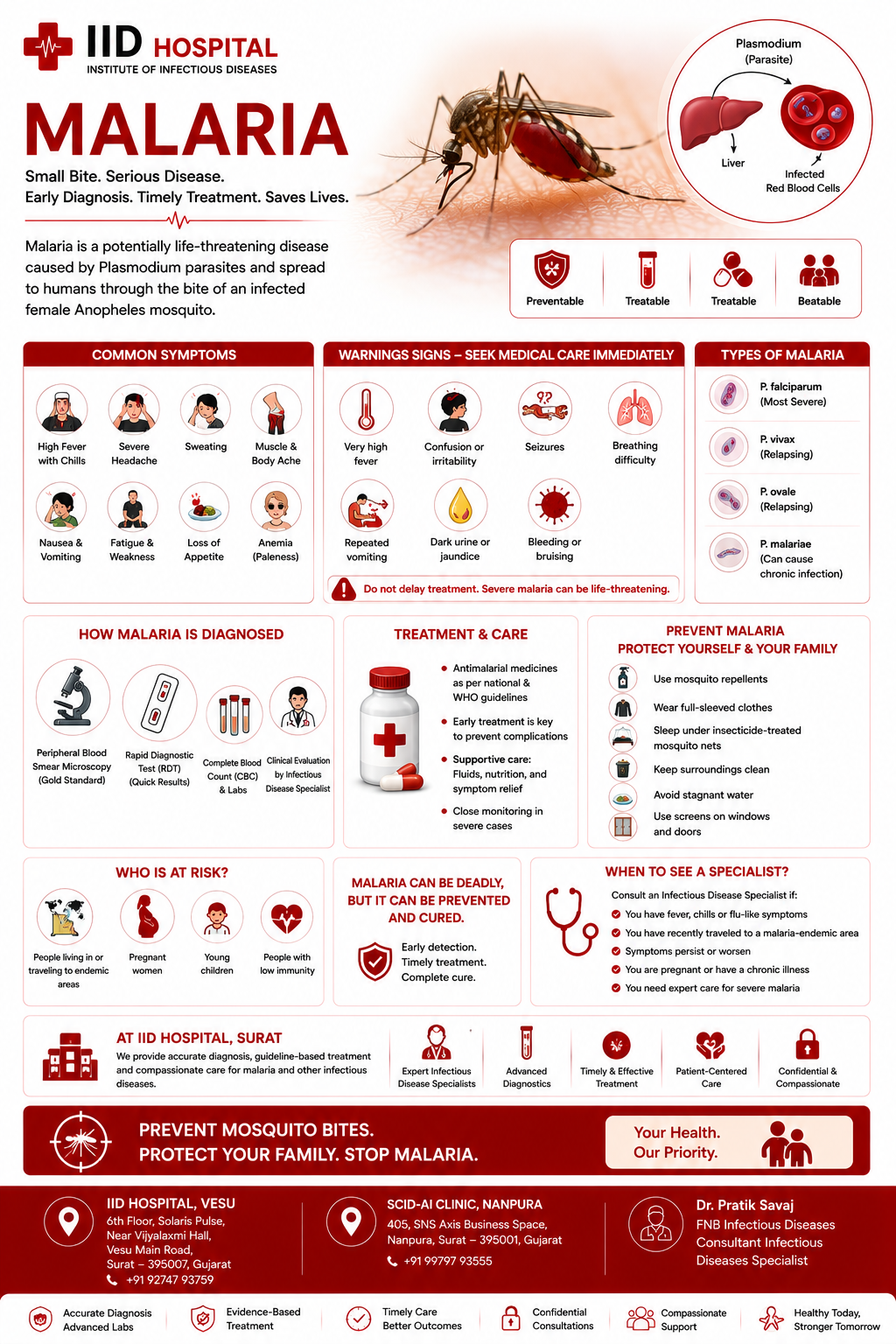
annually (NVBDCP 2023)
What Is Malaria — and Why Does the Species Matter?
Malaria is caused by Plasmodium parasites transmitted by the female Anopheles mosquito. There are five species that infect humans — four are clinically significant in India. Species identification is essential before treatment, because treatment regimens differ and only some species can relapse from a dormant liver stage.
Falciparum
Plasmodium falciparum
Vivax
Plasmodium vivax
Ovale
Plasmodium ovale
Malariae
Plasmodium malariae
Why Species Identification Cannot Be Skipped
Treating vivax malaria with only chloroquine without radical cure (primaquine) leaves hypnozoites in the liver — the patient will relapse. Treating falciparum with chloroquine fails because resistance is widespread in India. Every malaria case must have species identified by blood smear, PCR, or species-specific RDT before treatment begins.
How Malaria Works — The Parasite Life Cycle
Understanding the malaria life cycle explains why symptoms occur when they do, why fever is cyclical, why some species relapse, and why combination drug therapy is needed to block the parasite at multiple stages.
1. Mosquito Bite
Infected Anopheles female injects sporozoites into human bloodstream during a blood meal
Minutes2. Liver Stage
Sporozoites infect liver cells and multiply silently. P. vivax/ovale form dormant hypnozoites — no symptoms
7–30 days3. Red Blood Cell Invasion
Merozoites released from liver invade red blood cells and multiply inside them over 48–72 hours
48–72 hrs/cycle4. RBC Rupture — Fever
All infected RBCs burst simultaneously, releasing merozoites + toxins. This synchronised release causes the fever and rigors episode
Each cycle5. Gametocytes
Some merozoites develop into gametocytes — taken up by a mosquito during its next blood meal to restart the cycle
TransmissionScroll right to see the full life cycle —
Why This Matters for Treatment
Artemisinin-based drugs (in ACT) kill the blood-stage parasites rapidly — resolving fever within 24–48 hours. But they do not eliminate hypnozoites in the liver (vivax/ovale). Only primaquine or tafenoquine can eliminate hypnozoites. This two-stage treatment approach is why malaria treatment requires specialist guidance — getting it right the first time prevents relapse.
Symptoms of Malaria — Classic, Severe, and Atypical Presentations
The classic malaria presentation is a cyclical fever with rigors and sweating. However, P. falciparum frequently presents atypically — without the classic fever cycle — which is why it is often confused with other fevers and diagnosis is delayed. Any fever after travel to a malaria-endemic area is malaria until proven otherwise.

The Most Common Reason Malaria Is Missed
Falciparum malaria frequently does not present with the classic cyclical fever pattern. It can mimic any undifferentiated febrile illness. In any patient with fever who has travelled to or lives in a malaria-endemic area — malaria must be excluded by blood smear or RDT before any other diagnosis is made, regardless of the fever pattern.
Severe Falciparum Malaria — A Medical Emergency
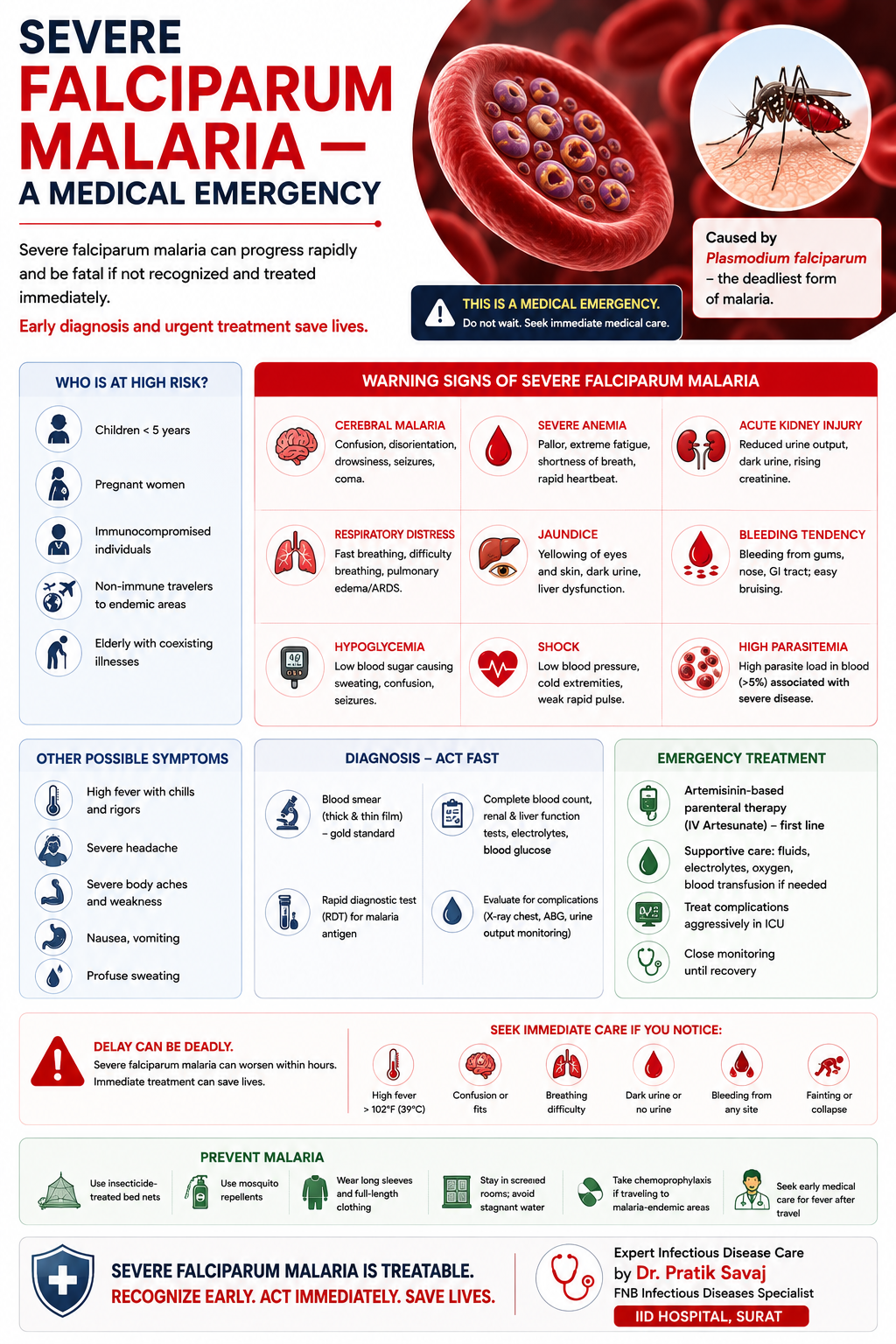
Severe malaria is almost exclusively caused by P. falciparum. It occurs when parasites sequester in blood vessels of vital organs — particularly the brain, kidneys, and lungs — causing organ dysfunction and failure. Without immediate IV artesunate treatment, severe malaria carries a mortality rate of 15–20% even with hospitalisation.
Severe malaria can develop rapidly — within hours of the first symptoms. A patient who appears to have mild malaria in the morning can develop cerebral malaria by evening. This is why falciparum malaria requires immediate specialist assessment and treatment, not a wait-and-watch approach.
The WHO criteria for severe malaria include any of the following features, each of which warrants immediate hospitalisation and IV artesunate:
Cerebral Malaria
Impaired consciousness or unarousable coma not explained by another cause. Caused by sequestration of parasitised RBCs in cerebral blood vessels, blocking blood flow. The most feared complication — mortality 15–25% even with treatment. Requires IV artesunate + intensive care.
Severe Anaemia
Haemoglobin below 7 g/dL with parasitaemia. Caused by massive destruction of both parasitised and non-parasitised RBCs, plus bone marrow suppression. More common in children and pregnant women. Blood transfusion may be required.
Acute Kidney Injury
Serum creatinine above 265 μmol/L or urine output less than 400 mL/24 hours. Dark “cola-coloured” urine (blackwater fever) indicates haemoglobinuria from massive RBC haemolysis. Renal dialysis may be required.
Pulmonary Oedema / ARDS
Fluid accumulation in the lungs causing respiratory failure. Can occur even as parasite counts are falling with treatment. One of the leading causes of death in severe malaria. Requires intensive respiratory support.
High Parasite Count (Hyperparasitaemia)
More than 5% of RBCs parasitised (or above 10,000 parasites/μL in some guidelines). High parasite density predicts rapid progression to organ failure and indicates need for immediate IV artesunate even without other severity criteria.
Hypoglycaemia
Blood glucose below 2.2 mmol/L (40 mg/dL). Caused by the parasite consuming glucose and by the release of insulin-stimulating cytokines. Particularly dangerous in children and pregnant women. Can be worsened by quinine treatment.
How Malaria Is Diagnosed — Tests and Species Identification
Blood Smear Microscopy
Gold standard · Species + densityThick and thin blood film examination under microscopy is the gold standard for malaria diagnosis. The thick film is used to detect parasites (more sensitive — concentrates blood), while the thin film is used to identify the species and count parasite density. Performed by an experienced microscopist, it can detect as few as 5–10 parasites per μL of blood and provides species identification and quantification essential for management decisions. A skilled microscopist is essential — poorly performed smears miss low-density infections. A single negative smear does not rule out malaria — repeat every 12–24 hours in high clinical suspicion.
Malaria Rapid Diagnostic Test (RDT)
Rapid · No microscopy neededMalaria RDTs detect specific malaria antigens in blood — typically HRP2 (P. falciparum-specific) and pLDH (pan-malaria, detects all species). Results available in 15–20 minutes without laboratory equipment. Sensitivity approximately 90–95% for falciparum and 75–90% for vivax at clinically significant parasite densities. RDTs are the primary diagnostic tool in settings without microscopy access. A positive RDT should be confirmed by smear where possible to assess parasite density. A negative RDT does not rule out malaria in high-suspicion cases — repeat smear and RDT if symptoms persist.
Malaria PCR (Molecular Diagnosis)
Most sensitive · Species confirmationMalaria PCR detects Plasmodium DNA in blood and can identify species with high sensitivity even at very low parasite densities (below the threshold detectable by smear or RDT). PCR is particularly useful for: confirming species in mixed infections (falciparum + vivax co-infection), diagnosing low-density parasitaemia after partial treatment, species confirmation where smear and RDT disagree, and epidemiological surveillance. It is more expensive and takes longer than smear or RDT, so it is used selectively in clinically uncertain cases.
G6PD Testing Before Primaquine
Mandatory before radical curePrimaquine — the drug used for radical cure of vivax malaria (eliminating liver-stage hypnozoites) — causes severe haemolytic anaemia in G6PD-deficient individuals. G6PD (Glucose-6-Phosphate Dehydrogenase) deficiency is common in India, particularly in tribal and coastal populations. G6PD testing must be performed before primaquine is prescribed for any patient with vivax or ovale malaria. If G6PD-deficient, a supervised weekly primaquine regimen or tafenoquine may be considered with careful monitoring. Skipping G6PD testing before primaquine is a serious medical error.
Supporting Investigations
Severity assessmentFull blood count (anaemia, thrombocytopenia), renal function (creatinine, urea), liver function (bilirubin, transaminases), blood glucose, lactate, and chest X-ray are needed in all confirmed malaria cases to assess severity and guide management. Parasite density (% RBCs parasitised) on the blood smear is particularly important in falciparum — above 5% indicates severe malaria requiring IV treatment regardless of other symptoms.
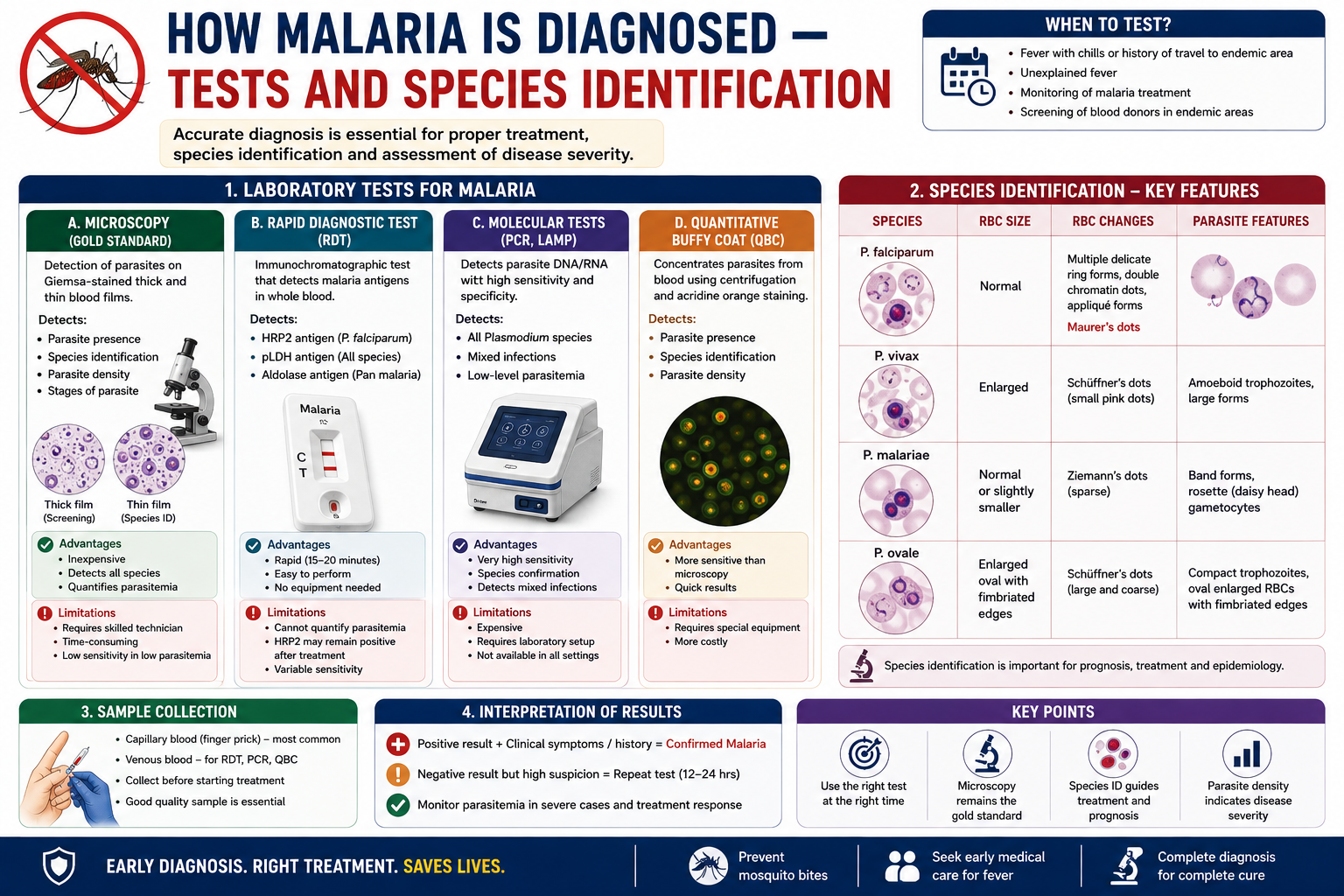
Blood Smear vs RDT — Quick Comparison
Best practice at IID Hospital
Both smear and RDT are ordered simultaneously. RDT gives rapid result while smear confirms species and parasite density. A single negative result never rules out malaria in a symptomatic patient with travel history.
Treatment of Malaria — Species-Based Regimens
Malaria treatment is species-specific. The wrong treatment can lead to treatment failure (chloroquine for chloroquine-resistant falciparum) or relapse (treating vivax without radical cure). All antimalarial drugs should be prescribed by a specialist after species confirmation.
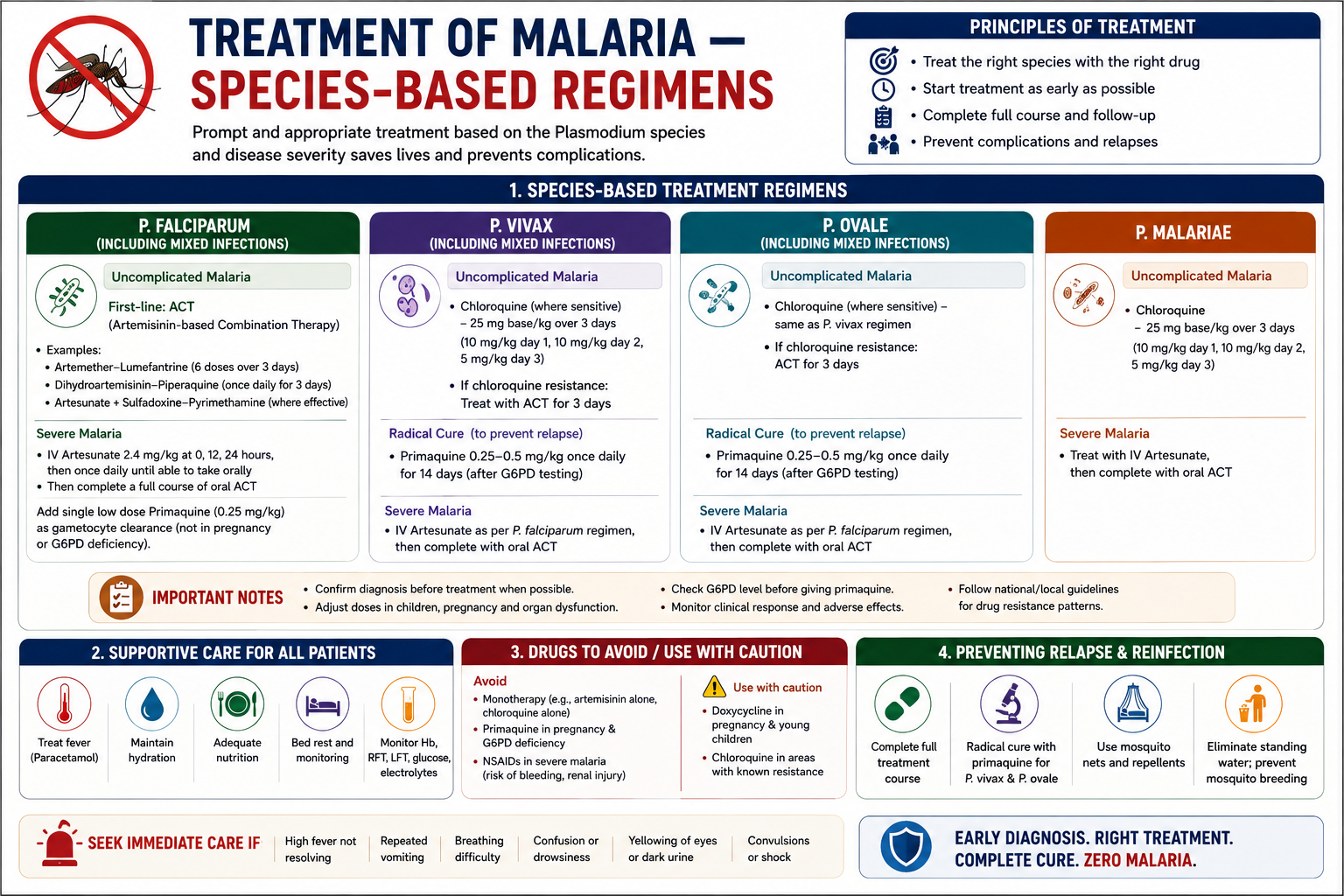
Uncomplicated Falciparum
Chloroquine-resistant — ACT required
Vivax — Two-Stage Treatment
Blood stage + radical cure essential
Severe Malaria — IV Artesunate
Medical emergency — ICU required
Malaria Chemoprophylaxis
For travellers to endemic regions
Malaria Burden in India — Where, When, and Who Is at Risk
India accounts for approximately 2% of the global malaria burden — but with 1.4 billion people, this represents a very significant absolute number. The Indian states with the highest malaria burden are Odisha, Jharkhand, Chhattisgarh, Madhya Pradesh, and the northeast. Gujarat has a lower but significant malaria burden, particularly in tribal and rural areas with poor vector control.
In Surat, malaria is most prevalent during and after the monsoon season (July–November) when Anopheles mosquito breeding peaks in standing water. Surat’s dense migrant worker population — many from high-malaria-burden states — contributes to importation of both falciparum and vivax malaria throughout the year.
Post-Travel Fever — When to Seek Urgent Assessment
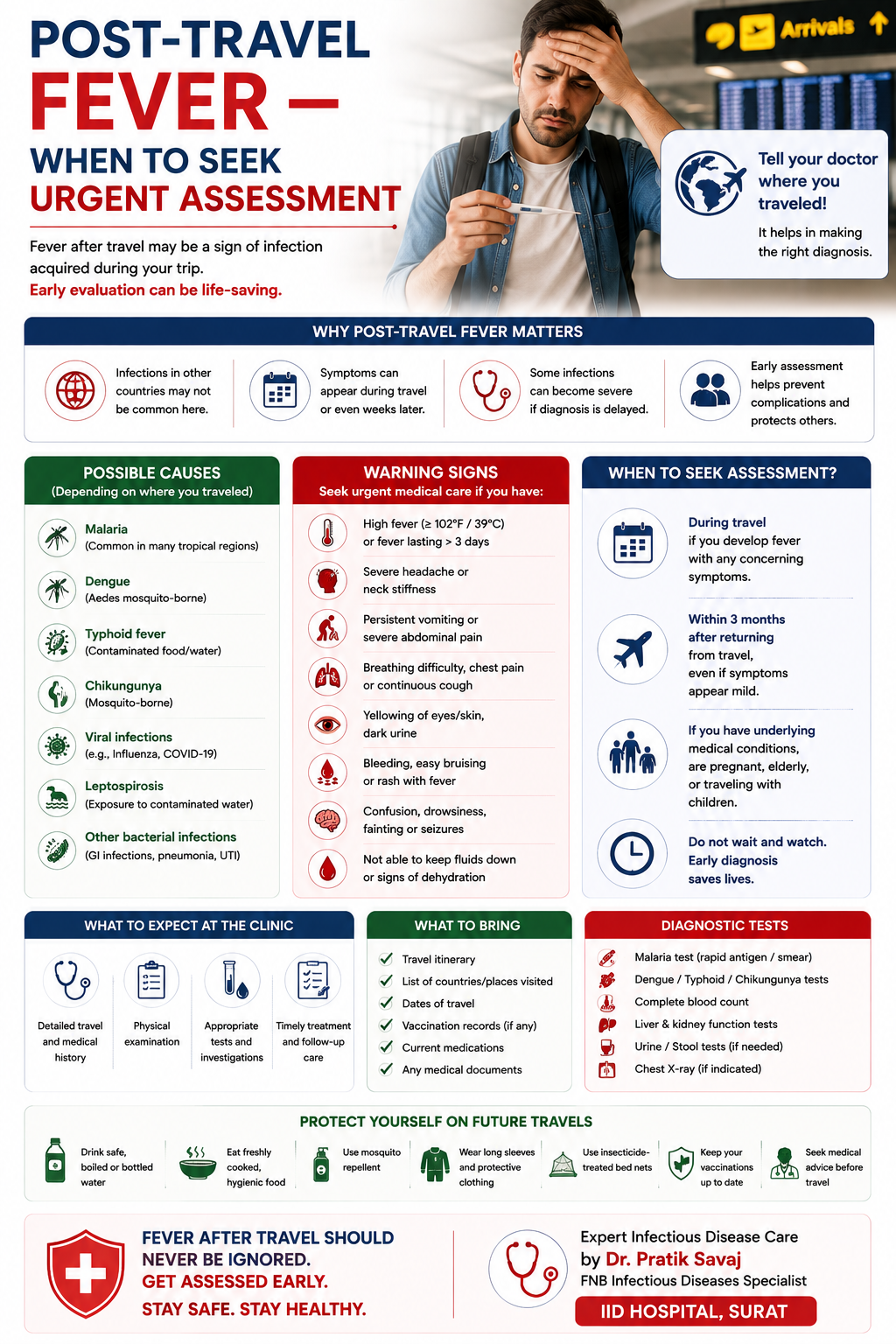
Fever starts — assess immediately
Any fever within weeks of returning from a malaria-endemic region must be assessed within 24 hours. Falciparum malaria can deteriorate to cerebral malaria within 24–48 hours. Call +91 92747 93759 immediately — do not wait for a scheduled appointment.
Incubation period for falciparum
P. falciparum malaria typically presents 7–14 days after the infecting mosquito bite. Most cases present within 30 days of travel. However, falciparum can present up to 3 months after travel in patients on partial chemoprophylaxis.
Vivax relapse — can appear months later
P. vivax malaria can present months or even years after travel due to hypnozoite reactivation in the liver. If you have had vivax malaria in the past and develop fever again — even without recent travel — malaria relapse must be excluded. A history of prior malaria is always relevant.
Tell your doctor your travel history
Always mention travel history at every medical consultation. Many cases of malaria are delayed in diagnosis because patients do not mention travel, or doctors do not ask. Travel to any malaria-endemic area in the last 3 months makes malaria a priority diagnosis in any fever illness.
What Patients Say About Dr. Pratik Savaj
I came back from Rajasthan with high fever, chills, and severe sweating. Dr. Savaj ran a rapid test and blood film the same day — confirmed P. vivax. He started treatment immediately and I was fever-free in 48 hours. His systematic approach gave me complete confidence.
I developed severe malaria with confusion and low platelet count. Dr. Savaj managed the case with IV artesunate and intensive monitoring, coordinating everything between specialties. His experience with severe cases was critical to my recovery.
Three doctors missed my diagnosis. Dr. Savaj ordered a thick blood smear and identified P. falciparum — a potentially fatal form. He acted fast, explained every step, and monitored me daily through treatment. Early diagnosis saved my life.
I had malaria at 28 weeks. Dr. Savaj chose pregnancy-safe treatment, coordinated with my obstetrician, and monitored both my haemoglobin and foetal wellbeing throughout. His expertise in this rare situation was exactly what we needed.
I had P. vivax relapse three times with other doctors. Dr. Savaj completed a proper radical cure with primaquine after checking my G6PD level. I have been relapse-free for 18 months. The correct complete treatment made all the difference.
I developed fever a week after returning from a malaria-endemic region. Dr. Savaj diagnosed and treated me quickly. He also explained malaria prevention for my next trip in detail. I now see him before every international trip.
Frequently Asked Questions
About Malaria
Answered by Dr. Pratik Savaj, FNB Infectious Diseases — IID Hospital, Vesu, Surat.