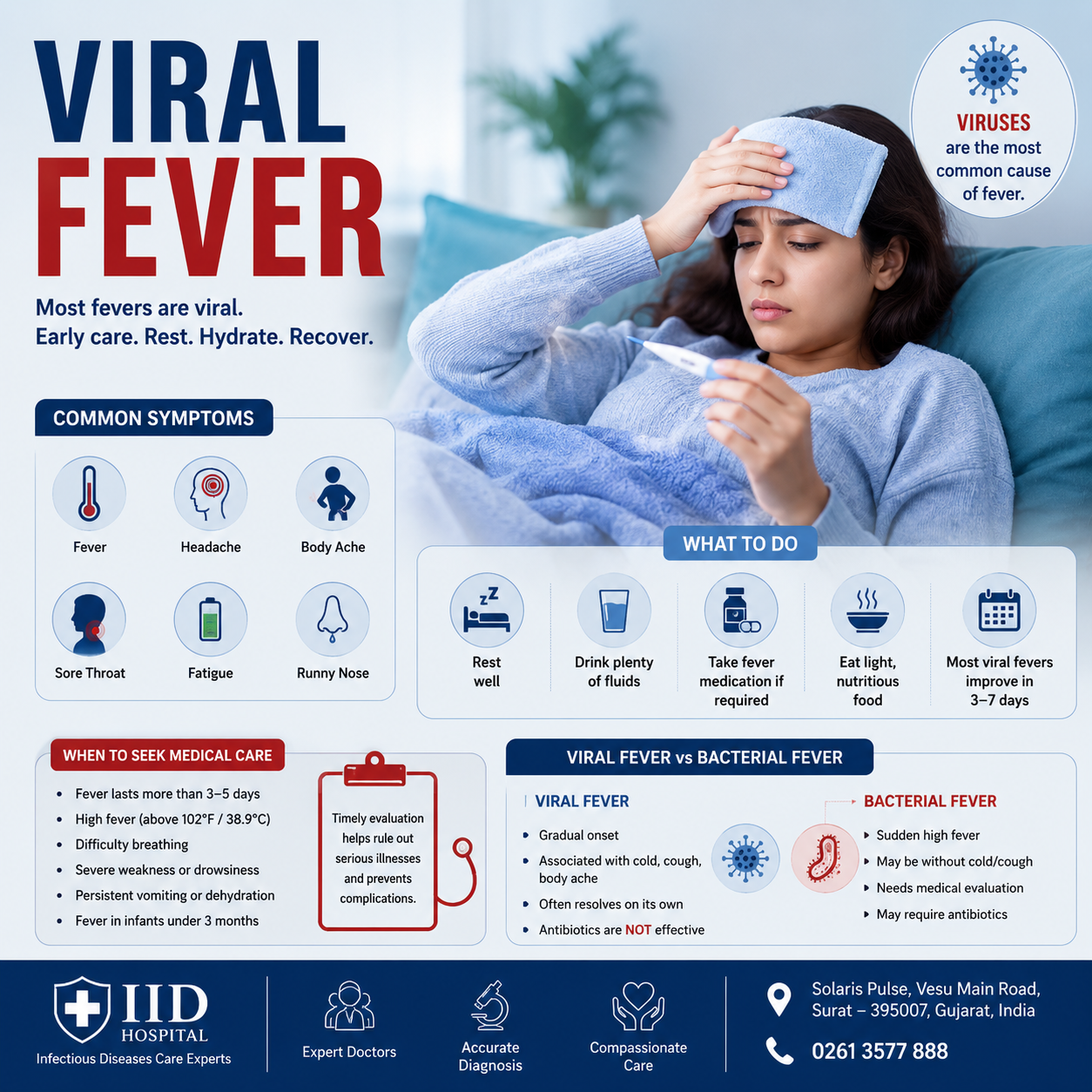
Viral FeverWhen to Wait. When to Worry.
Viral fever is the most common reason adults visit a doctor in India. Most viral fevers are self-limiting and resolve in 3–5 days without antibiotics. But in Surat during monsoon season, fever that looks viral may be dengue, malaria, or typhoid. Knowing when to wait, when to test, and when to seek specialist care is the most important knowledge any patient can have.
What Is Viral Fever?
“Viral fever” is not a specific diagnosis — it is a clinical description of fever caused by a viral infection. The term covers hundreds of different viruses that produce fever as their primary symptom: influenza, adenovirus, rhinovirus, enteroviruses, parainfluenza, EBV, CMV, and many others. What they share is that they all cause the same basic immune response — fever, body ache, fatigue, and often runny nose or sore throat — and that none of them respond to antibiotics.
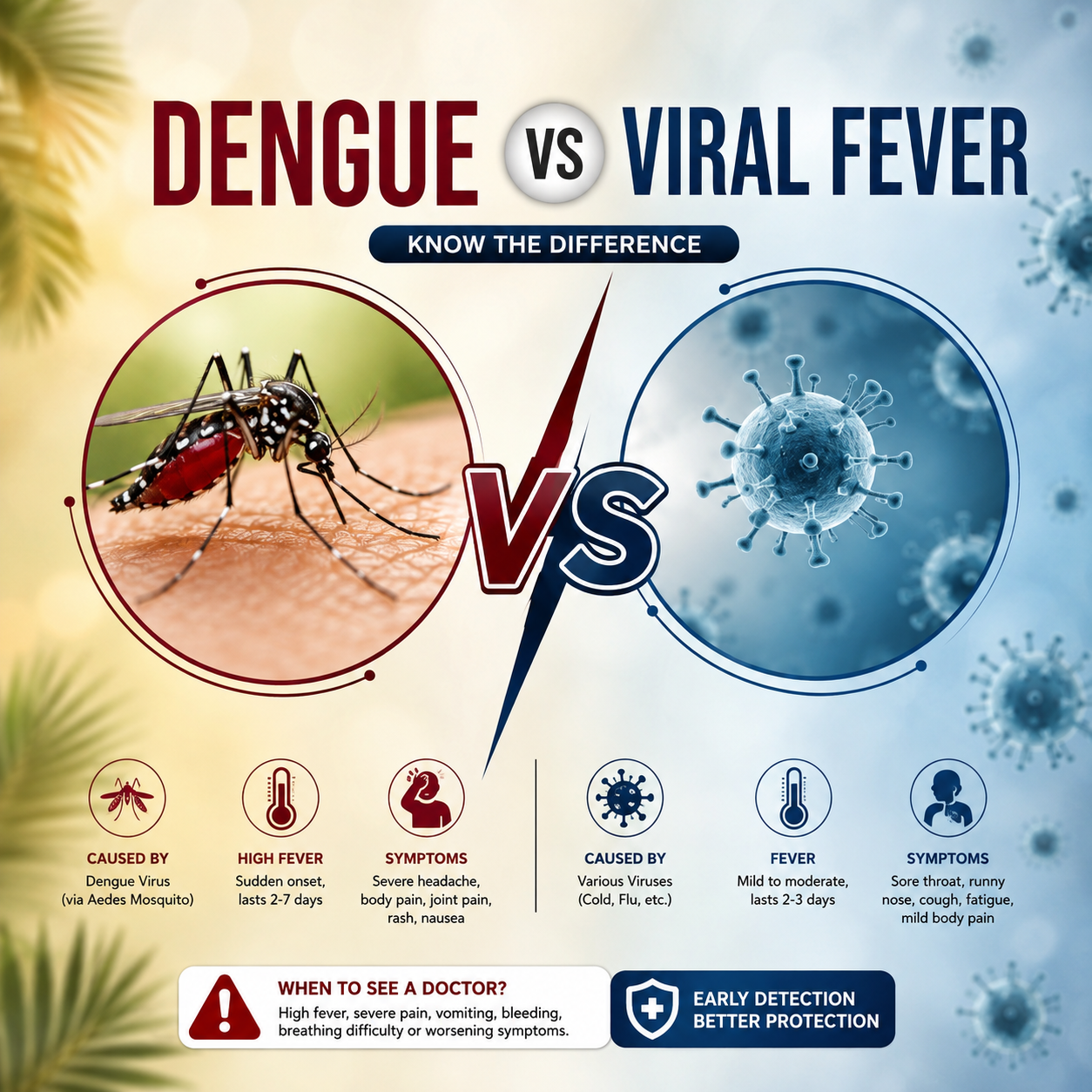
The clinical challenge in Surat is that specific dangerous infections — dengue, malaria, typhoid, chikungunya — all start as a fever that looks exactly like viral fever in the first 1–2 days. This is why the decision of whether to investigate a fever or simply manage it symptomatically requires clinical judgment, not just the label “viral fever”.
What Causes Viral Fever?
Fever is not the disease — it is the body’s immune response to a virus. When a virus infects the body, immune cells release pyrogens — chemical signals that tell the hypothalamus (the brain’s thermostat) to raise body temperature. A fever above 37.5°C is the body actively fighting infection. Most viral fevers are self-limiting because the immune system clears the virus within 3–7 days.
Why Viral Fever Resolves Without Antibiotics
Antibiotics work only against bacteria — they have zero effect on viruses. Viral fever resolves because the immune system produces virus-specific antibodies and cytotoxic T-cells that neutralise and eliminate the virus. This process takes 3–7 days for most common viral infections. No drug shortens this process significantly — treatment is supportive while the immune system does its work.
The Problem: “Viral Fever” Is Also How Dengue Starts
In the first 24–48 hours, dengue fever, malaria, and typhoid all look like viral fever. The differentiation becomes apparent over time — dengue develops severe body pain and platelet drop, malaria develops cyclical rigors, typhoid develops abdominal symptoms. The clinical risk in Surat is diagnosing everything as “viral fever” and missing a specific treatable or dangerous infection.
Viruses That Cause Fever in India
Different viruses produce fever with different associated symptoms and severity. Recognising the pattern of associated symptoms alongside fever — rather than just the temperature — guides the clinical assessment. Click each virus group to learn more.
Influenza (Flu)
Most common cause of severe viral fever in adults
High impact
Influenza (Flu)
Most common cause of severe viral fever in adults
Influenza A and B viruses cause the most significant viral fever illness in adults. Unlike the common cold, influenza has an abrupt onset with high fever (39–40°C), severe myalgia (muscle aches so bad patients cannot get out of bed), severe headache, dry cough, and profound fatigue. Influenza can cause serious complications: viral pneumonia, myocarditis, and encephalitis — particularly in elderly, diabetic, immunocompromised, obese, and pregnant patients. Influenza peaks in India during monsoon and winter months.
Adenovirus & Rhinovirus
Common cold — most frequent cause of mild viral fever
Very common
Adenovirus & Rhinovirus
Common cold — most frequent cause of mild viral fever
Rhinoviruses are responsible for approximately 40–50% of common cold illnesses. Adenoviruses cause a broader spectrum including pharyngoconjunctival fever (fever + sore throat + red eyes), gastroenteritis, and pneumonia. These viruses spread through respiratory droplets and direct contact with contaminated surfaces. In children, adenovirus can cause significant fever with prolonged symptoms.
Enterovirus & Viral Gastroenteritis
Fever + vomiting + diarrhoea
Common in monsoon
Enterovirus & Viral Gastroenteritis
Fever + vomiting + diarrhoea
Enteroviruses (norovirus, rotavirus, coxsackievirus) cause fever with prominent gastrointestinal symptoms. In Surat during monsoon, viral gastroenteritis is extremely common due to contaminated water. The key diagnostic challenge is distinguishing viral gastroenteritis from enteric fever (typhoid) — both cause fever with GI symptoms, but typhoid is a bacterial infection requiring specific antibiotics and potentially causing serious complications if missed.
EBV & CMV (Glandular Fever)
Prolonged fever with marked fatigue and swollen glands
Often missed
EBV & CMV (Glandular Fever)
Prolonged fever with marked fatigue and swollen glands
Epstein-Barr virus (EBV) causes infectious mononucleosis (“mono” or glandular fever) — a commonly missed diagnosis in young adults presenting with prolonged fever. Unlike typical viral fever that resolves in 5–7 days, EBV mononucleosis causes fever lasting 1–3 weeks with marked fatigue, severe sore throat with tonsillar exudate, and significantly swollen lymph nodes — particularly in the posterior cervical (back of neck) region. CMV causes a similar but usually milder illness.
Viral Fever vs Dengue vs Malaria vs Typhoid
All four start as fever. Distinguishing them early requires careful attention to fever pattern, associated symptoms, and timing. This comparison table summarises the key clinical clues that guide the assessment.
The Golden Rule in Surat During Monsoon
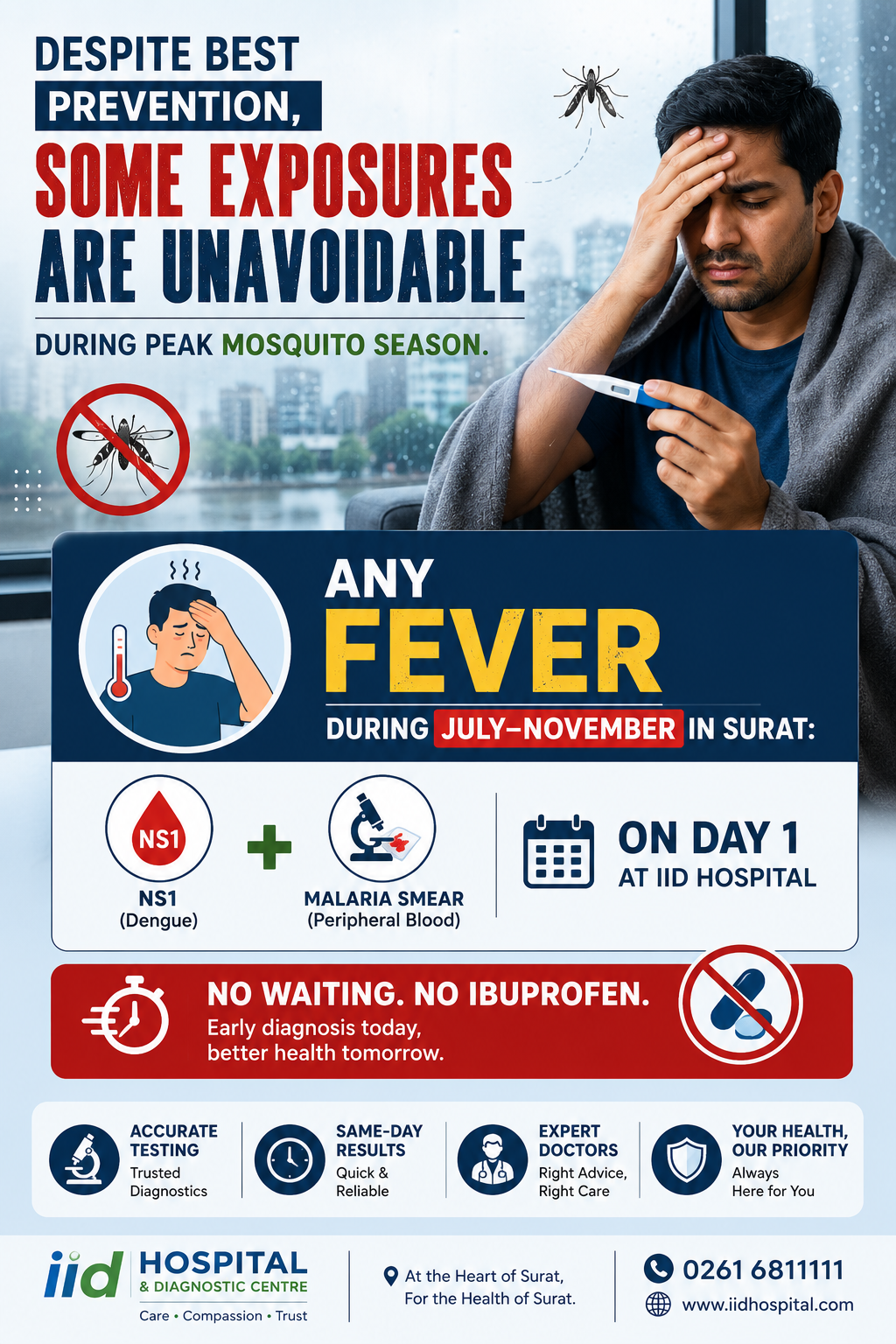
During monsoon season (July–November) in Surat, never assume fever is viral without excluding dengue and malaria. Both start as undifferentiated fever in the first 24–48 hours. NS1 antigen for dengue and blood smear + RDT for malaria should be done on the first day of assessment for any fever persisting beyond 2 days during monsoon. It is always safer to test and find it negative than to miss dengue or malaria.
When to Wait at Home (Manage Symptomatically)
What to do at home
Paracetamol 500–1000 mg every 6–8 hours as needed (not ibuprofen). 3–4 litres of fluids daily. Rest. Monitor temperature twice daily. If no improvement by day 5, see a doctor.
When to Seek Medical Attention Immediately
Call immediately
+91 92747 93759 — Dr. Pratik Savaj, IID Hospital, Surat. Mon–Sat 11AM–1PM & 4–6PM. For urgent concerns outside hours — WhatsApp.
How to Manage Viral Fever — Do’s and Don’ts
Viral fever management is supportive — helping the body fight the virus comfortably while avoiding interventions that cause harm. The most common management errors in India are taking antibiotics (useless), taking ibuprofen when dengue hasn’t been excluded (dangerous), and not staying hydrated enough.
The Only Antiviral for Viral Fever Available in India
For influenza specifically: Oseltamivir (Tamiflu) reduces illness duration and severity when started within 48 hours of symptom onset. It is indicated for confirmed or strongly suspected influenza in high-risk patients — elderly, diabetic, immunocompromised, obese, and pregnant. For all other common viral fevers — rhinovirus, adenovirus, enterovirus, EBV — there is no specific antiviral treatment available in India.
What Tests Are Actually Needed?
Antibiotics for Viral Fever Are Destroying Future Treatments
India has the highest rate of antibiotic use for viral fever in the world. Approximately 50% of all antibiotic prescriptions in India are unnecessary — given for viral infections where they have no effect. Every unnecessary antibiotic course accelerates antimicrobial resistance — the process by which bacteria evolve to survive antibiotics. In Surat, XDR typhoid and MDR tuberculosis are already the direct consequences of antibiotic overuse. The antibiotics that fail to treat your viral fever today are the ones that may not work for your child’s life-threatening bacterial infection tomorrow.
Antibiotics Have No Effect on Viruses
Antibiotics target bacterial cell processes — cell wall synthesis, protein synthesis, DNA replication. Viruses use completely different mechanisms and are completely unaffected by any antibiotic currently available.
Each Unnecessary Course Has Real Consequences
Every antibiotic course kills commensal gut bacteria and selects for resistant strains. This residual resistance in your gut flora persists for months. It makes the next bacterial infection harder to treat for you personally — and spreads resistant strains to household contacts.
What to Do Instead
Get a proper assessment. If the fever is truly viral — use paracetamol and fluids. If there is a specific concern (dengue, malaria, typhoid), the right targeted test will identify it, and the right treatment — which may or may not be an antibiotic — can be given.
The highest-risk period for fever in Surat — when viral fever, dengue, malaria, and typhoid all circulate simultaneously
Surat’s monsoon season is uniquely medically complex — multiple infectious agents circulate at the same time, and the clinical presentation of the first few days is almost identical across all of them. This is why a fever during monsoon in Surat requires a different approach than a fever in January.
The Aedes mosquito (dengue and chikungunya vector) breeds prolifically in the clean standing water that accumulates during monsoon — in coolers, flower pots, tyres, and construction sites. The Anopheles mosquito (malaria vector) breeds in the pools of water that form after heavy rain. And Salmonella typhi spreads through water contamination during flooding.
July — August
Peak Viral Fever Season
Schools reopen, indoor crowding, high humidity — respiratory viral illnesses surge. Influenza often peaks. Dengue cases begin to rise as mosquito populations build.
August — September
Peak Dengue and Malaria Risk
Mosquito populations peak 2–3 weeks after heavy rainfall. Dengue and malaria cases reach their highest levels. Every fever requires exclusion of these diagnoses.
September — October
Typhoid Season
Monsoon flooding contaminates water supplies. Typhoid cases rise as contaminated water is consumed. Blood culture-guided diagnosis becomes critical.
October — November
Post-Monsoon Risk Persists
Mosquito populations decline slowly. Dengue and malaria cases continue. Vivax malaria relapses can appear. Vigilance needed through November.

Questions About Viral Fever
The most common questions patients ask about viral fever — answered clearly by Dr. Pratik Savaj, FNB Infectious Diseases, IID Hospital, Surat.
How do I know if my fever is viral or bacterial?
Do I need antibiotics for viral fever?
How long does viral fever last?
Should I take ibuprofen or paracetamol for viral fever?
Why do so many people get viral fever during monsoon in Surat?
Is viral fever contagious?
When should I see a doctor for viral fever?
Can viral fever cause serious complications?
Fever That Won’t Go Away? Get Expert Assessment.
No referral needed. When fever is prolonged, unusual, or occurring during Surat’s monsoon season — specialist assessment identifies whether it is truly viral or a specific infection requiring targeted treatment. Dr. Pratik Savaj, FNB Infectious Diseases, IID Hospital, Lal Darwaja, Surat.
Clinic Hours