Chikungunya Fever, Joint Pain & Post-Chikungunya Arthritis
Chikungunya is a viral infection spread by the Aedes mosquito. The fever resolves in days — but the joint pain can be debilitating for months. Understanding chikungunya means understanding that the fever is the beginning of the illness, not the whole illness. Post-chikungunya arthritis (PCA) affects 30–40% of patients and requires specialist management.
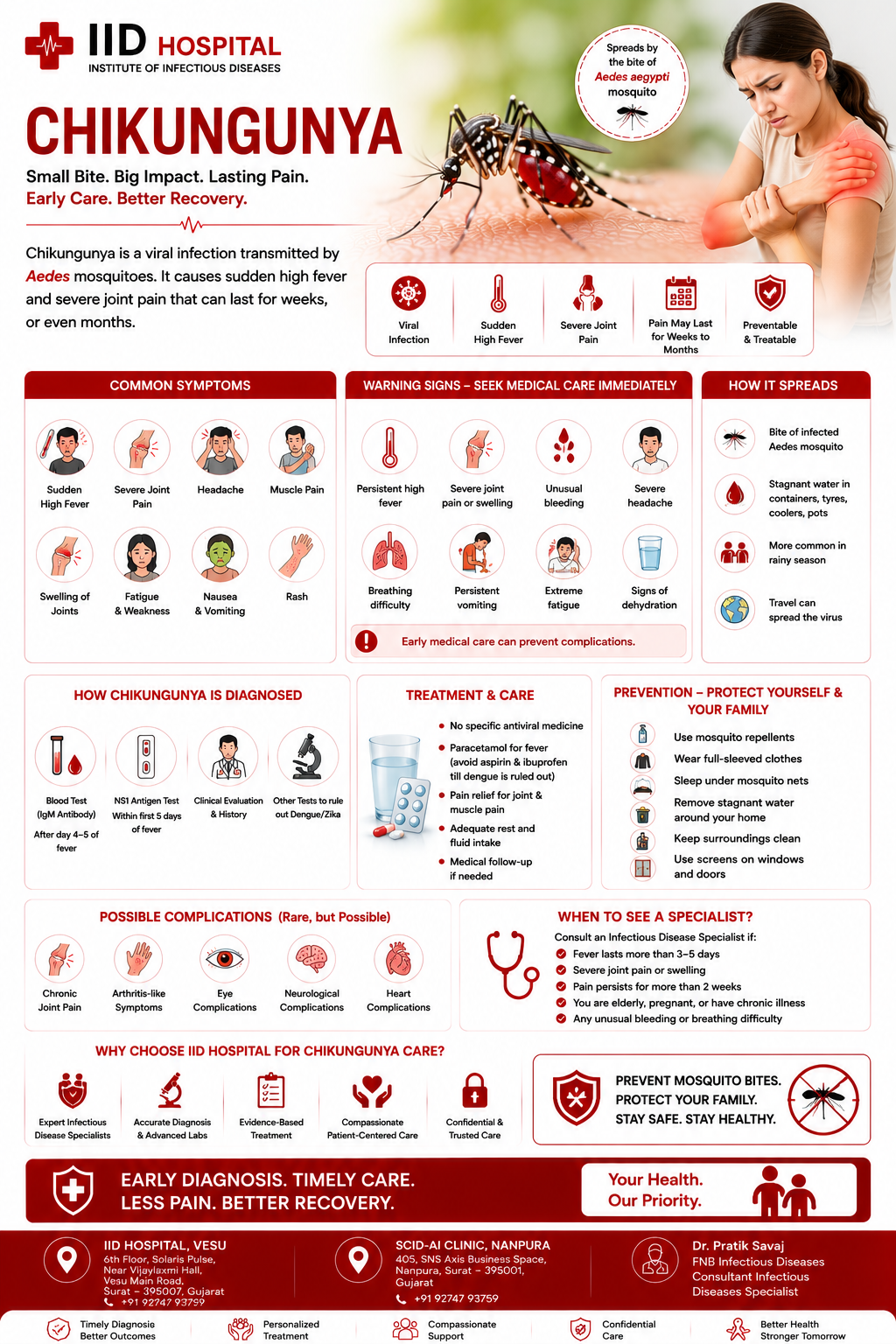
Same mosquito as dengue
What Is Chikungunya?
Chikungunya is caused by the chikungunya virus (CHIKV) — an alphavirus in the family Togaviridae. It was first identified during an outbreak in Tanzania in 1952. The name “chikungunya” comes from the Makonde language and means “that which bends up” — describing the stooped posture of patients suffering from severe joint pain.
CHIKV is transmitted to humans exclusively by the bite of an infected Aedes aegypti or Aedes albopictus mosquito — the same vectors as dengue fever. This means chikungunya and dengue often co-circulate in the same outbreaks, in the same geographic areas, at the same time. In Surat during monsoon, both viruses are frequently active simultaneously.
What makes chikungunya clinically unique is the severity and persistence of joint pain. While the fever typically resolves within 2–4 days, the arthritis — inflammation of multiple joints — can persist for months to years in a significant proportion of patients, significantly impairing quality of life. This post-chikungunya arthritis (PCA) is not simply residual soreness — it is active, immune-mediated joint inflammation requiring specific specialist management.
Why the Name Means “That Which Bends Up”
The classic clinical picture of chikungunya — patients walking hunched over due to bilateral ankle, knee, wrist, and finger joint pain — is so characteristic that it gave the disease its name. This bilateral, symmetrical, migratory polyarthritis affecting small and large joints simultaneously is the clinical signature that distinguishes chikungunya from dengue (where joint pain is present but less dominant) and from malaria (where joint pain is mild).
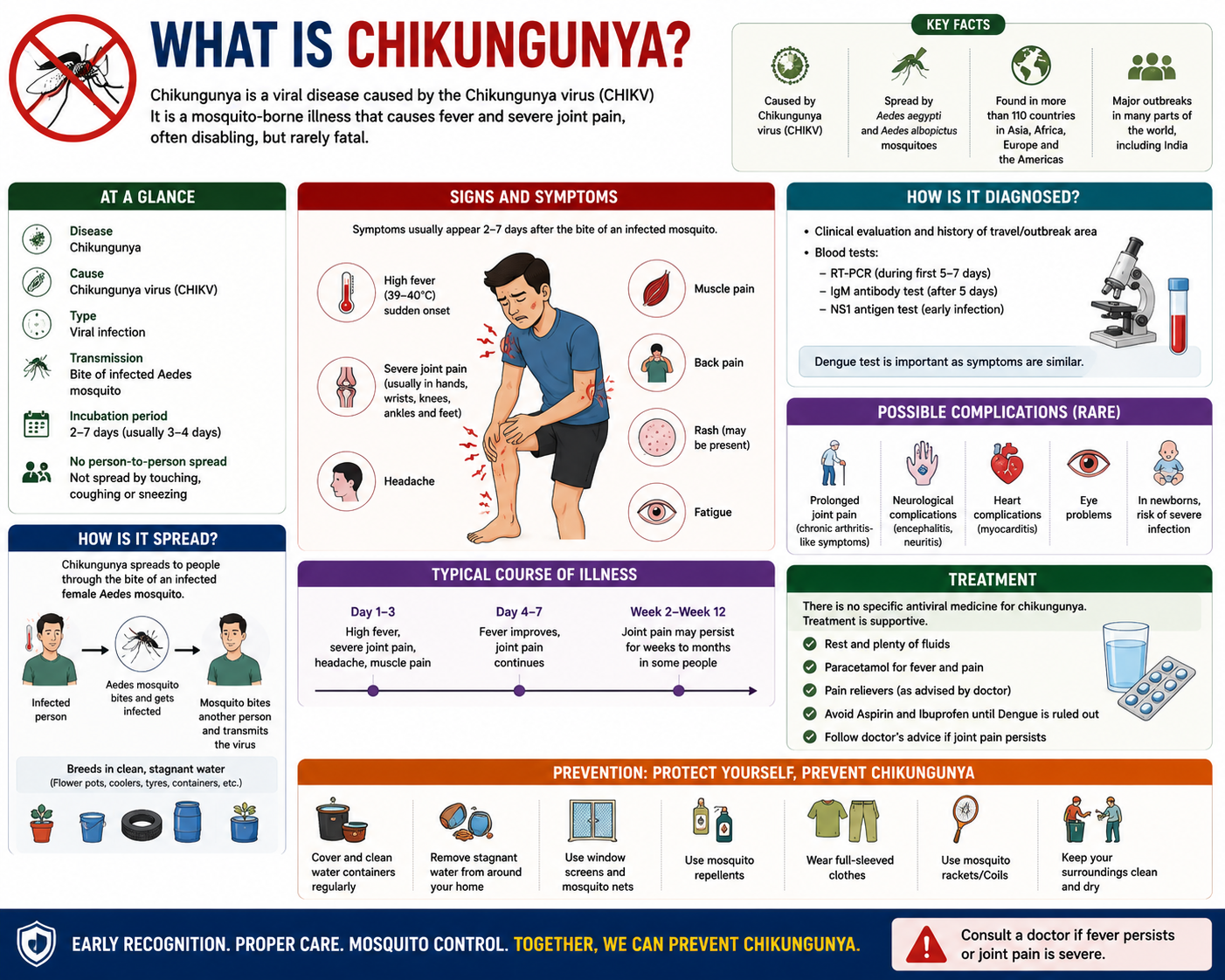
The 4 Phases of Chikungunya — From Fever to Recovery
Chikungunya has a distinct progression across four phases. Understanding these phases is essential — most patients expect recovery when the fever resolves, but the joint phase is just beginning at that point.
Acute Febrile Phase
High fever, joint pain onset, rash
Sub-Acute Joint Phase
Fever resolves, joint pain peaks
Post-Chikungunya Arthritis
30–40% of patients. Months of pain.
Full Recovery
Most patients recover completely
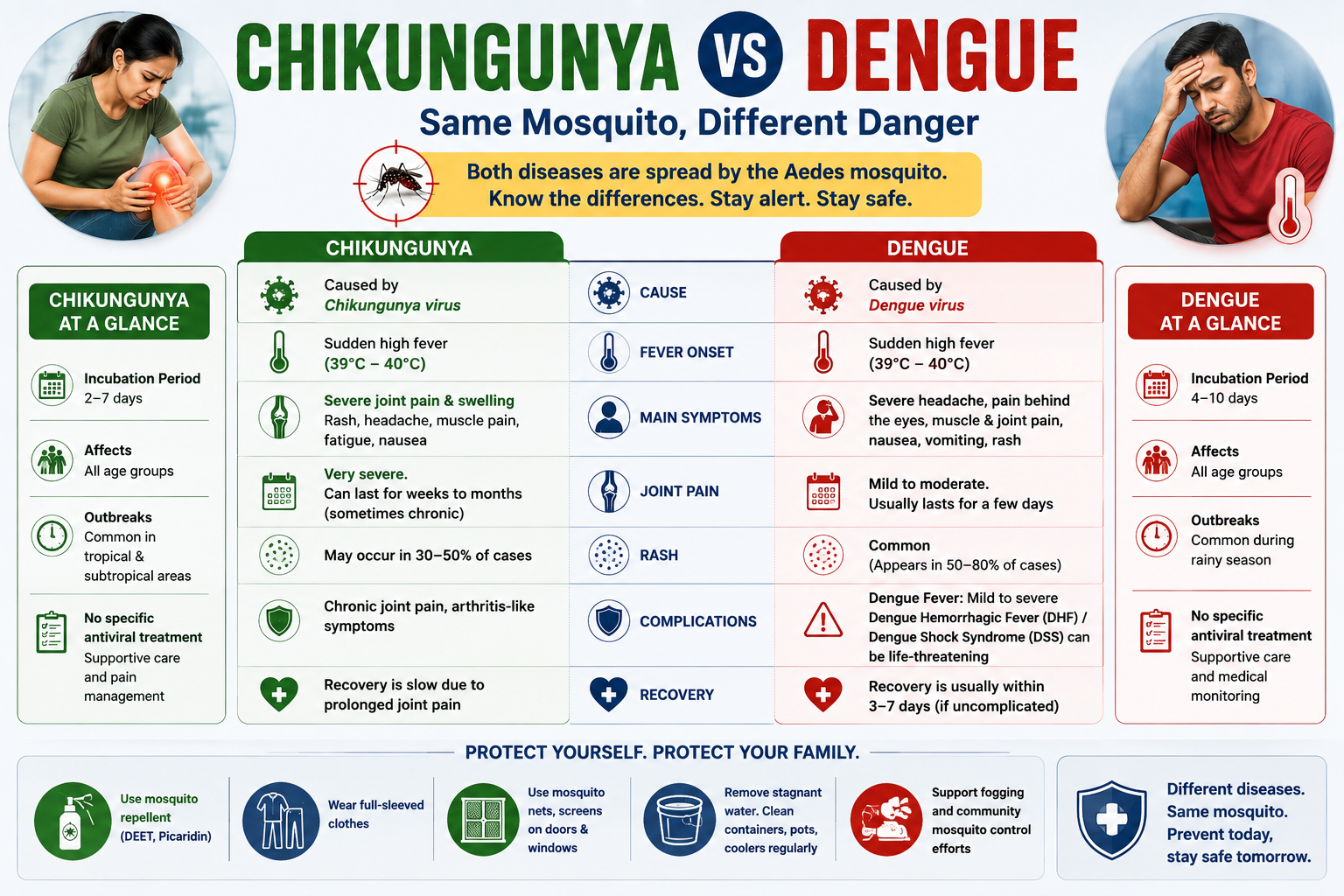
Chikungunya vs Dengue — Same Mosquito, Different Danger
Both are transmitted by the Aedes mosquito and co-circulate in Surat during monsoon. Both start with sudden high fever and body pain. But their clinical course, primary danger, and management are completely different — accurate diagnosis is essential.
Always Test for Both in Surat During Monsoon
Chikungunya and dengue co-infection is possible — and both viruses circulate simultaneously in Surat during monsoon. Always order dengue NS1 + chikungunya IgM together when either is suspected. A positive chikungunya result does not exclude dengue, and vice versa. NSAID use for chikungunya joint pain is only safe after dengue has been formally excluded by negative NS1 and negative dengue IgM after day 5.
Which Joints Are Affected — and Why It Hurts So Much
The joint pain in chikungunya is not a non-specific viral ache. It is true arthritis — synovial inflammation within the joint space caused by direct viral invasion of the joint tissue. CHIKV infects synovial fibroblasts and macrophages within joints, triggering an intense local inflammatory response that can continue even after the virus has been cleared.
The arthritis is characteristically bilateral, symmetrical, and polyarticular — affecting multiple joints on both sides of the body simultaneously. It has a migratory quality — the pain may be more intense in one joint on one day and shift to another joint the next day, while always maintaining its bilateral symmetrical pattern.
Most Commonly Affected Joints
Morning Stiffness — The Hallmark of Post-Chikungunya Arthritis
Morning stiffness — joints being worst after a period of rest and gradually improving with movement — is the hallmark of inflammatory arthritis, not just viral muscle aching. In post-chikungunya arthritis, morning stiffness lasting more than 30 minutes is a diagnostic indicator of ongoing synovial inflammation requiring specific treatment, not just paracetamol and waiting.
Joints Commonly Affected by Chikungunya
Most severely affected — walking impaired
Grip and daily tasks affected
Morning stiffness — RA-like
Walking and footwear affected
Swelling and restricted movement
Extension restricted
Elevation and rotation limited
Back and neck pain in severe cases
Key Pattern
Bilateral + Symmetrical + Migratory — both ankles, both wrists, both finger joints. Pain may shift emphasis from one joint to another but remains symmetrical. This pattern distinguishes CHIK arthritis from a traumatic or septic joint injury.
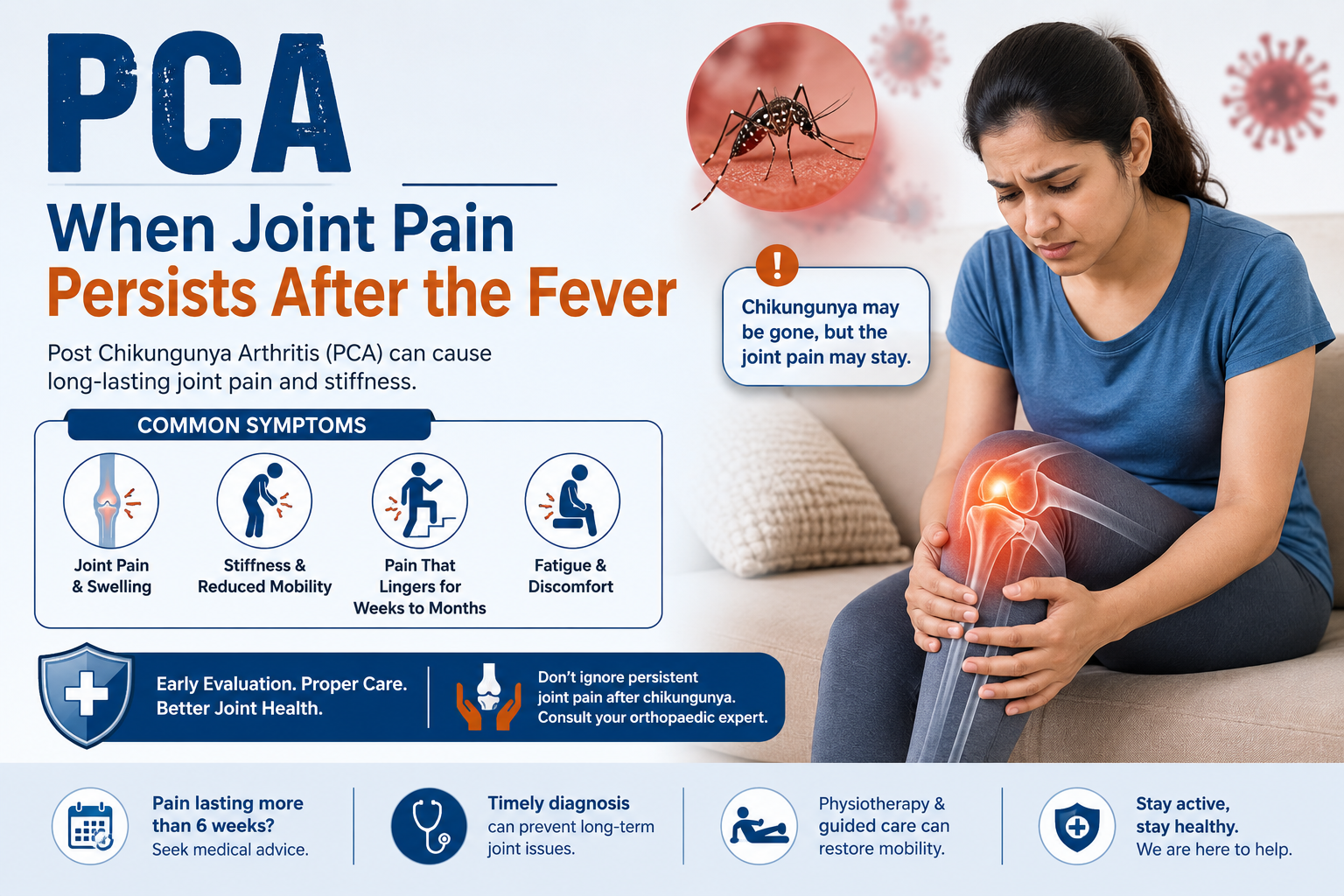
PCA — When Joint Pain Persists After the Fever
Post-chikungunya arthritis (PCA) is defined as arthritis persisting or recurring after the acute chikungunya fever has fully resolved — typically beyond 3 months from the original infection. It affects approximately 30–40% of adults infected with chikungunya, with higher rates in elderly patients (up to 65%).
PCA is not simply tiredness or delayed recovery. It is active, immune-mediated synovial inflammation — the same basic mechanism as rheumatoid arthritis — triggered by the original CHIKV infection and perpetuated by the immune system even after the virus has been cleared. In some patients, the joint inflammation becomes self-sustaining and can cause permanent joint damage if not treated.
Why Elderly Patients Need Early Specialist Involvement
In patients over 60, chikungunya arthritis is more severe, lasts longer, and is more likely to become chronic. Pre-existing osteoarthritis in elderly joints creates a more vulnerable joint environment. Elderly patients with chikungunya arthritis should see Dr. Savaj within 2 weeks of diagnosis — early hydroxychloroquine therapy significantly reduces the risk of progression to chronic PCA.
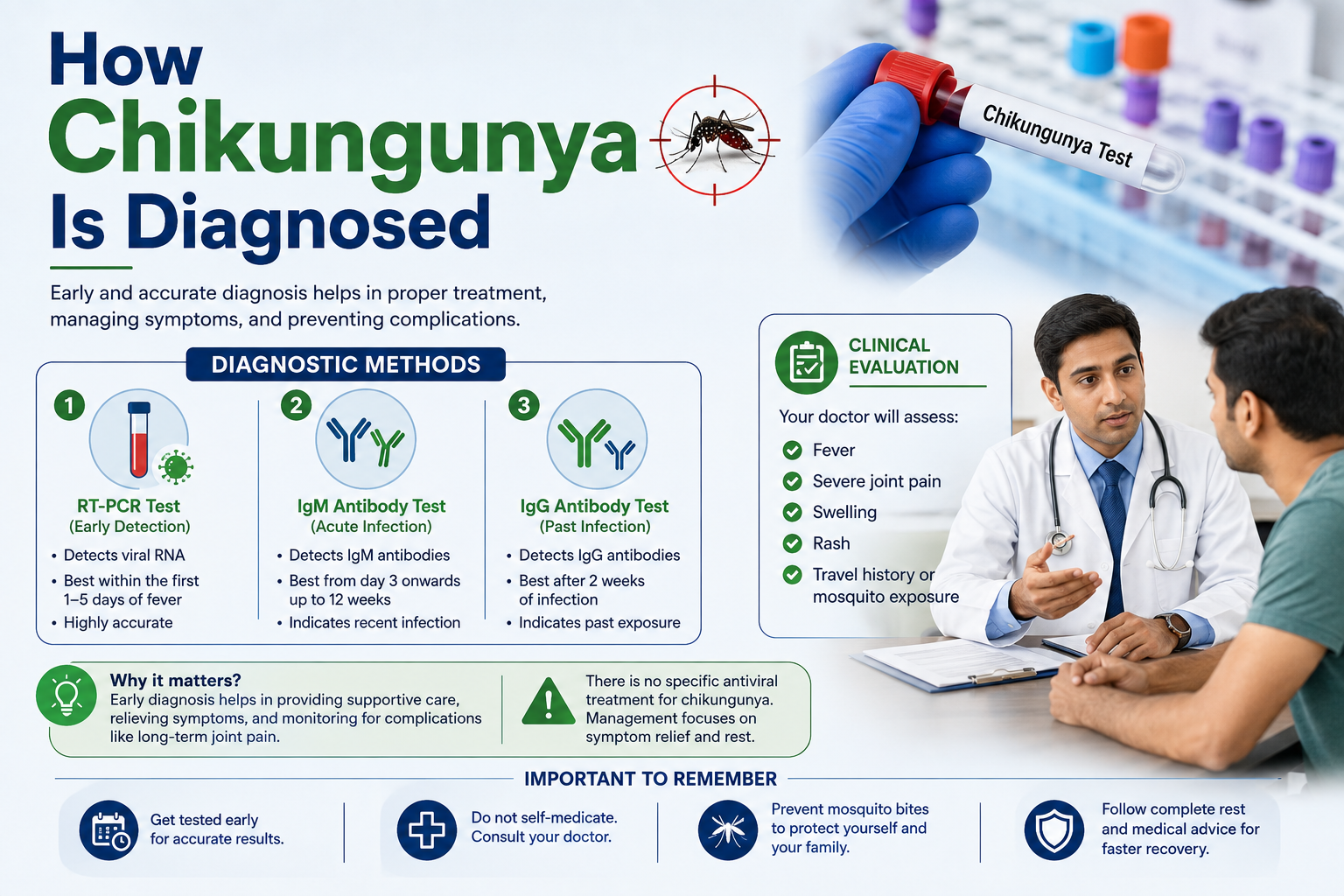
How Chikungunya Is Diagnosed
Chikungunya RT-PCR (Days 1–7)
Acute phase · Most sensitiveChikungunya RT-PCR detects CHIKV viral RNA in blood during active viraemia. It is highly sensitive and specific during the first 7 days of illness — positive from day 1. It is the most accurate test for acute chikungunya but is more expensive and less widely available than IgM serology. Used in clinically uncertain cases or for outbreak surveillance. A positive PCR definitively confirms active chikungunya infection.
Chikungunya IgM Antibody (From Day 5)
Most used test in SuratChikungunya-specific IgM antibodies appear in blood from approximately day 4–5 of illness and remain positive for several months. This is the most commonly used chikungunya diagnostic test in Surat due to its availability and lower cost. A positive chikungunya IgM confirms recent infection. IgM may occasionally cross-react with other alphaviruses. In clinical practice, a positive IgM in the context of typical bilateral polyarthritis and a compatible epidemiological setting (Surat, monsoon) is highly reliable.
Dengue Co-Testing (Always)
Mandatory in SuratBecause chikungunya and dengue co-circulate in Surat and both are spread by the same Aedes mosquito, always test for dengue simultaneously: NS1 antigen (days 1–5) and dengue IgM (from day 5). This is not optional — it is clinically necessary because: (1) Co-infection is possible; (2) NSAID use for chikungunya joint pain is only safe after dengue is formally excluded; (3) Missing dengue in a patient with concurrent chikungunya has potentially life-threatening consequences.
Blood Count and Inflammatory Markers
Severity and monitoringComplete blood count (CBC) — platelet count is important to confirm that it is not falling significantly (which would suggest concurrent dengue). Chikungunya typically causes only a mild decrease in platelet count. ESR and CRP — acute phase reactants that are elevated in active chikungunya arthritis and help monitor response to treatment in post-chikungunya arthritis. In chronic PCA, rheumatological markers (RF, ANA, anti-CCP) are sent to distinguish PCA from de novo autoimmune arthritis.
Joint X-Ray (Chronic PCA Only)
If arthritis persists beyond 3 monthsIn patients with chronic PCA lasting more than 3 months, X-rays of the most affected joints are ordered to look for erosive changes — joint space narrowing and marginal erosions that indicate progressive arthritis. MRI of severely affected joints (particularly wrists and ankles) provides more sensitive early detection of synovitis and erosive disease. These findings guide decisions about escalating from hydroxychloroquine to methotrexate or other DMARDs.
Which Test to Order When
NSAID Timing Rule
Use only paracetamol until dengue is excluded. Once dengue NS1 is negative and dengue IgM is negative (after day 5), NSAIDs (ibuprofen, naproxen) are safe and are the correct treatment for chikungunya joint pain.
How Chikungunya Is Treated — Phase by Phase
There is no specific antiviral treatment for chikungunya. Treatment is based on the phase of illness and targets the dominant problem — fever and initial symptoms in the acute phase, and joint inflammation in the sub-acute and chronic phases.
Acute Phase (Days 1–4)
Fever management
Joint Phase & PCA (Weeks 2+)
Anti-inflammatory specialist management
Chronic PCA (Beyond 3 Months)
Disease-modifying therapy
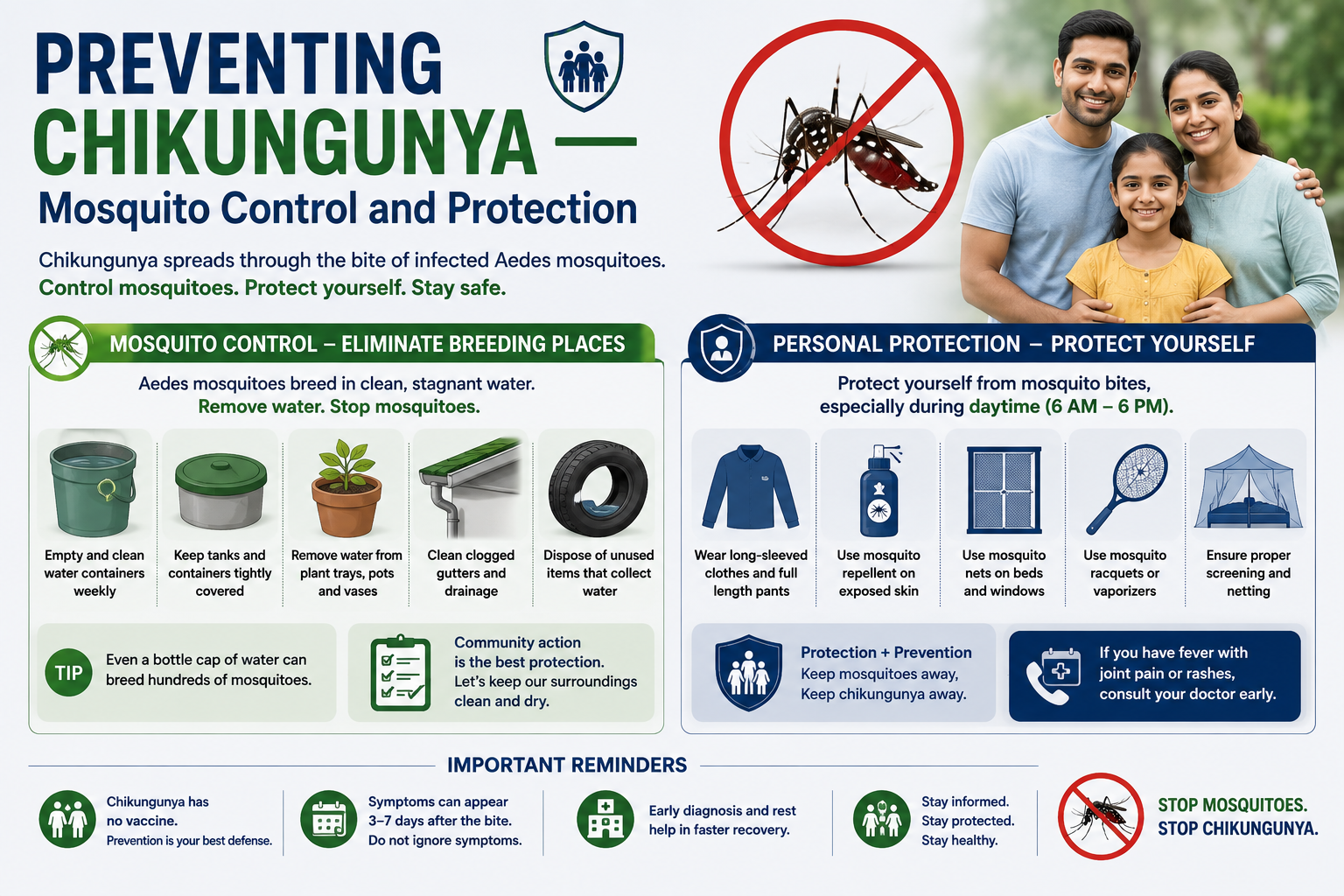
Preventing Chikungunya — Mosquito Control and Protection
Chikungunya prevention is mosquito prevention — specifically preventing bites from the day-biting Aedes mosquito. The same measures prevent dengue, making Aedes mosquito control a high-value public health investment.
Eliminate Aedes Breeding Sites Weekly
Aedes mosquitoes breed in small amounts of clean, stagnant water. Empty, clean, or cover all containers weekly — coolers, flower pots, tyres, buckets, bird baths, and roof gutters. Even a discarded bottle cap holding water is sufficient for Aedes breeding. This is the single most effective prevention measure and must be done on a weekly basis, not monthly.
Day-Time Protection — DEET and Clothing
Aedes bites primarily during the day — morning and late afternoon. Unlike malaria (night-biting Anopheles), bed nets have limited value against Aedes. Use DEET-based repellents (at least 20% DEET) on exposed skin. Wear long-sleeved clothing and long trousers during peak biting hours, particularly outdoors during monsoon.
Mosquito Screens on Windows and Doors
Fine-mesh wire screens on windows and doors prevent Aedes entry into the home during the day — when mosquitoes are actively biting. Use window screens and keep doors closed during peak biting hours. Insecticide-treated curtains provide additional protection and reduce mosquito density indoors.
Protect Chikungunya Patients from Mosquito Bites
A chikungunya patient is viremic (virus in blood) for approximately 5–7 days after symptom onset. If an Aedes mosquito bites an infected patient during this window, it can transmit chikungunya to the next person it bites. Patients should stay indoors where possible, use repellents, and sleep under fine-mesh nets to prevent transmission to household members.
Vaccine (Consult Specialist for Availability)
IXCHIQ (VLA1553) — a live-attenuated chikungunya vaccine — was approved by the US FDA and EMA in 2023–2024. It provides strong protection in adults 18+ as a single dose. Availability in India is currently limited but may be accessible through travel medicine clinics for travellers to endemic areas. Dr. Savaj can advise on current availability at IID Hospital.
What Patients Say About Dr. Pratik Savaj
I could not bend my fingers for three weeks after my fever resolved. Dr. Savaj explained post-chikungunya arthritis clearly, started the right anti-inflammatory protocol, and my joint function returned fully within six weeks. His calm, methodical approach made a painful situation manageable.
Six months after chikungunya my wrists and ankles were still swollen. Two rheumatologists suggested long-term DMARD therapy. Dr. Savaj correctly identified this as post-chikungunya arthritis, treated it conservatively, and I avoided unnecessary immunosuppression. His accurate diagnosis changed everything.
My elderly mother (72) developed severe chikungunya with joint involvement and couldn't walk. Dr. Savaj managed her pain carefully, explained why NSAIDs needed caution in her age group, and monitored her weekly through the acute and recovery phases.
I had fever and joint pain and was told it was dengue. Dr. Savaj ran the right tests, confirmed chikungunya, and explained the difference clearly. Accurate diagnosis meant I got the right treatment from day one and avoided unnecessary platelet monitoring.
Dr. Savaj explained that chikungunya joint pain can persist for months and set clear expectations from the start. That honesty, combined with a structured recovery plan, made the recovery far less anxious than it would have been without proper guidance.
Four members of our family got chikungunya simultaneously during the monsoon outbreak. Dr. Savaj managed all four with individualised care, always available on WhatsApp, and explained every stage of the illness. The family approach was exceptional.
Frequently Asked Questions
About Chikungunya
Answered by Dr. Pratik Savaj, FNB Infectious Diseases — IID Hospital, Vesu, Surat.