
SCID-AI · 405 SNS Axis Business Space, Nanpura, Surat
Mon–Sat: 11–1 PM & 4–6 PM
Dengue vs viral fever Surat SCID-AI  Dengue · SCID-AI Blog
Day 1 NS1 antigen test must be done on day 1
Not day 5 — the window closes
 Dengue · SCID-AI Blog

Dengue vs Viral Fever — How to Tell the Difference

Dr. Pratik Savaj
Dr. Pratik SavajFNB Infectious Diseases · SCID-AI, Surat
In Surat’s monsoon, every fever is a potential dengue. But treating every fever as dengue — or worse, dismissing dengue as “just viral fever” — are both dangerous errors. The difference matters because dengue has a narrow diagnostic window, a deceptive critical phase, and one absolute treatment rule: paracetamol only. This article tells you what to look for, when to test, and what never to take.

The Fundamental Difference

“Viral fever” is not a diagnosis — it is a placeholder. When a doctor says “viral fever,” they mean: I suspect this is a viral infection, I don’t know which one, and I think it will resolve on its own. For most viral fevers in Surat, that is correct. But dengue is also a viral fever — and unlike most viral fevers, it has a critical phase (days 4–6) when plasma leaks from blood vessels, platelets crash, and patients who appeared to be improving can deteriorate rapidly.

The clinical question is not “does this patient have a virus?” but “does this patient have dengue specifically?” Because dengue management is different: strict monitoring of platelet count, fluid balance, and warning signs during the critical phase; and the absolute prohibition of ibuprofen and aspirin, which increase bleeding risk in dengue.

The Most Important Rule

Never take ibuprofen (Brufen, Combiflam) or aspirin for fever during Surat’s monsoon season until dengue is excluded. Both drugs inhibit platelet function and increase the risk of severe bleeding in dengue haemorrhagic fever. Paracetamol (Calpol, Crocin) is the only safe fever medication when dengue has not been ruled out.

Dengue’s Day-by-Day Pattern — The Three Phases

Dengue has a characteristic day-by-day clinical pattern that distinguishes it from most other viral fevers. Understanding the three phases is critical — particularly the deceptive improvement on days 4–5 that precedes the critical phase.

Day 1 Febrile
Sudden high fever. Severe body pain begins. NS1 antigen most sensitive now.
Day 2 Febrile
Fever 39–40°C. Severe headache. Retro-orbital pain. Rash may appear.
Day 3 Febrile
Rash spreads. Platelet decline begins. Test NS1 + CBC + platelet.
Day 4 Critical
Fever drops. Feels better. DO NOT be reassured — this is the critical phase.
Day 5 Critical
Plasma leakage peaks. Platelet nadir. Warning signs may appear.
Day 6 Critical
Bleeding risk highest. Monitor closely. Admit if warning signs present.
Day 7+ Recovery
Fluid reabsorption. Platelet rises. Full recovery in most patients.

The Deceptive Defervescence — The Most Dangerous Day

When dengue fever drops on days 4–5, patients and families feel relieved — “the fever broke, they’re getting better.” This is the most dangerous moment in dengue. The drop in fever marks the beginning of the critical phase — plasma leakage, platelet nadir, and potential haemorrhage. Patients who feel better on day 4 need monitoring, not reassurance.

Dengue blood test platelet SCID-AI Surat
Daily platelet count monitoring during dengue’s critical phase (days 4–6) is essential. A platelet below 100,000 requires close monitoring; below 20,000 with bleeding symptoms requires immediate hospitalisation.

Dengue vs Viral Fever vs Malaria vs Typhoid — The Comparison

In Surat’s monsoon, all four of these fevers are circulating simultaneously. Each has distinguishing features — though clinical features alone are never enough to diagnose; the right test at the right time is always needed.

Feature Dengue Viral Fever (URTI) Malaria Typhoid
Fever onsetSudden, highGradualCyclical / suddenStep-ladder pattern
Body painSevere “breakbone” myalgiaMild–moderateSevere rigor + sweatingMild
RashDay 3–5, islands of whiteAbsentAbsentRose spots (rare)
Bleeding riskYES — haemorrhageNoNo (vivax); some (falciparum)No
PlateletsFalling — hallmarkNormalNormal or lowNormal or low
Key testNS1 antigen (days 1–5)Clinical / CBCBlood smear + RDTBlood culture
Safe fever drugParacetamol ONLYParacetamolParacetamolParacetamol
Antibiotics?NO — harmfulNoNo (antimalarials)YES — essential
Dengue diagnosis NS1 test SCID-AI Surat
NS1 antigen test: the specific dengue test that must be done on day 1–5. Most sensitive in the first 3 days. After day 5, dengue IgM antibody test is used instead.

When and What to Test

The NS1 antigen test is positive from day 1 through day 5 of dengue illness — it detects the dengue virus protein directly. After day 5, it becomes negative as the immune response clears the antigen. Testing on day 6 or 7 with NS1 alone will give a false negative. From day 5 onwards, dengue IgM antibody is the correct test. If in doubt about timing, send both. The platelet count and haematocrit must be checked daily during the critical phase regardless of test results.

1

Day 1–3 of fever (best window)

NS1 Antigen Test + CBC + Platelet

NS1 is most sensitive in the first 3 days. Send NS1 antigen + CBC with differential + platelet count simultaneously. A normal NS1 on day 1 with strong clinical suspicion: repeat on day 2–3 if symptoms persist. Also send blood smear + RDT for malaria at the same time.

2

Day 3–5 (active monitoring)

Daily Platelet Count + Haematocrit

Even if NS1 is positive and dengue is confirmed, daily monitoring continues. Platelet below 100,000: close outpatient monitoring. Platelet below 50,000: specialist assessment. Haematocrit rising by more than 20%: indicates plasma leakage — may need IV fluids.

3

Day 5+ (if NS1 was negative or not done)

Dengue IgM Antibody

From day 5 onwards, dengue IgM is the correct serological test. If the patient is on day 7 of fever with no previous testing: send dengue IgM + NS1 simultaneously + blood culture (to exclude typhoid).

4

Any day during monsoon fever

Blood Smear + RDT for Malaria

Every monsoon fever in Surat requires simultaneous malaria exclusion — not either/or. Dengue and malaria can co-exist. Send NS1 + blood smear + RDT together on day 1. Missing falciparum malaria while treating for dengue is a life-threatening error.

Warning Signs — When to Go to Hospital Immediately

Most dengue patients recover with outpatient monitoring. A minority develop severe dengue — characterised by plasma leakage, severe bleeding, or organ impairment. The warning signs below indicate severe dengue developing — any one of them requires immediate hospital assessment, not waiting until the next morning.

Severe Abdominal Pain

Persistent, severe pain or tenderness in the abdomen. Indicates plasma leakage into the peritoneal cavity. Go to hospital immediately.

Persistent Vomiting

Three or more episodes of vomiting in 1 hour. Prevents oral fluid intake. IV fluid replacement is needed urgently.

Any Bleeding

Blood in vomit, black tarry stools, heavy menstrual bleeding, blood in urine, or spontaneous bruising. Immediate hospitalisation.

Restlessness or Lethargy

Sudden change in mental state — either unusually agitated or unusually drowsy. Indicates circulatory compromise. Emergency.

Rapid Breathing

Breathlessness at rest or with minimal activity. Indicates pleural effusion or pulmonary oedema from plasma leakage. Emergency.

Fever Drops but Patient Worsens

The deceptive defervescence. Fever comes down on day 4–5 but the patient feels worse, more tired, or develops any of the above signs. Immediate assessment required.

Dengue treatment monitoring SCID-AI Surat
Dengue management at SCID-AI: daily platelet + haematocrit monitoring, fluid balance assessment, and specific guidance on when IV fluids are needed vs when they should be avoided.

What to Do and What Never to Do in Dengue

 Do This
Paracetamol only for fever — every dose, every time
NS1 antigen test on day 1 of fever — not later
Daily platelet count during days 3–7
Oral fluids: 2–3 litres of water, ORS, coconut water, juices daily
Rest completely during the febrile and critical phases
Return immediately if any warning sign develops
Send blood smear + RDT for malaria simultaneously
 Never Do This
Ibuprofen or Combiflam — causes bleeding in dengue
Aspirin or Disprin — inhibits platelets, causes haemorrhage
Antibiotics — dengue is viral, antibiotics are useless and harmful
Steroids empirically — no evidence in dengue, may worsen outcome
Waiting until day 5–6 to do the first test — NS1 window closes
Reassuming recovery when fever drops on day 4–5 — critical phase
Excess IV fluids without indication — causes pulmonary oedema

Dengue Management at SCID-AI, Surat

Dr. Pratik Savaj sees dengue patients at SCID-AI throughout Surat’s monsoon season. The assessment covers: NS1 + malaria exclusion on day 1; daily platelet and haematocrit monitoring during the critical phase; specific fluid balance guidance; and clear criteria for when outpatient monitoring is safe versus when hospitalisation is needed.

Dengue care at SCID-AI is not just diagnosis — it includes daily contact during the critical phase, specific instructions on what to watch for at home, and a clear threshold for when to come back immediately.
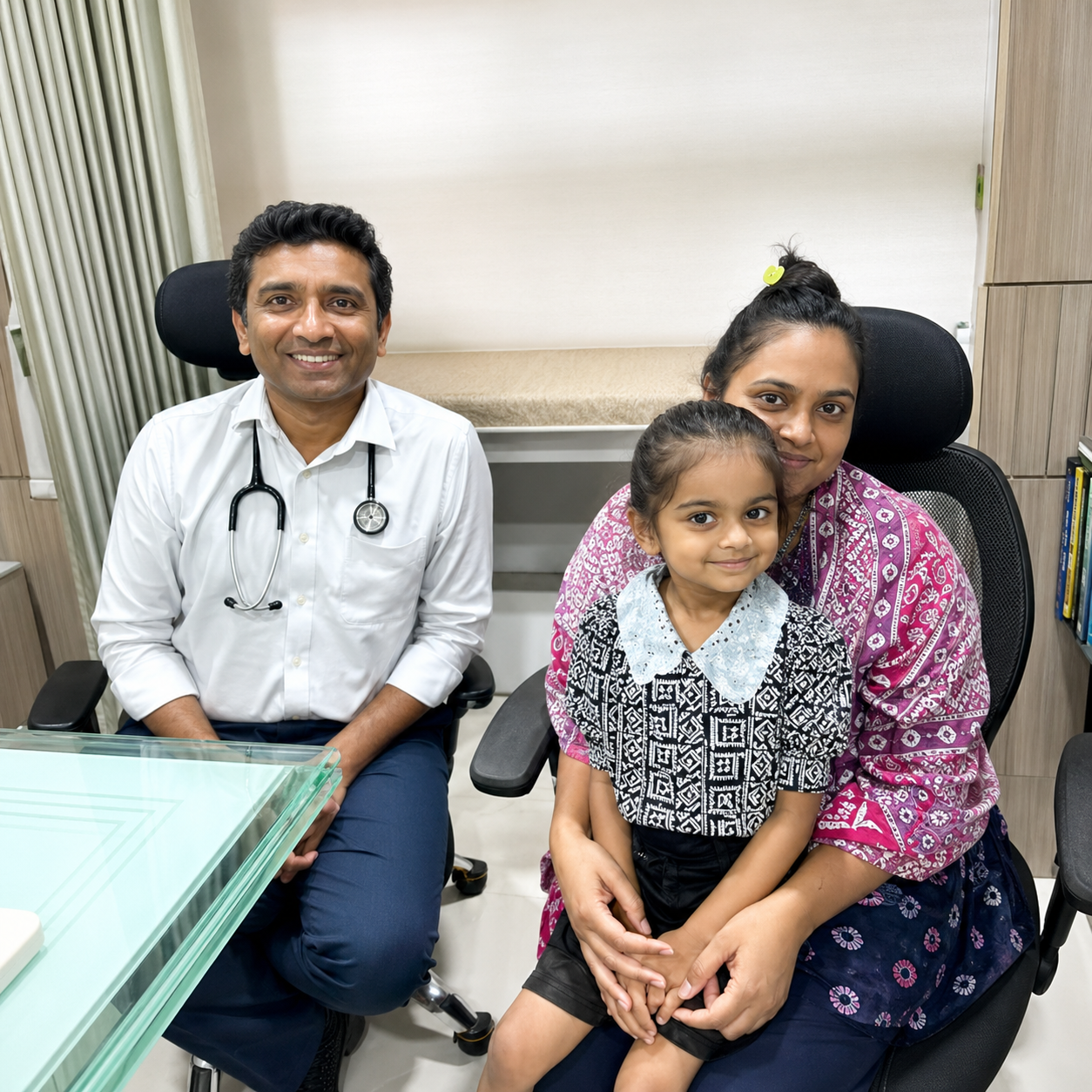
Dengue consultation SCID-AI Surat Dr Savaj
Dengue consultation at SCID-AI — no referral needed. Book on day 1 of fever during monsoon season.

The Monsoon Fever Protocol

Every fever during Surat’s monsoon (July–November): NS1 + blood smear on day 1. Paracetamol only. No ibuprofen, no aspirin, no antibiotics. Platelet count daily from day 3. If fever drops on day 4–5 but the patient feels worse — come to SCID-AI immediately. Do not wait to see if it improves on its own.

Dengue care SCID-AI
Dr. Pratik Savaj MBBS · DNB Medicine · Fellowship ID · FNB Infectious Diseases · P.D. Hinduja Hospital, Mumbai

Dr. Savaj manages dengue, malaria, typhoid, and all monsoon fevers at SCID-AI, Nanpura, Surat throughout the monsoon season. For monsoon fever: come on day 1 — +91 72839 34807.

Common Questions

Frequently Asked Questions

Answered by Dr. Pratik Savaj, FNB Infectious Diseases, SCID-AI, Surat.

Why can't I take ibuprofen or aspirin for dengue fever?
Ibuprofen (Brufen, Combiflam) and aspirin (Disprin, Ecosprin) both work by inhibiting cyclooxygenase (COX) enzymes, which reduces fever but also impairs platelet function. In dengue, platelets are already falling due to the virus — they can drop to dangerously low levels in the critical phase (days 4–6). Adding a drug that further impairs platelet function dramatically increases the risk of dengue haemorrhagic fever — serious internal bleeding that can be fatal. Ibuprofen additionally irritates the stomach lining and can cause gastrointestinal bleeding. Aspirin causes irreversible platelet dysfunction that lasts 7–10 days. Paracetamol (Calpol, Crocin) does not affect platelet function and is the only safe fever medication when dengue has not been excluded. This rule applies to all monsoon fevers in Surat — until dengue is ruled out, paracetamol only.
Can dengue be fatal? What is dengue haemorrhagic fever?
Dengue is fatal in a small but significant proportion of cases when the critical phase is not recognised and managed correctly. Dengue haemorrhagic fever (DHF) and dengue shock syndrome (DSS) are severe forms characterised by: plasma leakage causing haemoconcentration (rising haematocrit) and fluid accumulation in the abdomen or chest; severe platelet fall (below 20,000) with risk of spontaneous bleeding; circulatory failure and shock in the most severe cases. Case fatality rates for untreated severe dengue can reach 20%, but with proper medical management fall below 1%. The key to survival is recognising the warning signs early (severe abdominal pain, persistent vomiting, any bleeding, sudden deterioration as fever drops) and seeking immediate hospital care. Most dengue patients never reach this stage — but monitoring during the critical phase is what prevents it from being missed.
Can I get dengue more than once?
Yes — and the second infection can be more severe than the first. There are four dengue serotypes (DENV-1, 2, 3, 4). Infection with one serotype provides lifelong immunity to that serotype but only temporary cross-protection against the others. A second infection with a different serotype can trigger a more intense immune response — antibody-dependent enhancement (ADE) — in which antibodies from the first infection actually help the second serotype enter cells more efficiently, leading to higher viral loads and more severe disease. This is why dengue haemorrhagic fever is more common in second infections. In Surat, where multiple serotypes circulate, a history of previous dengue does not protect against re-infection — it may actually increase the severity of a subsequent infection. All dengue illnesses must be managed with the same protocol regardless of previous history.
What is the difference between dengue and chikungunya?
Dengue and chikungunya are both transmitted by Aedes aegypti mosquitoes and share many features — which is why they are frequently confused. Key differences: Joint pain: in dengue, joint pain is moderate; in chikungunya, severe, debilitating polyarthritis is the defining feature — the name chikungunya means “that which bends up” in Makonde, referring to the stooped posture from joint pain. The arthritis in chikungunya can last weeks to months, long after the fever resolves. Platelet fall: dramatic in dengue (the hallmark); only mild in chikungunya. Bleeding risk: significant in dengue; absent in chikungunya. Rash: both can cause rash, but the timing and character differ. Tests: chikungunya is diagnosed by chikungunya IgM antibody; NS1 is dengue-specific. In Surat’s monsoon, both can circulate simultaneously — testing for both is appropriate when the clinical picture is ambiguous.
What should I eat and drink if I have dengue?
Hydration is the most important nutritional intervention in dengue. Dengue causes plasma leakage — fluid moves from blood vessels into surrounding tissues — and adequate oral fluid intake helps maintain blood volume. Fluid intake guidelines for dengue: 2–3 litres per day of oral fluids; ORS (oral rehydration solution) is ideal; coconut water provides electrolytes; fresh fruit juices (not packaged); plain water. Regarding papaya leaf juice: there is some evidence that papaya leaf extract may increase platelet count in dengue, and it is widely used in India. The evidence is not strong enough for a formal medical recommendation, but it is generally safe and not harmful. However, papaya leaf juice is not a substitute for medical monitoring — it does not prevent the critical phase and cannot replace daily platelet count monitoring. Foods to avoid: spicy or hard-to-digest foods that may cause nausea; alcohol (dehydrates and may affect the liver, which is often mildly affected in dengue).
Is there a dengue vaccine available in India?
Yes — Dengvaxia (CYD-TDV) by Sanofi Pasteur is a dengue vaccine that has been approved in some countries. However, it has an important restriction: it is recommended only for individuals who have previously had dengue infection (seropositive). In people who have never had dengue (seronegative), the vaccine paradoxically increases the risk of severe dengue if they are subsequently infected. This restriction makes population-wide vaccination complex and limits its use. In India, dengue vaccination is not yet part of the national immunisation programme. A newer vaccine, TAK-003 (Qdenga) by Takeda, does not have the same serostatus restriction and is approved in some countries — but availability in India is limited. Prevention through mosquito control (eliminating Aedes breeding sites, repellent use) remains the primary strategy in Surat.
How do I prevent dengue at home during monsoon?
Dengue is transmitted by the Aedes aegypti mosquito, which breeds in small collections of clean, stagnant water. Prevention targets the mosquito, not people-to-people contact. Eliminate breeding sites: empty and scrub all water storage containers every 3–5 days (cooler trays, flower pot saucers, overhead tank lids, buckets, tyres); change water in flower vases every 2–3 days; keep overhead tanks tightly covered; clear blocked gutters. Personal protection: use DEET 20–30% repellent on exposed skin during dawn and dusk (peak Aedes biting hours); wear full-coverage clothing during peak biting hours; use mosquito nets for young children during daytime naps. Household measures: window and door screens; mosquito coils or electric repellents indoors. The Aedes mosquito is a daytime biter — mosquito nets at night alone are insufficient for dengue prevention (unlike malaria).
When is hospital admission necessary for dengue?
Most dengue patients can be managed as outpatients with daily monitoring. Hospital admission is necessary when any of the following are present: Platelet below 20,000 with any bleeding symptom; platelet below 10,000 regardless of symptoms; any warning sign (severe abdominal pain, persistent vomiting, any spontaneous bleeding, altered consciousness, rapid breathing); rising haematocrit of more than 20% above baseline (indicates plasma leakage requiring IV fluids); inability to maintain oral fluid intake; comorbidities that increase risk (pregnancy, infancy, elderly, obesity, diabetes, renal disease). At SCID-AI, Dr. Savaj provides specific, personalised threshold guidance for each patient during daily critical phase monitoring — there is no one-size-fits-all platelet number that triggers admission; the decision integrates platelet trend, symptoms, hydration status, and clinical signs.

Fever During Monsoon? Come on Day 1.

NS1 antigen test window closes at day 5. Paracetamol only — no ibuprofen, no aspirin, no antibiotics until dengue is excluded. Dr. Pratik Savaj, FNB Infectious Diseases, SCID-AI, Nanpura, Surat — no referral needed.

Dr. Pratik Savaj
Dr. Pratik Savaj FNB Infectious Diseases · SCID-AI, Surat
Morning11:00 AM – 1:00 PM, Mon–Sat
Evening4:00 PM – 6:00 PM, Mon–Sat
Phone+91 72839 34807
);document.body.style.overflow='';});}); })();