SCID-AI · 405 SNS Axis Business Space, Nanpura, Surat
Mon–Sat: 11–1 PM & 4–6 PM
India TB burden SCID-AI Surat  Tuberculosis · SCID-AI Blog
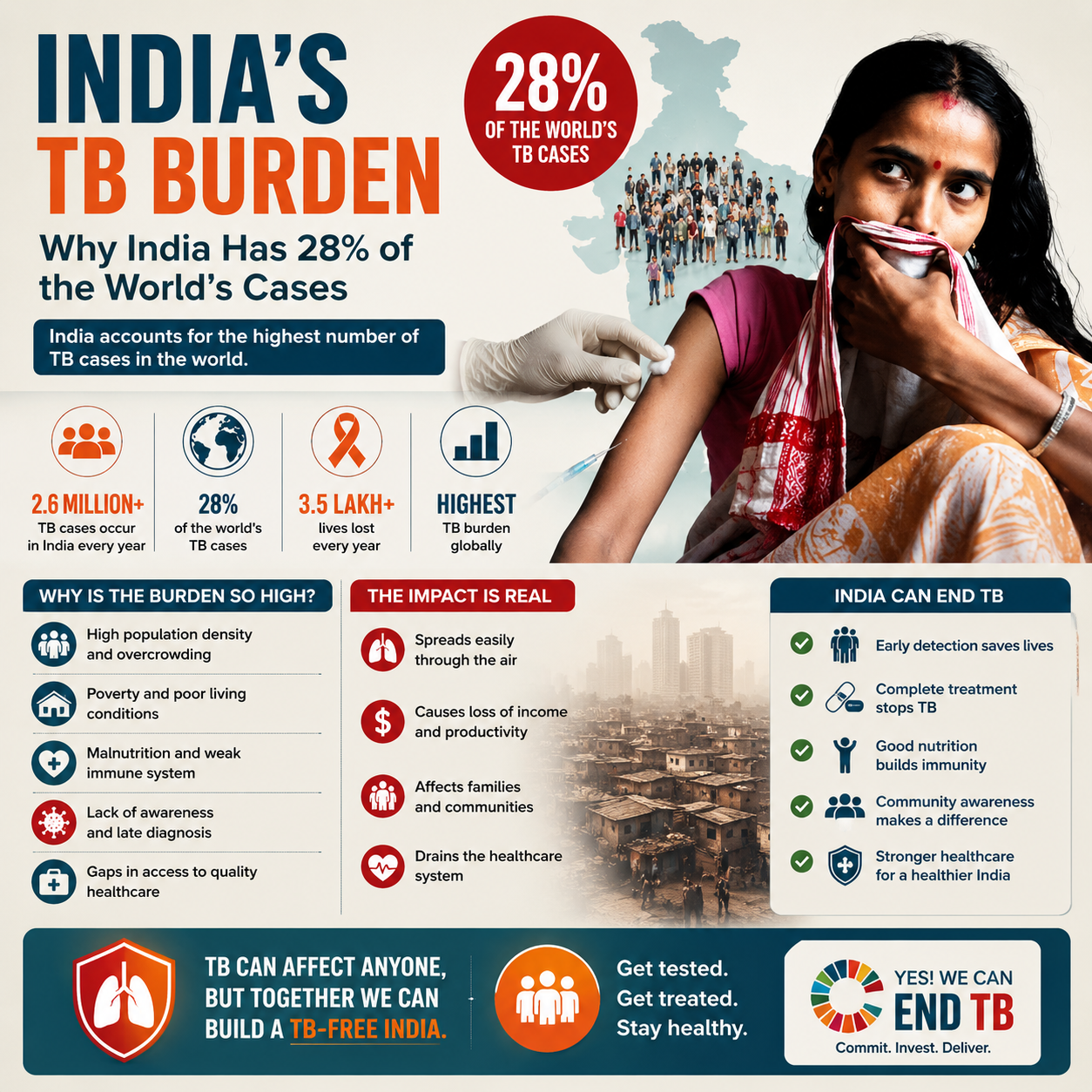
28% of the world’s TB cases are in India
despite India having 18% of the world’s population
 Tuberculosis · SCID-AI Blog

India’s TB Burden — Why India Has 28% of the World’s Cases

Dr. Pratik Savaj
Dr. Pratik SavajFNB Infectious Diseases · SCID-AI, Surat
India has 18% of the world’s population but 28% of its tuberculosis burden. 2.8 million new TB cases every year. 480,000 deaths annually — more than any other infectious disease in India. This is not inevitable. TB is curable, preventable, and the gap between India’s burden and its population share is explained by specific, addressable factors. This article explains what drives India’s TB epidemic and what is being done to end it.

The Scale of India’s TB Burden — The Numbers

The statistics are stark. India’s TB burden is not just a public health problem — it is one of the largest preventable causes of death and disability in the country, with enormous economic consequences for families and the national economy.

2.8M New TB cases per year India leads the world — 28% of global burden
480K TB deaths per year in India More than any other infectious disease
40% Of Indians have latent TB Infected but not currently ill — reactivation risk
₹100K+ Average economic loss per TB patient Lost wages + treatment cost burden on families

TB Kills More Indians Than Any Other Infectious Disease

TB kills more people in India than HIV, malaria, dengue, and typhoid combined. Yet it receives a fraction of the public awareness. A cough lasting 2–3 weeks in India is TB until GeneXpert is negative. The gap between India’s TB burden and global norms is not genetic or inevitable — it is driven by specific, addressable risk factors.

Why Does India Have 28% of the World’s TB?

India has a disproportionate TB burden for specific reasons — not all of which are poverty. The major drivers are quantifiable and each one is a target for intervention.

Risk Factor Contribution to India’s excess TB burden %
Malnutrition
54% of TB attributable
54%
Overcrowding
22%
Diabetes
13%
Smoking & tobacco
9%
HIV co-infection
6%
Alcohol use
5%

Malnutrition alone explains 54% of India’s TB burden. An undernourished person’s immune system cannot maintain the dormant latent TB infection — it reactivates. Addressing malnutrition is the single highest-impact TB prevention intervention for India. The Nikshay Poshan Yojana (₹500/month nutritional support for TB patients) is a direct response to this.

Overcrowding amplifies transmission. India’s urban slums, migrant worker dormitories, and crowded public transport systems create environments where one person with active pulmonary TB can expose dozens daily. A single GeneXpert-negative result the day before prevents this chain — but only if testing is done.
GeneXpert TB NTEP India SCID-AI
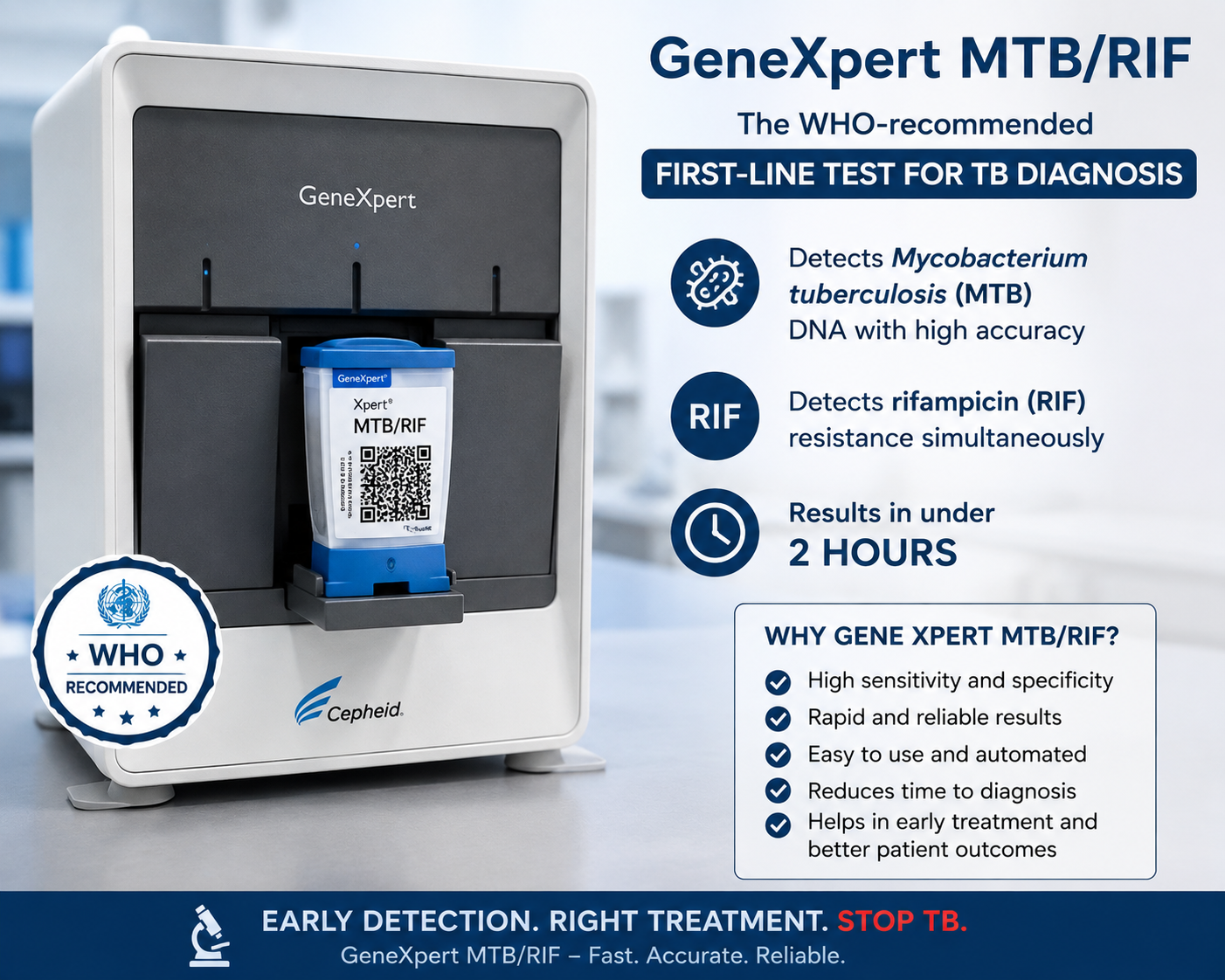
GeneXpert (CBNAAT) — the WHO-recommended first-line TB diagnostic. Available free at NTEP designated sites. The correct first test for anyone with cough lasting 2–3 weeks in Surat — not empirical antibiotics.

India’s National TB Elimination Programme (NTEP)

India’s national TB programme — the National TB Elimination Programme (NTEP), formerly the Revised National TB Control Programme — is one of the largest TB programmes in the world. It has achieved significant reductions in TB incidence and mortality since its expansion in the 1990s. Understanding what it offers helps patients access free care.

NTEP ComponentWhat It ProvidesWhere Available
GeneXpert (CBNAAT)Free molecular TB diagnosis. Detects TB + rifampicin resistance in 2 hours.District TB centres, designated GeneXpert sites
Line Probe Assay (LPA)Rapid detection of isoniazid + rifampicin resistance. For confirmed TB cases.State TB labs, National Reference Labs
DOTS / Daily FDCFree daily fixed-dose combination anti-TB drugs for 6 months. Drug-sensitive TB.All Primary Health Centres, TB units
MDR-TB TreatmentFree bedaquiline, delamanid, linezolid for MDR and XDR-TB.Designated DR-TB centres
Nikshay Poshan Yojana₹500/month nutritional support direct bank transfer. For all notified TB patients.Bank account required. Via Nikshay portal.
99-DOTS AdherenceDigital adherence monitoring. Unique phone number on each blister strip.All NTEP sites
Contact InvestigationTesting and IPT for household contacts of all TB patients.Via the notifying TB unit
HIV–TB co-testingFree HIV test for all TB patients. Free TB screen for all HIV patients.At point of care
MDR-TB treatment India SCID-AI Surat
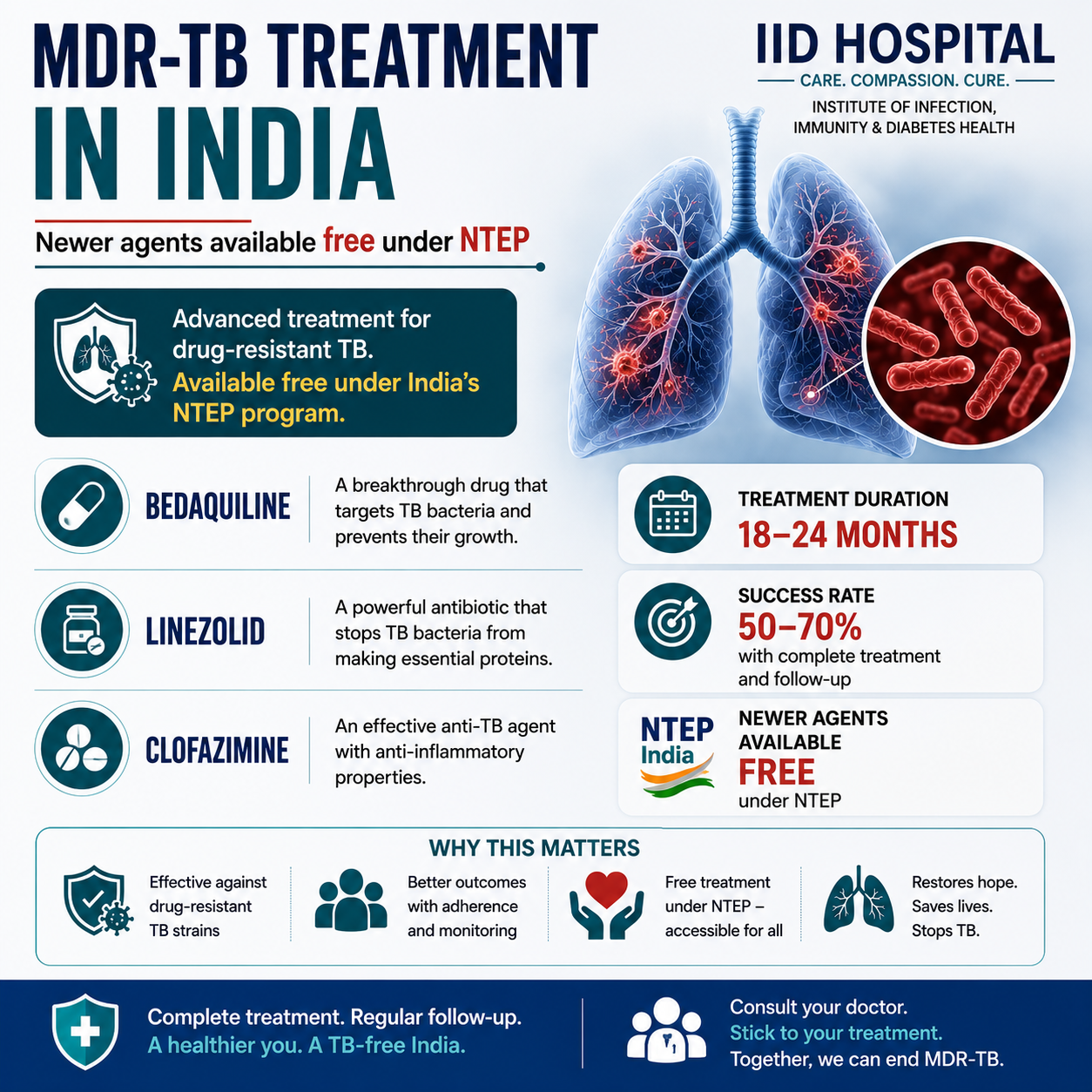
MDR-TB treatment in India: bedaquiline + linezolid + clofazimine — newer agents available free under NTEP. Treatment duration 18–24 months. Success rate 50–70%.

The Drug Resistance Crisis — India’s MDR-TB Burden

Drug-resistant TB is one of the most serious consequences of India’s incomplete treatment epidemic. India has approximately 130,000 new MDR-TB cases per year — the second highest in the world. MDR-TB arises when patients stop anti-TB treatment before completing the 6-month course — which kills sensitive bacteria but leaves resistant variants to multiply.

1
Drug-Sensitive TB

6-Month Regimen — HRZE Then HR

90%+ cure rate with proper adherence. HRZE (isoniazid + rifampicin + pyrazinamide + ethambutol) for 2 months, then HR for 4 months. Never stop early. Available free under NTEP.

2
MDR-TB (Rifampicin + Isoniazid Resistant)

18–24 Month Regimen — Newer Agents

50–70% cure rate. Bedaquiline + linezolid + clofazimine ± other agents. Requires monthly monitoring of cardiac function (QTc), liver function, vision. Available free at DR-TB centres. 3× longer treatment than drug-sensitive TB.

3
XDR-TB (Additional Fluoroquinolone Resistance)

Specialist Management — SCID-AI Surat

40–60% cure rate under optimal conditions. Requires the most complex antibiotic combinations: bedaquiline + linezolid + delamanid + pretomanid. Managed at SCID-AI in coordination with the NTEP DR-TB programme. Preventing XDR-TB = completing MDR-TB treatment fully.

What Individuals in Surat Can Do

India’s TB burden is driven by systemic factors — but individual actions make a real difference. The five actions that matter most:
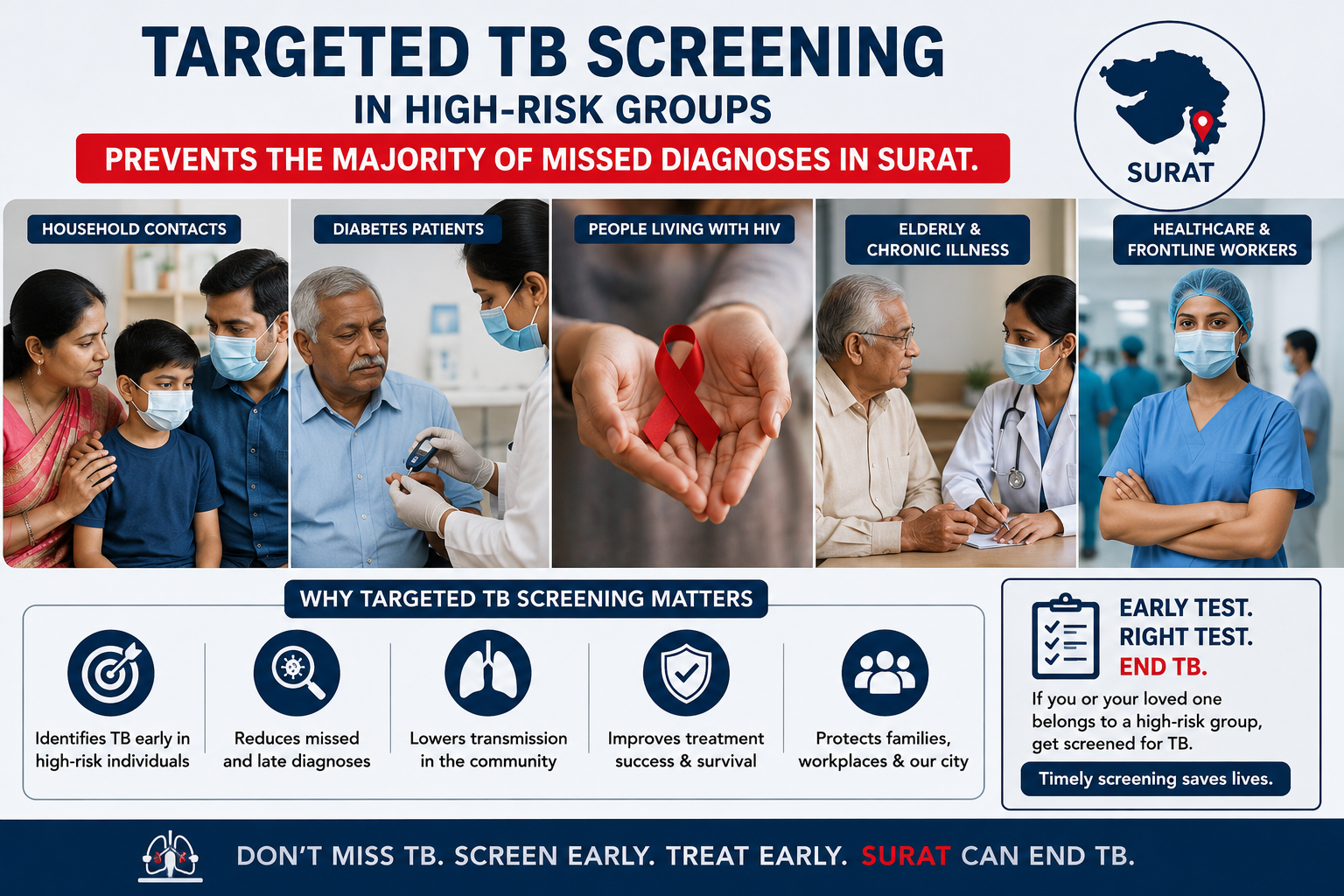
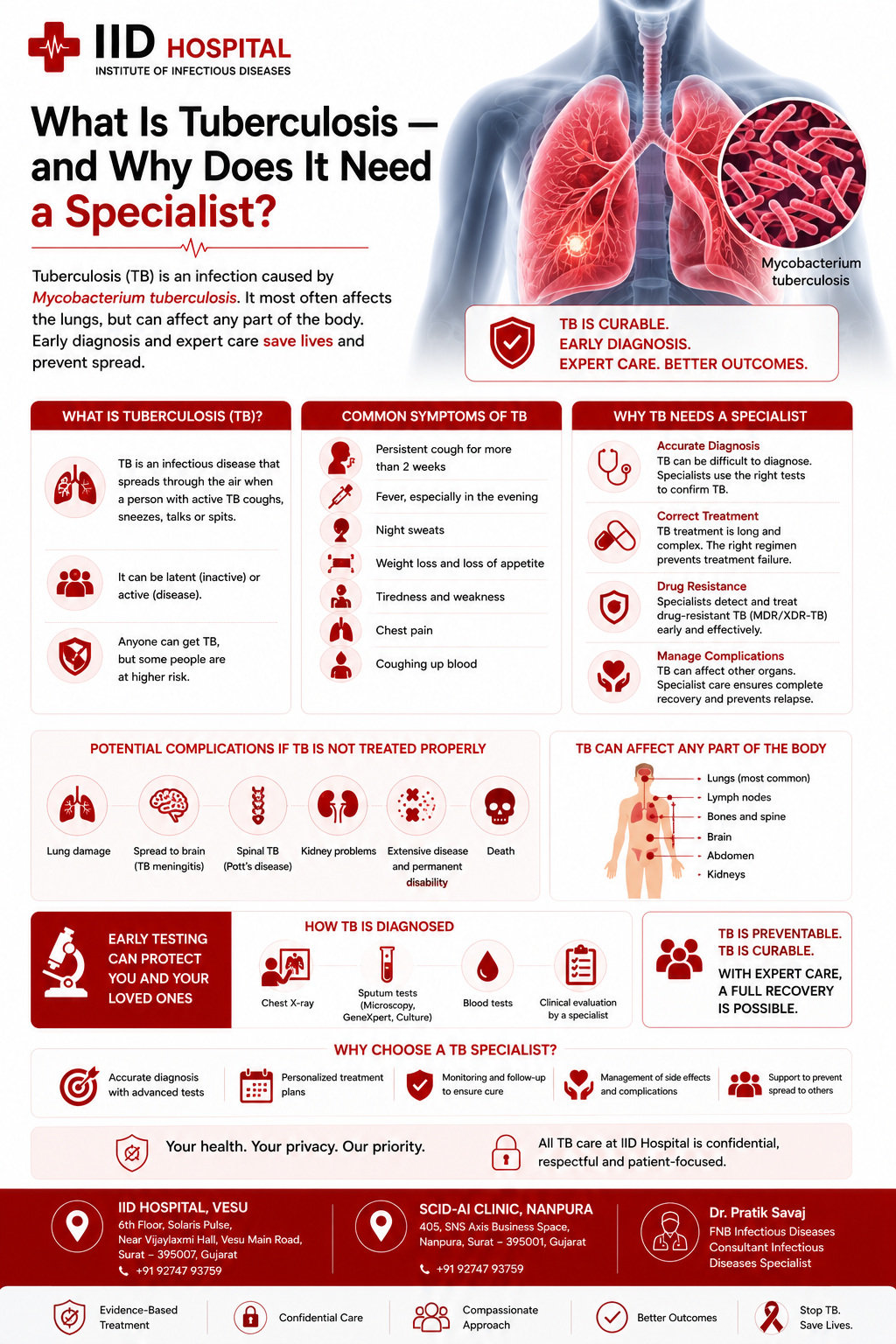
GeneXpert, not antibiotics, for any cough lasting 2–3 weeks. Three courses of antibiotics for a cough that doesn't resolve is not treatment — it is a 3-month delay in diagnosis.
Complete the full 6-month TB course. Never stop because you feel better at month 2. The last 4 months kill the slow-growing bacteria that cause relapse and drug resistance.
Household contact investigation. If a family member has TB, every household member must be tested and IGRA-positive contacts must receive preventive therapy (IPT).
Notify your TB case to NTEP. Every TB case treated in the private sector must be notified via Nikshay. This is legally required and enables contact tracing.
Ventilate your home and workplace. Open windows dramatically reduce TB transmission. The single most effective environmental intervention.
TB prevention Surat SCID-AI
Contact investigation at SCID-AI — all household members of a TB patient are screened with IGRA + CXR. IGRA-positive contacts receive isoniazid preventive therapy (IPT) to prevent reactivation.
TB elimination India 2025 SCID-AI
India has set a TB elimination target — incidence below 10 per 100,000 — requiring a 95% reduction from current levels. The progress is real but the timeline is optimistic. Sustained effort across nutrition, housing, diagnosis speed, and treatment completion is the path.

TB Elimination — Is It Achievable?

India’s TB incidence has fallen from approximately 256 per 100,000 in 2015 to around 195 in recent years — a 20–25% reduction in a decade. This is meaningful progress. But elimination requires a 95% reduction from 2015 levels — reaching below 10 per 100,000. The 2025 target will not be met. A more realistic timeline: 2035–2045, contingent on sustained political will, social determinant improvements, and prevention of MDR-TB amplification.

The pathways to elimination are known: universal access to GeneXpert diagnosis; 6-month complete treatment for all patients; contact investigation and preventive therapy for all contacts; nutritional support adequate to actually address malnutrition; housing improvements that reduce overcrowding; and bidirectional TB-diabetes screening. None of these is technically impossible. The barrier is sustained implementation at scale.

TB at SCID-AI — GeneXpert, Contact Investigation, MDR Management

At SCID-AI, Dr. Savaj provides GeneXpert-based TB diagnosis, drug sensitivity testing, MDR and XDR-TB management, household contact investigation with IGRA, and isoniazid preventive therapy (IPT) for contacts. Every TB patient is also tested for HIV and diabetes. TB notification to NTEP is completed for every diagnosed case. No patient with TB leaves SCID-AI without their household contacts assessed.

India’s TB Rule

28% of the world’s TB cases in 18% of the world’s population. The gap is driven by malnutrition, crowding, delayed diagnosis, and incomplete treatment. Every individual action matters: GeneXpert for a 2–3 week cough; complete the 6-month course; test household contacts; never stop TB treatment early. TB is curable. Drug resistance is preventable. Elimination is achievable.
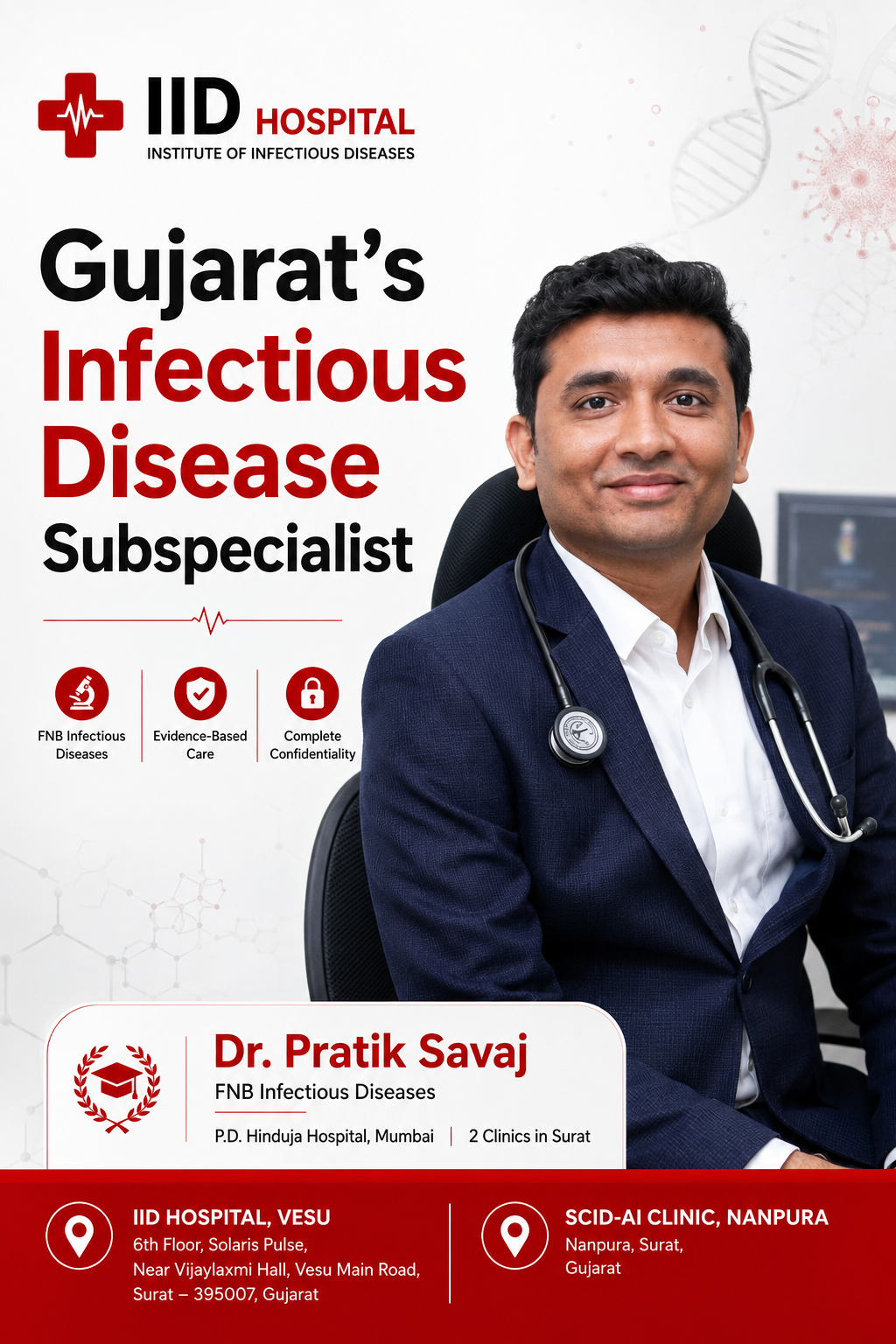
TB specialist SCID-AI Surat
Dr. Pratik Savaj MBBS · DNB Medicine · Fellowship ID · FNB Infectious Diseases · P.D. Hinduja Hospital, Mumbai

Dr. Savaj provides GeneXpert TB diagnosis, MDR-TB management, household contact investigation, and IGRA-based preventive therapy at SCID-AI, Nanpura, Surat. +91 72839 34807.

Common Questions

Frequently Asked Questions

Answered by Dr. Pratik Savaj, FNB Infectious Diseases, SCID-AI, Surat.

What is India's TB Elimination target and is it realistic?
India has set an ambitious target of TB elimination by 2025 — defined as incidence below 10 cases per 100,000 population (the WHO elimination threshold). This target was set 10 years ahead of the global SDG TB target of 2030. As of the most recent WHO Global TB Report data, India’s TB incidence remains approximately 195–210 per 100,000 — still far above the elimination threshold. The 2025 target will not be met. This is acknowledged by public health experts. However, the national programme has achieved significant reductions: TB incidence fell from approximately 256 per 100,000 in 2015 to around 195 in recent years — a 20–25% reduction. The TB mortality rate has fallen even more steeply, reflecting improved access to treatment. Revised realistic targets: Most epidemiologists now project elimination closer to 2035–2045, contingent on sustained programme performance, social determinant improvements (nutrition, housing, HIV), and prevention of MDR-TB amplification. The ambition of the target is not wrong — it has galvanised resources and political will. But honest communication about the timeline is important.
What is XDR-TB and how common is it in India?
XDR-TB (Extensively Drug-Resistant TB) is defined as TB resistant to isoniazid, rifampicin, any fluoroquinolone, AND at least one of the second-line injectable agents (amikacin, kanamycin, capreomycin) — or under the 2021 WHO revised definition, resistant to isoniazid, rifampicin, any fluoroquinolone, AND bedaquiline or linezolid. India has one of the highest XDR-TB burdens globally. XDR-TB arises from: inadequate MDR-TB treatment (wrong drugs, wrong doses, poor monitoring); transmission of already-resistant strains from person to person; poor drug quality and supply. Treatment of XDR-TB requires 18–24 months of newer agents: bedaquiline, delamanid, linezolid, clofazimine — under strict specialist supervision. Treatment success rates: approximately 40–60% for XDR-TB under optimal conditions. This compares to >90% for drug-sensitive TB. At SCID-AI, Dr. Savaj manages MDR and XDR-TB cases using current WHO-recommended regimens with culture-guided drug selection.
Is TB free to treat in India?
Yes — TB diagnosis and treatment are completely free under India’s National TB Elimination Programme (NTEP, formerly RNTCP). What is available free of charge at government facilities: GeneXpert (CBNAAT) testing: available at designated Microscopy Centres and GeneXpert sites. Line Probe Assay (LPA): for rapid detection of rifampicin and isoniazid resistance. Culture and Drug Sensitivity Testing (C&DST): at National Reference Laboratories. All first-line TB drugs: under DOTS (Directly Observed Treatment, Short-course). Second-line drugs for MDR-TB: bedaquiline, delamanid, linezolid are now available free under the national programme at designated DR-TB centres. Nikshay Poshan Yojana: ₹500/month nutritional support. Private sector treatment: while free options exist, many patients choose private practitioners — where quality of care varies significantly and antibiotic stewardship is often poor. The message: no one in India should avoid TB diagnosis or treatment due to cost. All TB patients should be notified to NTEP regardless of whether they are treated in the public or private sector.
Can a person who has had TB in the past get it again?
Yes — and this is clinically important in high-burden settings like India. TB recurrence occurs through two mechanisms: Relapse: the original infection was not fully eliminated — surviving bacteria reactivate. Most common with incomplete treatment (the patient stopped early or missed doses). Relapse typically occurs within 6–12 months of completing treatment. The recurrence may be with a drug-resistant strain if the original treatment was inadequate. Reinfection: the patient was genuinely cured but was re-exposed to TB from the community and contracted a new infection. In high-burden cities like Surat, the annual risk of TB exposure is significant — someone previously cured has the same community exposure risk as everyone else. Risk factors for recurrence: incomplete original treatment (most important); HIV co-infection (dramatically increases reactivation risk); uncontrolled diabetes; malnutrition; continued crowded living conditions. At SCID-AI: every patient who has completed TB treatment is counselled about recurrence risk, symptoms to watch for, and the importance of immediate investigation if symptoms recur — with repeat GeneXpert including drug sensitivity testing.
What is the Nikshay Poshan Yojana and does it help?
Nikshay Poshan Yojana (NPY) is India’s nutritional support programme for TB patients under the National TB Elimination Programme (NTEP). It provides a direct benefit transfer of ₹500 per month to each notified TB patient for the duration of treatment — 6 months for drug-sensitive TB, longer for MDR-TB. The rationale: malnutrition is the single most important TB risk factor in India, contributing to an estimated 54% of India’s TB incidence. Addressing nutritional deficiency during treatment improves treatment outcomes and reduces relapse risk. Does it work? Evidence suggests it improves treatment completion rates and reduces default (treatment abandonment). However, ₹500 per month is below the actual cost of adequate nutritional supplementation — and disbursement delays (due to banking issues) mean many patients do not receive payments consistently. The programme is a step in the right direction but requires better implementation and potentially higher benefit amounts to have its full impact.
How does TB spread in crowded Indian cities like Surat?
Surat has specific urban characteristics that drive TB transmission. Population density: Surat is one of India’s fastest-growing cities with significant migrant populations living in crowded dormitories, slums, and shared accommodation — ideal conditions for airborne transmission. Migrant workers: workers from TB-endemic states (Bihar, UP, Jharkhand) who may have latent or active TB arrive in Surat’s industrial zones. Crowded factory floors and shared accommodation amplify transmission. Textile industry: textile dust inhalation (without adequate respiratory protection) causes chronic lung inflammation that increases susceptibility to TB. Delayed diagnosis: workers with productive cough continue working due to economic pressure, seeing multiple private practitioners who may not order GeneXpert, resulting in months of community transmission before diagnosis. Ventilation: many factory floors, warehouses, and informal settlements have inadequate ventilation — the single most important environmental factor in TB transmission. The solution in Surat: GeneXpert for any cough lasting 2–3 weeks; contact investigation at the workplace, not just the household; improved factory ventilation; and migrant TB screening programmes.
What is DOTS and is it still used in India?
DOTS (Directly Observed Treatment, Short-course) is the WHO-recommended TB treatment strategy that has been the backbone of India’s national programme since the 1990s. The core principle: a health worker or designated supporter watches the patient swallow every dose of anti-TB medication — to ensure adherence and prevent treatment default. India’s programme has evolved significantly: From RNTCP to NTEP: the Revised National TB Control Programme was renamed the National TB Elimination Programme in 2020, reflecting the shift from “control” to “elimination.” Daily vs intermittent DOTS: India has shifted from thrice-weekly to daily fixed-dose combination therapy — aligned with WHO guidelines, as daily therapy produces better outcomes. 99-DOTS: a digital adherence monitoring tool using a unique phone number on each blister pack strip — patients call a number when opening each strip, providing real-time adherence data. Nikshay platform: India’s digital TB management system that tracks every notified TB patient from diagnosis to treatment outcome. DOTS remains relevant and effective, but has evolved into a more patient-centred, technology-supported framework.
What role does diabetes play in India's TB epidemic?
Diabetes is the second most important TB risk factor in India after malnutrition — and it is growing. The statistics: people with diabetes have a 2–3 times higher risk of developing active TB than non-diabetics. India has the world’s second-largest diabetic population (over 100 million). The intersection of TB and diabetes — the “dual epidemic” — is particularly severe in urban India where Type 2 diabetes is increasingly prevalent. Mechanisms: poor glycaemic control impairs neutrophil and macrophage function — the primary immune defence against TB. High blood glucose provides a more favourable environment for mycobacterial replication. Clinical implications: TB is harder to treat in diabetics (poorer drug absorption, higher relapse rates, higher mortality); anti-TB drugs (particularly rifampicin) interact with diabetes medications; and TB itself worsens glycaemic control. The bidirectional screen: every TB patient should have their HbA1c checked; every diabetic with respiratory symptoms should have GeneXpert ordered. This bidirectional TB-DM screening is recommended by WHO and NTEP guidelines. At SCID-AI, Dr. Savaj screens all TB patients for diabetes and manages the bidirectional interaction.

Cough for 2–3 Weeks? GeneXpert, Not Antibiotics.

TB is curable. Drug resistance is preventable. GeneXpert — not a chest X-ray and empirical antibiotics. Dr. Pratik Savaj, FNB Infectious Diseases, SCID-AI, Nanpura, Surat — no referral needed.

Dr. Pratik Savaj
Dr. Pratik Savaj FNB Infectious Diseases · SCID-AI, Surat
Morning11:00 AM – 1:00 PM, Mon–Sat
Evening4:00 PM – 6:00 PM, Mon–Sat
Phone+91 72839 34807
);document.body.style.overflow='';});}); })();