The Scale of India’s TB Burden — The Numbers
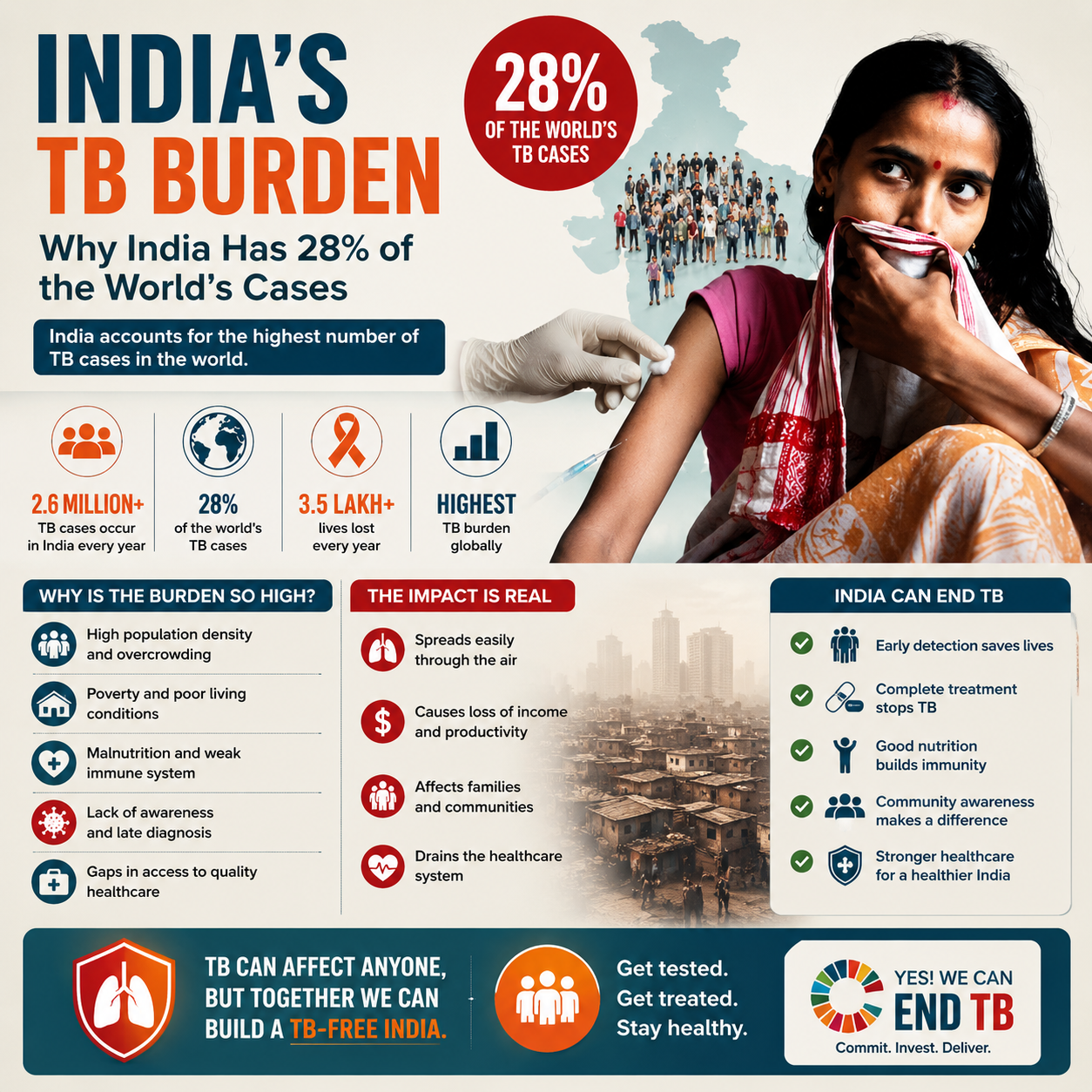
The statistics are stark. India’s TB burden is not just a public health problem — it is one of the largest preventable causes of death and disability in the country, with enormous economic consequences for families and the national economy.
TB Kills More Indians Than Any Other Infectious Disease
TB kills more people in India than HIV, malaria, dengue, and typhoid combined. Yet it receives a fraction of the public awareness. A cough lasting 2–3 weeks in India is TB until GeneXpert is negative. The gap between India’s TB burden and global norms is not genetic or inevitable — it is driven by specific, addressable risk factors.
Why Does India Have 28% of the World’s TB?
India has a disproportionate TB burden for specific reasons — not all of which are poverty. The major drivers are quantifiable and each one is a target for intervention.
Malnutrition alone explains 54% of India’s TB burden. An undernourished person’s immune system cannot maintain the dormant latent TB infection — it reactivates. Addressing malnutrition is the single highest-impact TB prevention intervention for India. The Nikshay Poshan Yojana (₹500/month nutritional support for TB patients) is a direct response to this.
Overcrowding amplifies transmission. India’s urban slums, migrant worker dormitories, and crowded public transport systems create environments where one person with active pulmonary TB can expose dozens daily. A single GeneXpert-negative result the day before prevents this chain — but only if testing is done.
India’s National TB Elimination Programme (NTEP)
India’s national TB programme — the National TB Elimination Programme (NTEP), formerly the Revised National TB Control Programme — is one of the largest TB programmes in the world. It has achieved significant reductions in TB incidence and mortality since its expansion in the 1990s. Understanding what it offers helps patients access free care.
| NTEP Component | What It Provides | Where Available |
|---|---|---|
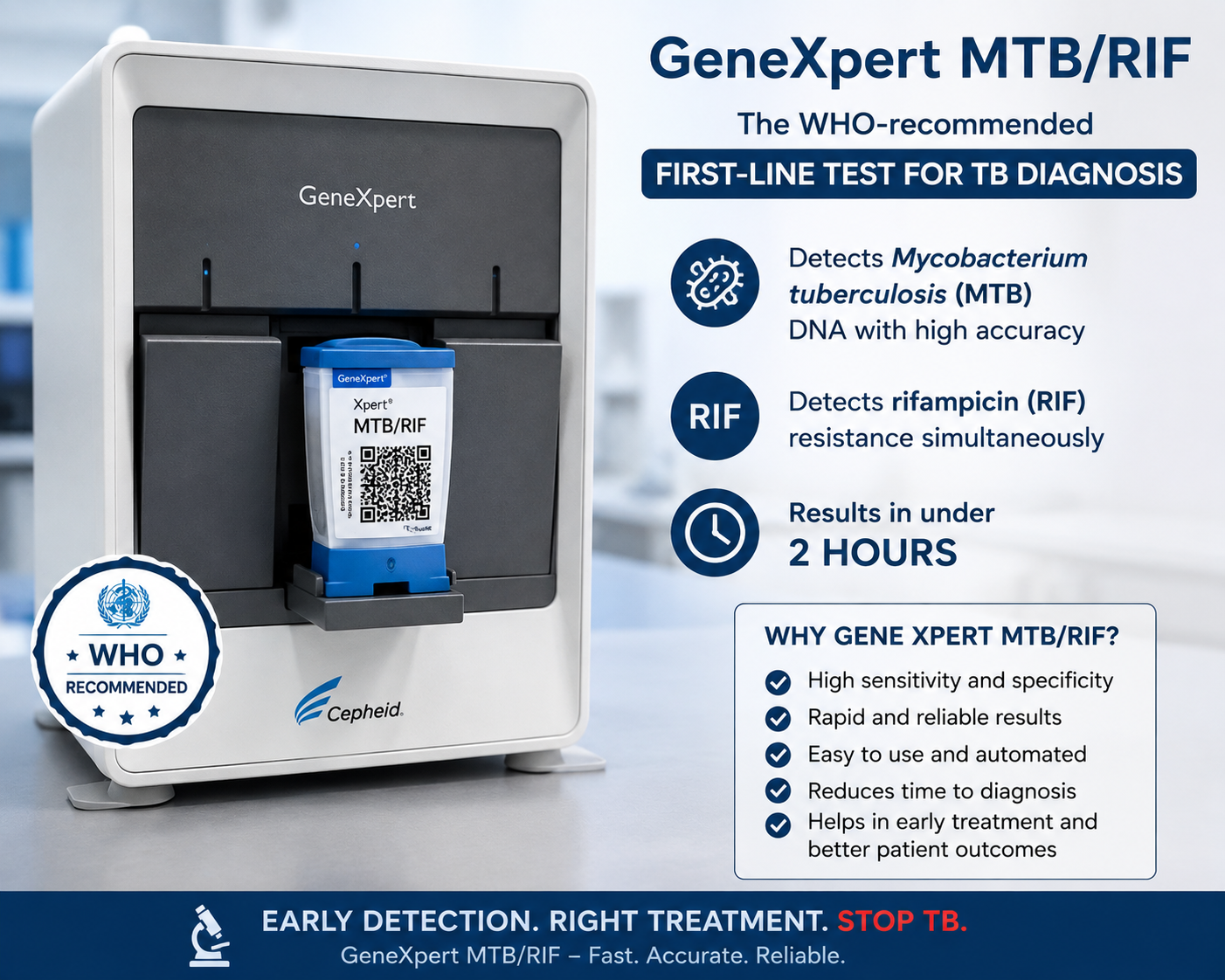
| GeneXpert (CBNAAT) | Free molecular TB diagnosis. Detects TB + rifampicin resistance in 2 hours. | District TB centres, designated GeneXpert sites |
| Line Probe Assay (LPA) | Rapid detection of isoniazid + rifampicin resistance. For confirmed TB cases. | State TB labs, National Reference Labs |
| DOTS / Daily FDC | Free daily fixed-dose combination anti-TB drugs for 6 months. Drug-sensitive TB. | All Primary Health Centres, TB units |
| MDR-TB Treatment | Free bedaquiline, delamanid, linezolid for MDR and XDR-TB. | Designated DR-TB centres |
| Nikshay Poshan Yojana | ₹500/month nutritional support direct bank transfer. For all notified TB patients. | Bank account required. Via Nikshay portal. |
| 99-DOTS Adherence | Digital adherence monitoring. Unique phone number on each blister strip. | All NTEP sites |
| Contact Investigation | Testing and IPT for household contacts of all TB patients. | Via the notifying TB unit |
| HIV–TB co-testing | Free HIV test for all TB patients. Free TB screen for all HIV patients. | At point of care |
The Drug Resistance Crisis — India’s MDR-TB Burden
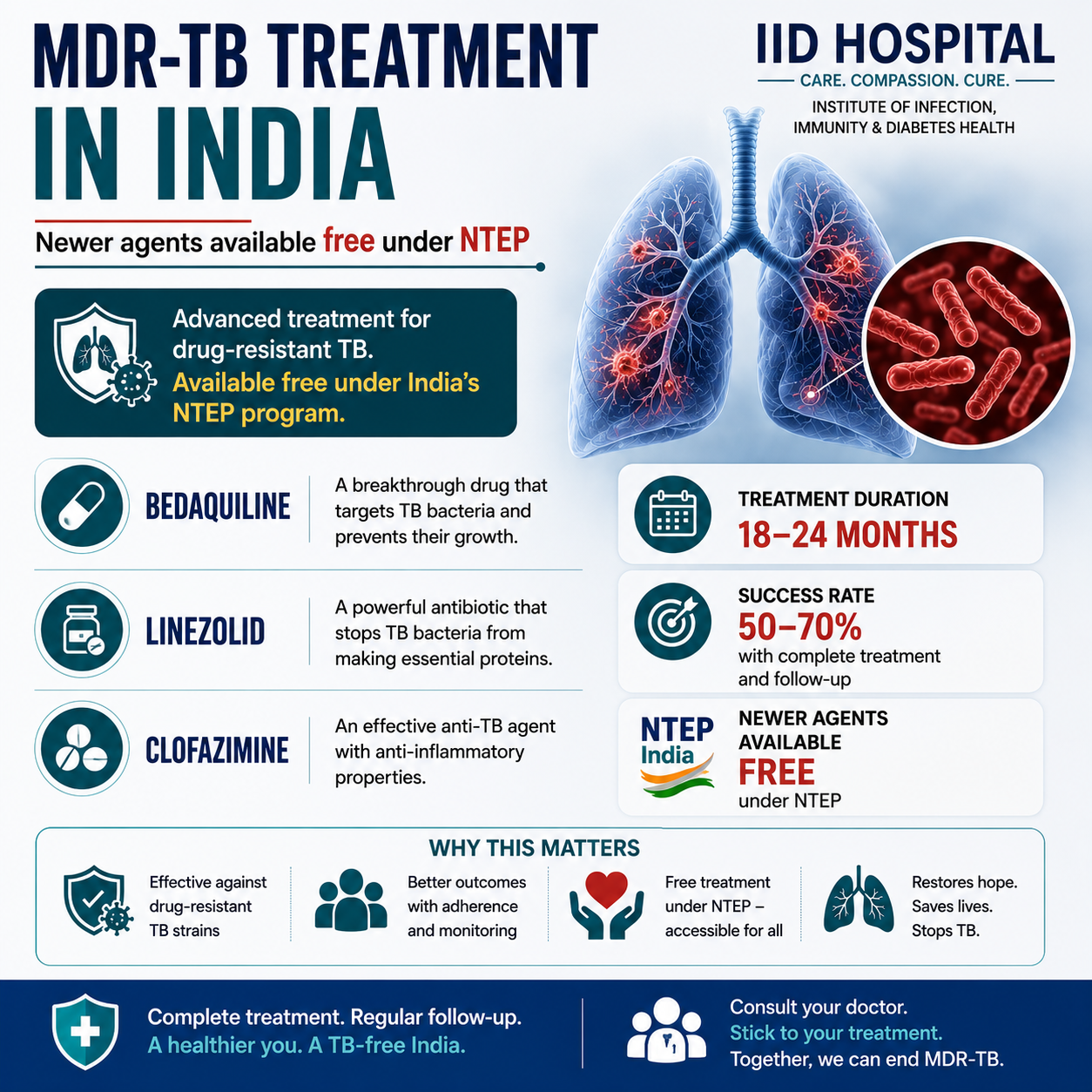
Drug-resistant TB is one of the most serious consequences of India’s incomplete treatment epidemic. India has approximately 130,000 new MDR-TB cases per year — the second highest in the world. MDR-TB arises when patients stop anti-TB treatment before completing the 6-month course — which kills sensitive bacteria but leaves resistant variants to multiply.
6-Month Regimen — HRZE Then HR
90%+ cure rate with proper adherence. HRZE (isoniazid + rifampicin + pyrazinamide + ethambutol) for 2 months, then HR for 4 months. Never stop early. Available free under NTEP.
18–24 Month Regimen — Newer Agents
50–70% cure rate. Bedaquiline + linezolid + clofazimine ± other agents. Requires monthly monitoring of cardiac function (QTc), liver function, vision. Available free at DR-TB centres. 3× longer treatment than drug-sensitive TB.
Specialist Management — IID Hospital Surat
40–60% cure rate under optimal conditions. Requires the most complex antibiotic combinations: bedaquiline + linezolid + delamanid + pretomanid. Managed at IID Hospital in coordination with the NTEP DR-TB programme. Preventing XDR-TB = completing MDR-TB treatment fully.
What Individuals in Surat Can Do
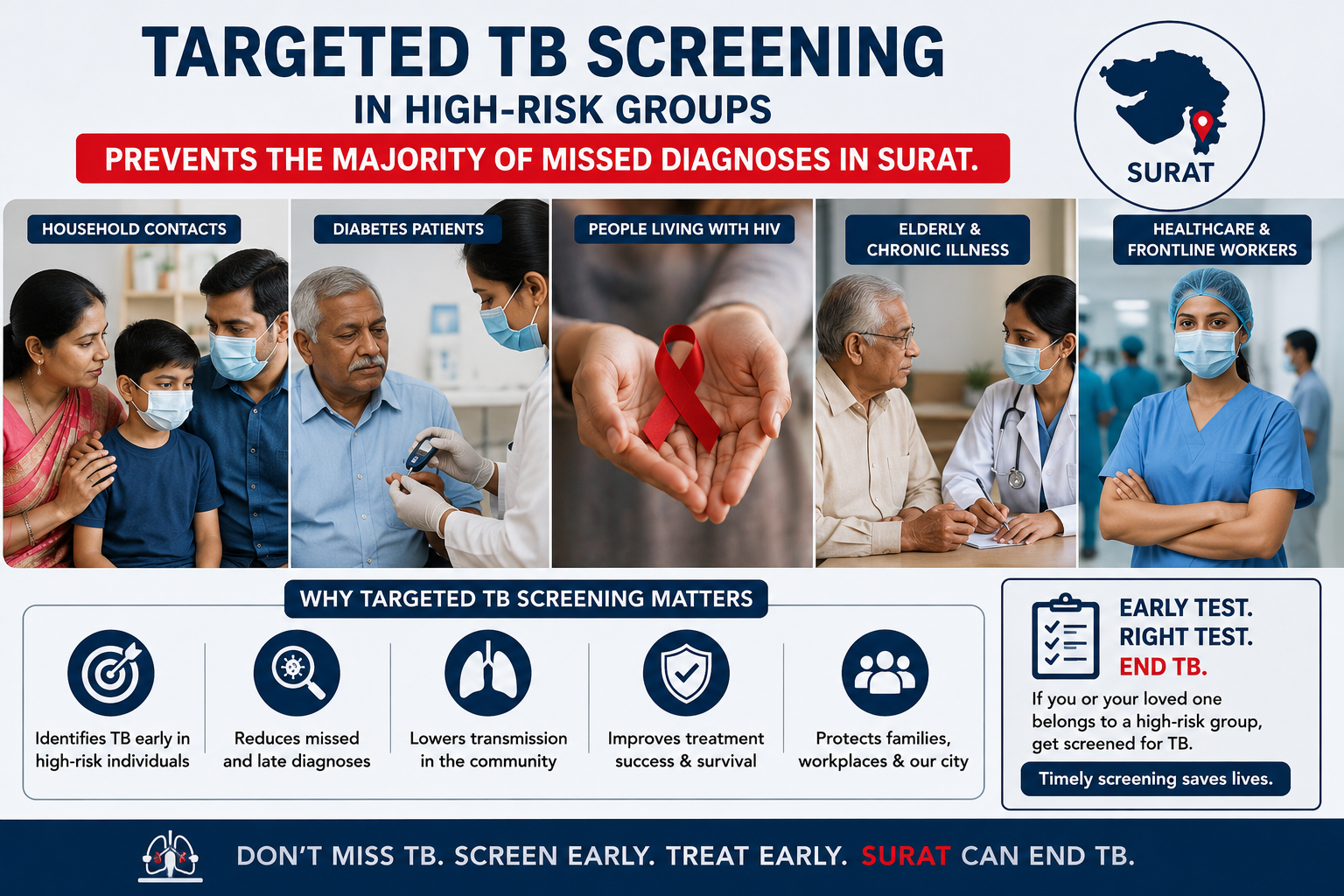
India’s TB burden is driven by systemic factors — but individual actions make a real difference. The five actions that matter most:
TB Elimination — Is It Achievable?
India’s TB incidence has fallen from approximately 256 per 100,000 in 2015 to around 195 in recent years — a 20–25% reduction in a decade. This is meaningful progress. But elimination requires a 95% reduction from 2015 levels — reaching below 10 per 100,000. The 2025 target will not be met. A more realistic timeline: 2035–2045, contingent on sustained political will, social determinant improvements, and prevention of MDR-TB amplification.
The pathways to elimination are known: universal access to GeneXpert diagnosis; 6-month complete treatment for all patients; contact investigation and preventive therapy for all contacts; nutritional support adequate to actually address malnutrition; housing improvements that reduce overcrowding; and bidirectional TB-diabetes screening. None of these is technically impossible. The barrier is sustained implementation at scale.
TB at IID Hospital — GeneXpert, Contact Investigation, MDR Management
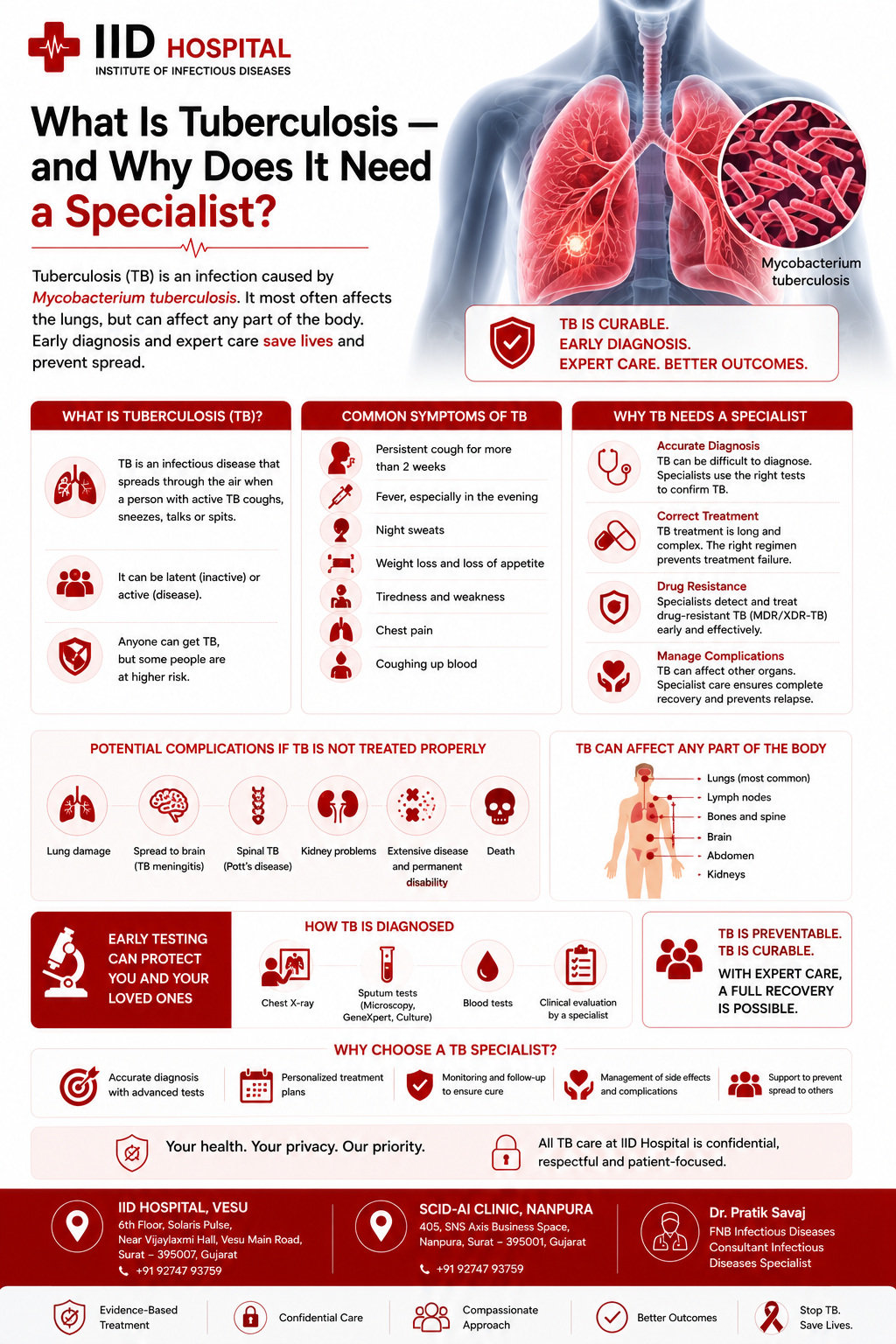
At IID Hospital, Dr. Savaj provides GeneXpert-based TB diagnosis, drug sensitivity testing, MDR and XDR-TB management, household contact investigation with IGRA, and isoniazid preventive therapy (IPT) for contacts. Every TB patient is also tested for HIV and diabetes. TB notification to NTEP is completed for every diagnosed case. No patient with TB leaves IID Hospital without their household contacts assessed.
India’s TB Rule
28% of the world’s TB cases in 18% of the world’s population. The gap is driven by malnutrition, crowding, delayed diagnosis, and incomplete treatment. Every individual action matters: GeneXpert for a 2–3 week cough; complete the 6-month course; test household contacts; never stop TB treatment early. TB is curable. Drug resistance is preventable. Elimination is achievable.