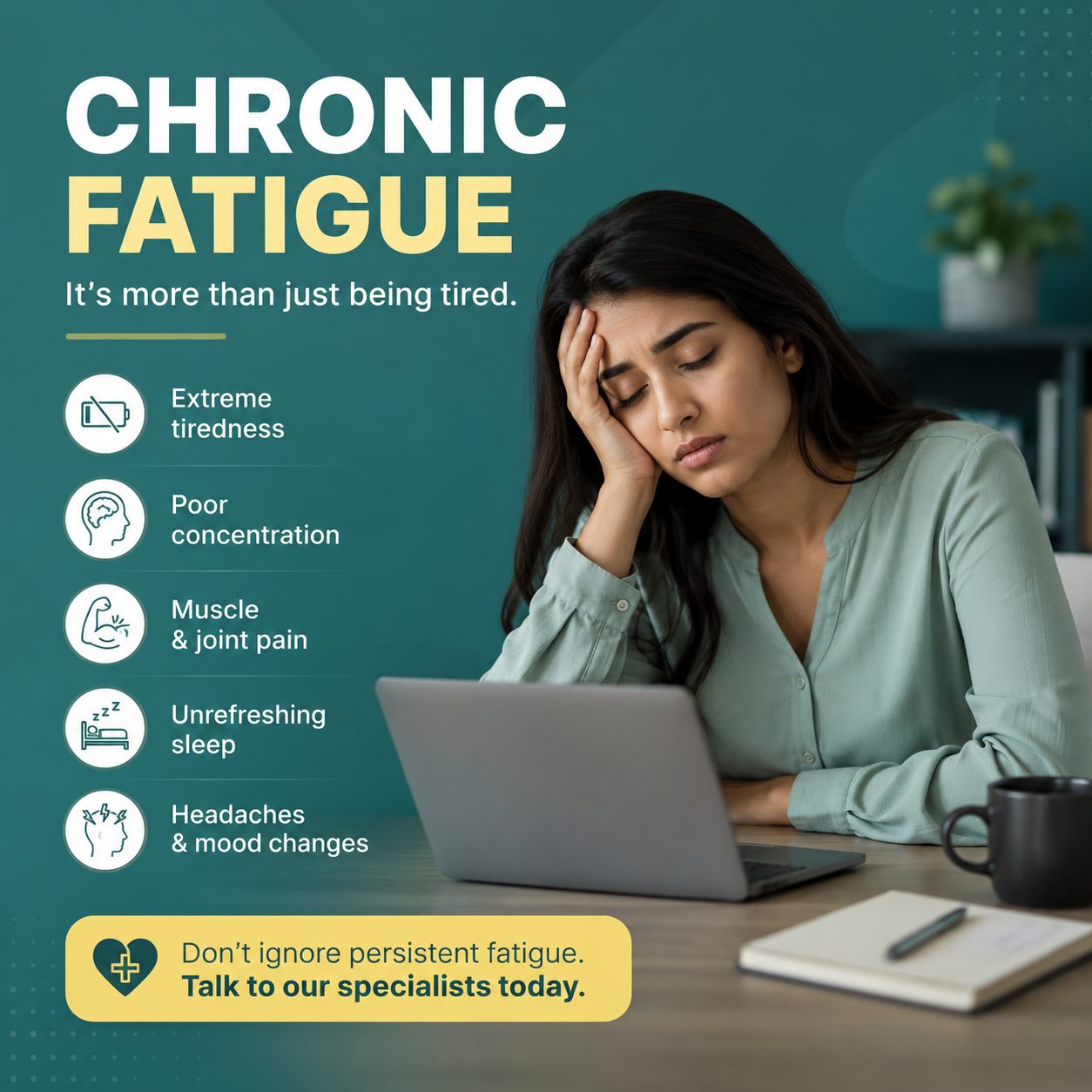
Chronic FatigueWhen Tiredness Has a Medical Cause
Everyone feels tired. But fatigue that is persistent, out of proportion to activity, present most days, and not relieved by rest — lasting more than 6 weeks — is a medical symptom that needs investigation. In India, anaemia, thyroid disease, tuberculosis, and uncontrolled diabetes are the most commonly missed and most easily treated causes.
When Fatigue Needs Investigation
Top Treatable Causes in India
Normal Tiredness vs Pathological Fatigue — The Clinical Distinction
Fatigue is one of the most common complaints in medicine — and one of the most dismissed. The key clinical distinction is not how tired a person feels, but whether the fatigue is proportional to its cause or disproportionate and persistent beyond what any trigger can explain. Pathological fatigue has four defining features: present most days, significantly impacts function, not relieved by rest or sleep, and has lasted more than 6 weeks without an obvious cause.
The mechanism differs entirely by cause. Anaemia causes fatigue through reduced oxygen delivery. Thyroid disease slows every metabolic process. TB and HIV create fatigue through chronic immune activation and increased metabolic demand. Diabetes causes cellular energy starvation. Understanding the mechanism guides the investigation — which is why a blood panel before a psychological diagnosis is non-negotiable at IID Hospital.
Fatigue Spectrum — Clinical Thresholds
Normal Tiredness
Resolves with rest
Post-illness fatigue
2–6 weeks; monitor
Persistent — Investigate
6+ weeks; blood panel now
+ Symptoms
Urgent
The Most Harmful Error
Attributing fatigue to “stress” or “overwork” without a blood panel. This delays the diagnosis of iron deficiency (reversible in weeks), hypothyroidism (reversible in months), TB (curable in 6 months), and HIV (manageable lifelong with ART). Every patient with chronic fatigue deserves a basic blood panel before a psychological diagnosis is made.
Normal vs Pathological — Side by Side
Normal Tiredness
Pathological Fatigue
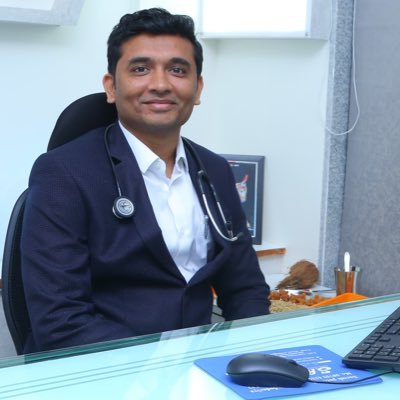
Dr. Pratik Savaj
FNB Infectious Diseases · IID Hospital, Surat
Chronic fatigue & post-infectious fatigue
What Causes Chronic Fatigue — Organ System by Organ System
The majority of chronic fatigue in India has a treatable organic cause. The four groups below cover the most common ones. Iron deficiency, B12 deficiency, hypothyroidism, and uncontrolled diabetes are found with a single blood panel and resolve with simple treatment.
Blood & Nutritional
Most common cause in India — simple blood panel
Iron Deficiency Anaemia
Most common cause in India. Fatigue from reduced O₂ delivery + depleted energy enzymes independent of haemoglobin. Check serum ferritin — can be low even when Hb is borderline normal. Treatable with oral iron in 4–8 weeks.
Vitamin B12 Deficiency
Very common in vegetarians, elderly, and metformin users. Causes fatigue through megaloblastic anaemia AND direct neurological effects. Normal Hb does not exclude B12 deficiency. B12 injections produce dramatic improvement within 1–2 weeks.
Folate Deficiency
Similar to B12 — megaloblastic anaemia with fatigue. Common in pregnancy, alcoholism, malabsorption. Serum folate. Treatable with oral folic acid.
Endocrine & Metabolic
Hormone imbalances that slow every cell
Hypothyroidism
Reduced thyroid hormone slows every metabolic process. Fatigue + weight gain + cold intolerance + constipation. TSH is the best single screening test. Treatable with levothyroxine — fatigue resolves in 4–12 weeks.
Diabetes (Uncontrolled)
Cells starved of glucose cause fatigue even in hyperglycaemia. Undiagnosed T1DM or poorly controlled T2DM. Polyuria + polydipsia + weight loss alongside. Fasting glucose + HbA1c. Treating glucose resolves fatigue.
Addison’s Disease
Adrenal insufficiency — cortisol deficiency causes profound fatigue, postural hypotension, weight loss, and hyperpigmentation of skin creases. Morning cortisol <140 nmol/L warrants further assessment. Rare but treatable.
Infectious Causes
Investigate systematically — TB first in India
Tuberculosis
Chronic immune activation + increased metabolic demand. Extrapulmonary TB causes fatigue without cough, normal CXR. IGRA + GeneXpert + CT chest/abdomen. Fatigue resolves dramatically within 4–6 weeks of anti-TB treatment.
HIV
Primary HIV and advanced HIV (low CD4) both cause significant fatigue. Post-diagnosis fatigue also common from psychological impact + opportunistic infections. HIV test mandatory in every chronic fatigue workup. Confidential at IID Hospital.
Chronic Hepatitis B
Active HBV replication with elevated liver enzymes causes fatigue through liver inflammation. HBsAg screening identifies carriers; HBV DNA + ALT determines if active inflammation is the driver. Antivirals suppress replication and resolve fatigue.
Cardiac, Renal, Autoimmune & Other
Broader differential — guided by clinical picture
Cardiac Causes
Heart failure, severe valvular disease, arrhythmias — fatigue through reduced cardiac output. Fatigue + breathlessness + leg swelling + orthopnoea. Echocardiogram. Older patients with exertional fatigue must have cardiac causes excluded.
Autoimmune (SLE / RA / IBD)
Chronic inflammation (elevated IL-6, TNF) causes fatigue independent of anaemia or organ dysfunction. ANA, RF, anti-CCP, faecal calprotectin. Fatigue in young women with joint symptoms: SLE must be excluded.
Depression (Exclusion Only)
Causes fatigue, anhedonia, and sleep disturbance. Must only be considered after all organic causes are excluded. Treating TB, anaemia, or hypothyroidism often resolves associated depression simultaneously.
Fatigue After Infection — Post-COVID, Post-Dengue, Post-Chikungunya
Post-infectious fatigue is persistent fatigue following an acute infection that continues beyond the expected recovery period. It is an important and commonly missed cause of chronic fatigue in Surat, where dengue, chikungunya, and COVID-19 cause large numbers of post-infectious cases every year.
Post-COVID
Long COVID Fatigue
4+ weeks after acute COVID-19
Post-Dengue
Post-Dengue Fatigue Syndrome
2–8 weeks after dengue
Post-Chikungunya
Post-CHIK Fatigue & Arthritis
Months after fever
Post-EBV / Viral
Post-Viral Fatigue Syndrome
1–3 months after EBV
Post-Infectious Fatigue vs Active Infection
Before diagnosing post-infectious fatigue, active infection must be excluded. A patient presenting with fatigue 6 weeks after dengue may have post-dengue fatigue syndrome — or may have developed a separate active infection (TB, secondary bacterial infection) during the immunosuppressed post-dengue period. Blood culture, GeneXpert, and a CBC are part of the assessment even in presumed post-infectious fatigue.
How Chronic Fatigue Is Investigated
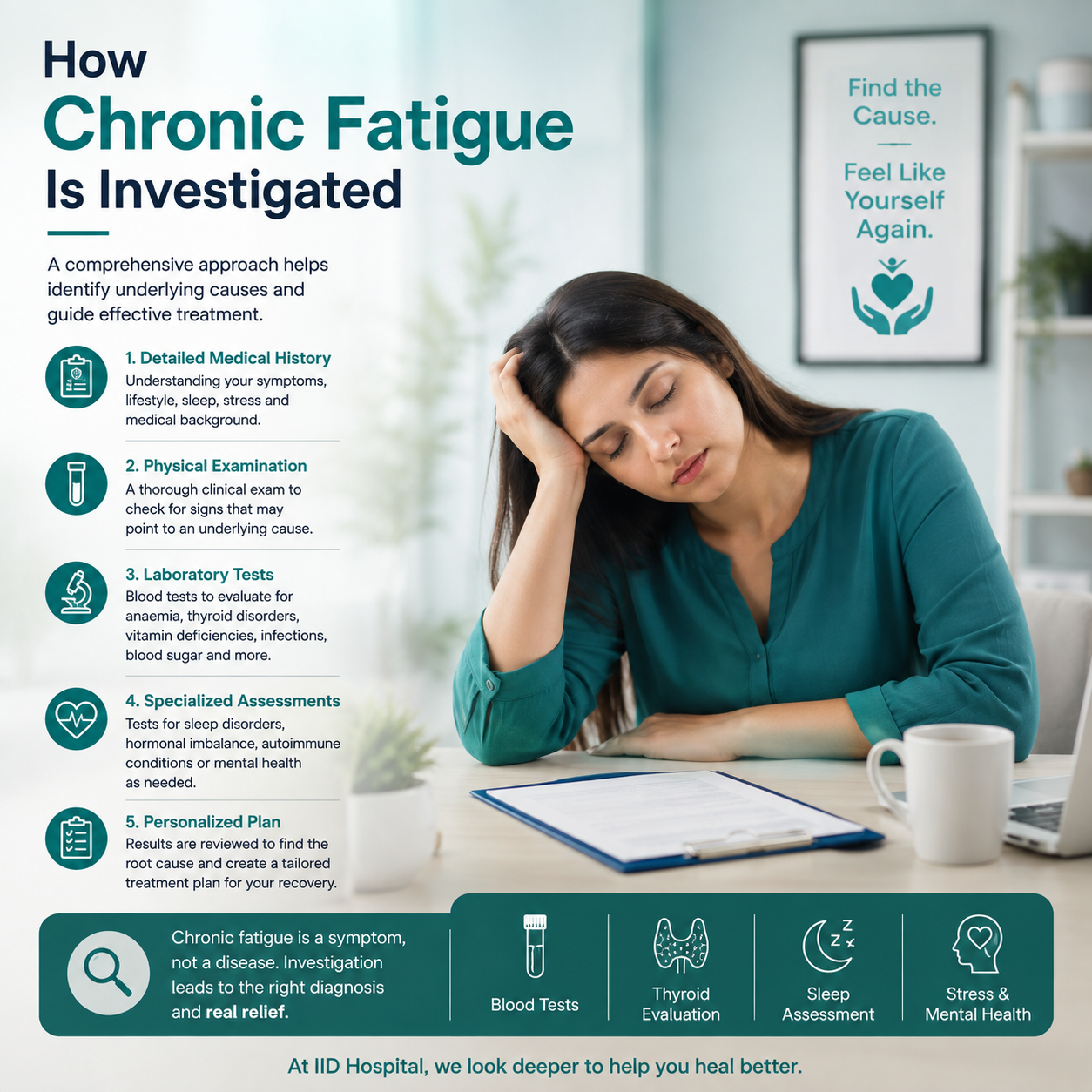
Characterise the Fatigue — History Is Everything
First consultationDuration, pattern (worse at specific times of day?), relationship to activity (does rest help?), impact on daily function (work, exercise, concentration), sleep quality, associated symptoms (weight change, fever, night sweats, joint pain, swollen glands, urinary frequency, bowel changes), medications, alcohol, diet, and any recent infection that preceded the fatigue onset. A careful history narrows the differential dramatically before any test is ordered.
First-Line Blood Panel — Covers the Common and Treatable
Day 1 of assessmentCBC + differential (anaemia, leucocytosis); serum ferritin (iron stores — more sensitive than haemoglobin); vitamin B12 + folate; TSH (thyroid); fasting glucose + HbA1c (diabetes); LFT + RFT; ESR + CRP (inflammation); HIV test; HBsAg; morning cortisol (if Addison’s suspected). This single panel identifies the most common treatable causes including anaemia, B12 deficiency, thyroid disease, and diabetes — all in one visit.
TB Exclusion — Always First Priority if Infectious Cause Suspected
If ESR/CRP elevated or clinical suspicionGeneXpert sputum ×2 — even without cough; IGRA (blood test for TB sensitisation); CT chest and abdomen (detects lymphadenopathy and extrapulmonary TB missed by CXR). Elevated ESR with chronic fatigue and weight loss in India has a high prior probability of TB. IGRA positive + constitutional symptoms + elevated inflammatory markers = anti-TB treatment is strongly considered even if microbiological confirmation is pending.
Second-Line — Based on First-Line Results
Guided by clinical pictureIf first-line is non-diagnostic: ANA + anti-dsDNA (SLE); anti-tTG IgA (coeliac disease); EBV IgM + IgG / CMV IgM (post-viral fatigue); echocardiogram (cardiac fatigue); LDH + uric acid + CT (lymphoma); serum cortisol stimulation test (Addison’s); HBV DNA + ALT (active hepatitis); sleep study (obstructive sleep apnoea — common cause of non-restorative sleep and daytime fatigue). Tests are selected by clinical probability.
Psychological Assessment — Only After Organic Causes Excluded
Diagnosis of exclusionDepression, anxiety, and psychosocial stress are considered as contributing or primary causes only after a systematic organic workup is negative. When psychological assessment indicates depression, treatment with antidepressants or counselling is initiated — but even then, a repeat blood panel at 3 months ensures no organic cause was missed. Treating depression empirically without an organic workup is clinically unacceptable in the context of TB and cancer risk in India.
What to Track Before Your Visit
Keeping a brief 1–2 week diary before your appointment gives Dr. Savaj the pattern information that guides investigation:
Bring Previous Reports
Any previous blood tests, thyroid results, or imaging — even from years ago — provide baseline context. Do not repeat tests that were done within the last 3 months without clinical indication.
Manage at Home vs See Dr. Savaj
Not all fatigue requires specialist assessment. Here is a clear clinical guide to when home management is appropriate and when investigation at IID Hospital is needed.
Manage at Home
Observe with adequate rest and nutrition
See Dr. Savaj
Systematic investigation needed
The Minimum Test Before Any Diagnosis
Before attributing fatigue to stress, depression, or “overwork,” every patient deserves: CBC + serum ferritin + vitamin B12 + TSH + fasting glucose + HbA1c + HIV test. This single panel identifies all the most common treatable causes. At IID Hospital, no patient is told their fatigue is psychological without this panel being negative first.
Patients Who Came With Chronic Fatigue
I had been exhausted for 4 months. My previous doctor said it was stress and gave me B-complex vitamins. Dr. Savaj did a ferritin level — not just haemoglobin — and found severe iron deficiency with a ferritin of 4. My haemoglobin was still borderline normal so previous doctors had missed it. Iron supplementation for 8 weeks and I was a completely different person. The right test made all the difference.
I had fatigue for 6 months, gradually getting worse. I am a strict vegetarian. Dr. Savaj included B12 in the first panel — my level was 98 (severely low). He explained that vegetarians lose B12 gradually and the symptoms creep up. Three B12 injections and within 10 days I felt dramatically better. Simple, cheap, life-changing.
Eight months of progressive fatigue, mild weight loss, no cough. I had been to three doctors who said stress or depression. Dr. Savaj sent a GeneXpert and IGRA on day 1. Abdominal TB. My chest X-ray was normal. Anti-TB treatment was started — I gained energy within 5 weeks. I am now fully recovered. Dr. Savaj told me TB without cough is common and commonly missed. He was right.
Questions About Chronic Fatigue
Answered by Dr. Pratik Savaj, FNB Infectious Diseases, IID Hospital, Surat.
How long does fatigue have to last before it is considered 'chronic'?
Is anaemia the most common cause of chronic fatigue in India?
Can tuberculosis cause fatigue without fever or cough?
What is post-infectious fatigue and how long does it last?
Can thyroid disease cause chronic fatigue?
Is depression always a cause of fatigue, or can it be a result?
What tests are done for chronic fatigue?
When should I be concerned that chronic fatigue has a serious cause?
Exhausted Without Explanation? Find the Cause.
No referral needed. Bring any previous blood tests. Chronic fatigue lasting more than 6 weeks deserves a systematic investigation — not just vitamins and reassurance. The cause is usually identifiable. The treatment is usually simple. Dr. Pratik Savaj, FNB Infectious Diseases, IID Hospital, Lal Darwaja, Surat.
MBBS · DNB Medicine · Fellowship ID
P.D. Hinduja Hospital, Mumbai