SCID-AI · 405 SNS Axis Business Space, Nanpura, Surat
Mon–Sat: 11–1 PM & 4–6 PM
Hepatitis B silent threat SCID-AI Surat  Hepatitis B · SCID-AI Blog
40 million Indians living with chronic hepatitis B
Most don’t know — the virus is silent until it isn’t
 Hepatitis B · SCID-AI Blog

Hepatitis B — The Silent Threat Most Indians Don’t Know They Have

Dr. Pratik Savaj
Dr. Pratik SavajFNB Infectious Diseases · SCID-AI, Surat
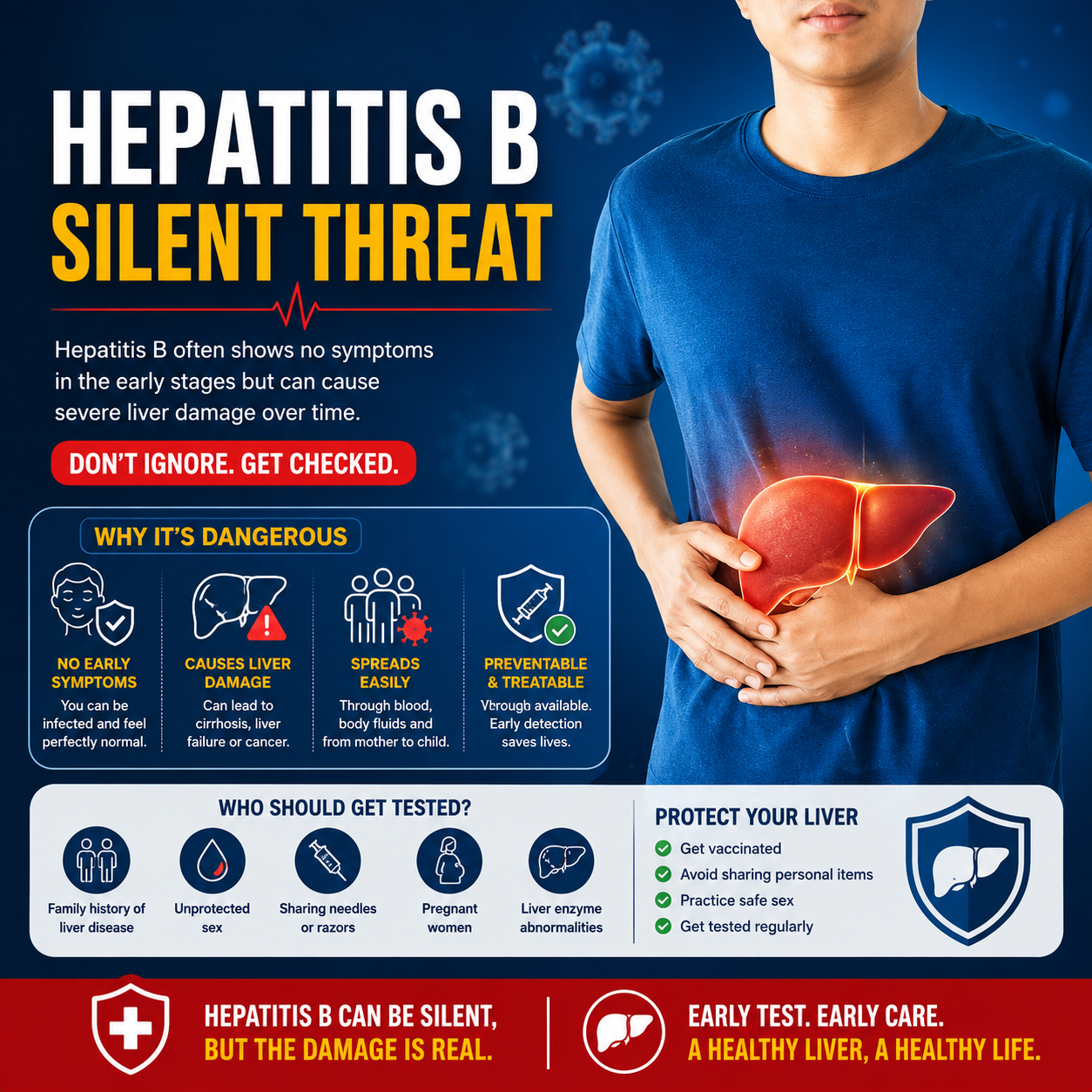
Hepatitis B is called the silent threat because most people with chronic hepatitis B have no symptoms — for years, sometimes decades — while the virus quietly destroys liver cells, builds scar tissue, and increases the risk of liver cancer to 100 times that of uninfected individuals. India has 40 million chronic HBV carriers. Most don’t know they are infected. Many who do know don’t know what it means. This article explains what HBV actually does, who is at risk, and what treatment can achieve.

Why Hepatitis B Is Silent

The hepatitis B virus is not immediately destructive. It infects liver cells (hepatocytes) and uses them as factories for viral replication — but unlike hepatitis A or acute hepatitis B, chronic HBV does not cause dramatic acute illness in most people. The damage is cumulative and slow: years of low-level inflammation, repeated cycles of hepatocyte death and regeneration, gradual accumulation of scar tissue (fibrosis), eventual cirrhosis, and the risk of hepatocellular carcinoma (HCC).

The patient feels nothing abnormal — no jaundice, no pain, no fatigue — until the liver is already significantly damaged. By the time symptoms appear (ascites, jaundice, bleeding from oesophageal varices), the disease may be at an advanced stage. This is why testing is the only way to know. Symptoms are not a reliable indicator of HBV status or liver health.

Who Should Be Tested for Hepatitis B

Anyone born in India before routine HBV vaccination was introduced (before 2002 in most states) who has never been tested. Family members of an HBV-positive person: spouses, children, parents. Anyone who has had unprotected sexual contact with a person of unknown HBV status. Healthcare workers: occupational blood exposure risk. Anyone who has received a blood transfusion before blood screening was universal. People who inject drugs: shared needles. All pregnant women: to prevent mother-to-child transmission. If you have never been tested for hepatitis B — test now.

The 5 Phases of Chronic Hepatitis B

Chronic HBV infection is not a single state — it evolves through phases over years. Understanding which phase a patient is in determines whether treatment is needed now, and what the liver damage risk is.

Phase 1

Immune-Tolerant Phase

HBeAg positive. Very high HBV DNA. Normal ALT. Minimal liver inflammation. Common in perinatally-infected adults.

No treatment — monitor
Phase 2

Immune-Active (HBeAg+)

HBeAg positive. High HBV DNA. Elevated ALT. Active liver inflammation. Significant fibrosis risk.

Treatment indicated
Phase 3

Inactive Carrier

HBeAg negative, Anti-HBe positive. Low/undetectable HBV DNA. Normal ALT. Minimal inflammation.

Monitor every 6 months
Phase 4

HBeAg-Negative CHB

HBeAg negative. Fluctuating HBV DNA. Elevated ALT. Pre-core mutant — still active and damaging.

Treatment indicated
Phase 5

Cirrhosis / HCC Risk

Advanced fibrosis or cirrhosis. HCC risk 2–6% per year. Requires treatment + 6-monthly HCC surveillance.

Urgent treatment

The Phase Determines Everything

Telling a patient “your HBV is positive but your ALT is normal so you don’t need treatment” without measuring HBV DNA, assessing fibrosis by fibroscan, and determining the phase is incomplete assessment. Phase 4 HBeAg-negative CHB has a normal or fluctuating ALT in 40% of patients — and still causes progressive fibrosis. HBV DNA and fibroscan, not ALT alone, determine treatment decisions.
Hepatitis B blood tests SCID-AI Surat
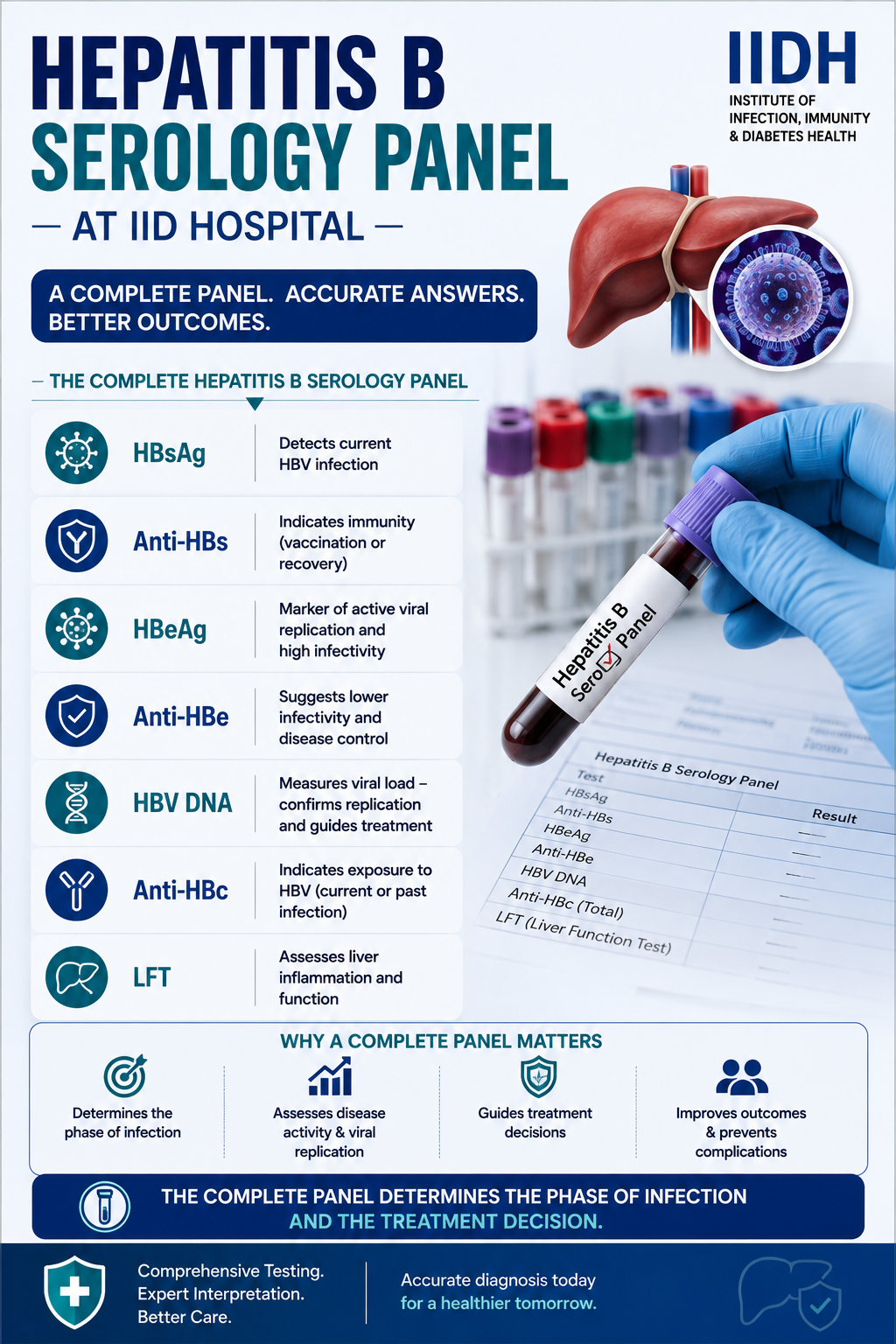
Hepatitis B serology panel at SCID-AI: HBsAg + Anti-HBs + HBeAg + Anti-HBe + HBV DNA + Anti-HBc + LFT. The complete panel determines the phase of infection and the treatment decision.

Understanding the Hepatitis B Blood Tests

A single HBsAg positive result is only the starting point. The full serology panel below tells the complete story of HBV status — whether the infection is acute or chronic, active or controlled, infectious or resolved.

Status HBsAg Anti-HBs HBeAg HBV DNA Meaning
Susceptible (never infected)hhhhNot infected, not immune. Vaccinate now.
Vaccinated / ImmunehhhhImmune from vaccine. No infection. No action needed.
Acute HBVhhhhActive acute infection. Monitor for clearance or chronicity.
Chronic HBV — ActivehhhhChronic infection. Phase assessment + treatment decision needed.
Inactive CarrierhhhhLow replication. Needs monitoring but usually no treatment now.
Past Infection / ResolvedhhhhHBV cleared. Usually immune. HCC risk reduced but not zero.
Hepatitis B treatment tenofovir SCID-AI Surat
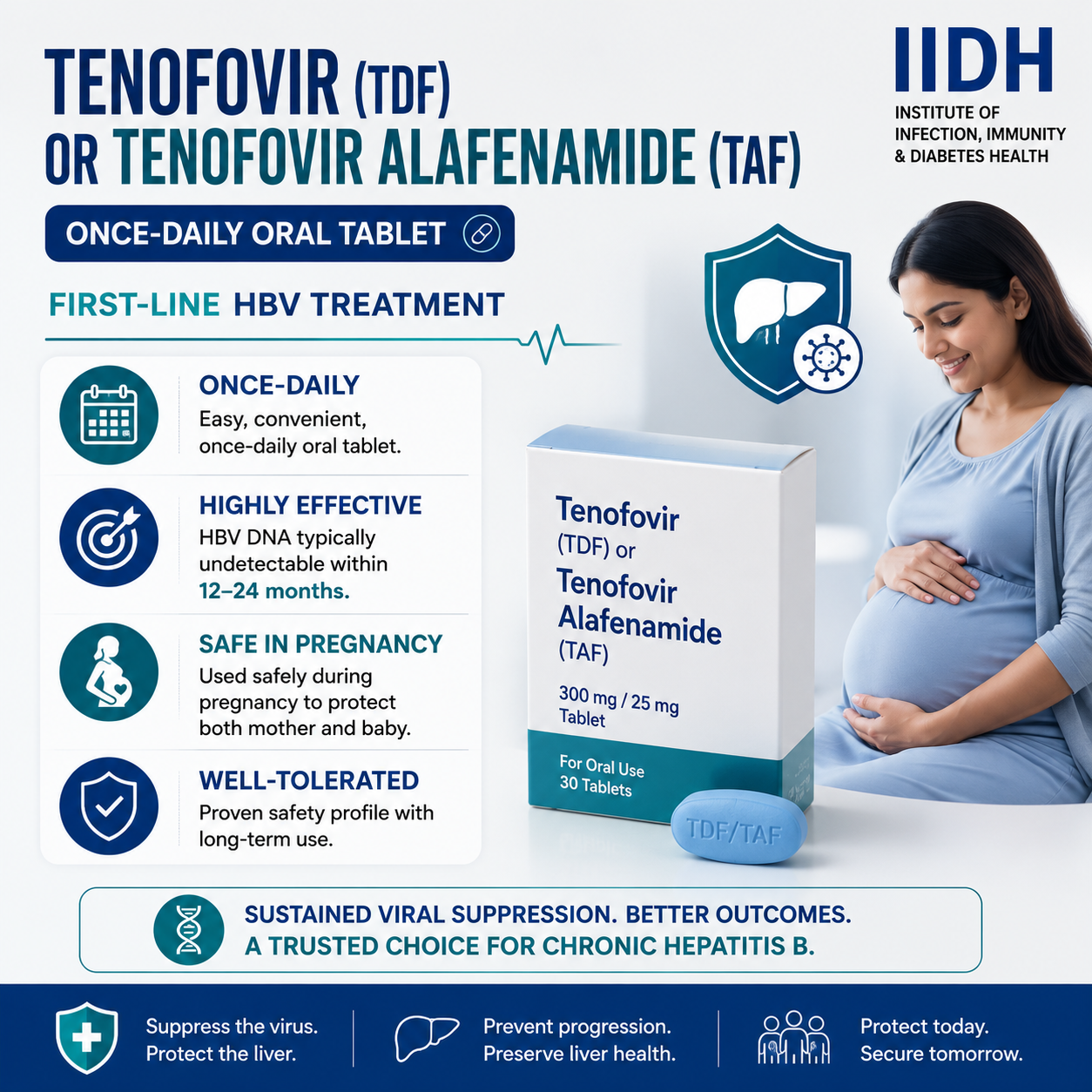
Tenofovir (TDF) or Tenofovir alafenamide (TAF) — once-daily oral tablet. First-line HBV treatment. HBV DNA typically undetectable within 12–24 months. Used safely in pregnancy.

Treatment — What It Can and Cannot Do

Modern HBV treatment does not cure HBV in the traditional sense — it cannot eliminate the virus completely from liver cells. But it achieves something nearly as important: viral suppression so complete that the liver heals, fibrosis reverses, and the risk of cirrhosis and liver cancer falls by 50–80%.

Tenofovir (once daily) suppresses HBV DNA to undetectable levels in most patients within 12–24 months. ALT normalises. Liver stiffness on fibroscan decreases over years. Life expectancy on treatment approaches normal. The drug is safe, well-tolerated, and inexpensive under the generic programme.

Treatment Cannot Be Stopped

HBV antivirals suppress but do not eliminate the virus. Stopping treatment risks HBV reactivation — sometimes a severe hepatic flare that can cause acute liver failure and death. Treatment is typically lifelong unless HBsAg clearance occurs.

Myths About Hepatitis B Transmission — Corrected

The discrimination against HBV-positive individuals in India is driven by myths about transmission. The correction of these myths is as important as the clinical management.

 Myth

"Hepatitis B spreads through sharing food and utensils."

 Fact

False. HBV is bloodborne — it cannot spread through sharing food, cups, plates, or utensils. Saliva does not contain infectious concentrations of HBV. Sharing meals is completely safe.

 Myth

"You can get hepatitis B from a mosquito bite."

 Fact

False. HBV is not transmitted by mosquitoes. Mosquitoes cannot carry or transmit HBV. There is no insect vector for hepatitis B.

 Myth

"If someone in my family has hepatitis B I should avoid physical contact."

 Fact

False. Casual physical contact — hugging, handshaking, kissing on the cheek — does not transmit HBV. Family members need vaccination, not social distancing.

 Myth

"Hepatitis B always causes jaundice and liver symptoms."

 Fact

False. Most people with chronic HBV have no symptoms at all. The absence of jaundice or fatigue does not mean the liver is undamaged — only testing reveals the true state.

 Myth

"There is no treatment for hepatitis B."

 Fact

False. Effective oral antiviral therapy (tenofovir, entecavir) suppresses HBV DNA to undetectable, reverses fibrosis, and dramatically reduces liver cancer risk. Treatment works.

 Myth

"HBV-positive people cannot have children or get married."

 Fact

False. HBV-positive individuals can have children safely with appropriate management. The partner needs vaccination. Mother-to-child transmission is preventable in >95% of cases with HBIG + birth-dose vaccine.

Hepatitis B monitoring SCID-AI Surat
Hepatitis B monitoring at SCID-AI: HBV DNA every 3–6 months on treatment, ALT, fibroscan annually, and abdominal ultrasound + AFP every 6 months for HCC surveillance in high-risk patients.

The Monitoring Protocol — What Every HBV Patient Needs Regularly

Hepatitis B management is not “take a tablet and forget.” Regular monitoring detects treatment response, identifies drug resistance (rare with tenofovir), screens for liver cancer, and adjusts management as the phase of infection evolves.

HBV DNA (viral load) Primary marker of treatment response. Target: undetectable. Rising viral load = resistance or non-adherence. Every 3–6 months on treatment
ALT (liver enzyme) Elevated ALT indicates ongoing liver inflammation. Normalisation confirms treatment response. Every 3–6 months
HBsAg + HBeAg Track phase transitions. HBeAg seroconversion and HBsAg clearance are treatment milestones. Every 6–12 months
Fibroscan (liver stiffness) Non-invasive assessment of liver fibrosis. Fibrosis can regress on treatment — tracked annually. Every 12 months
Ultrasound abdomen + AFP HCC surveillance. Detects early-stage liver tumours when curative treatment is still possible. Every 6 months (cirrhosis / high-risk)
Renal function (creatinine, eGFR) Tenofovir can affect kidneys in susceptible patients. TAF is preferred with renal impairment. Every 6–12 months on TDF

Hepatitis B Management at SCID-AI

Dr. Pratik Savaj provides complete chronic hepatitis B management at SCID-AI, Nanpura, Surat: phase determination; treatment initiation with tenofovir or entecavir; HBV DNA monitoring; fibroscan interpretation; HCC surveillance; household contact evaluation and vaccination; and management of HBV in pregnancy.

Every HBV-positive patient at SCID-AI has their household contacts systematically tested and vaccinated. A diagnosis of HBV in one family member is an opportunity to protect every other family member. The vaccine is 95% effective and provides lifelong protection.

Hepatitis B consultation SCID-AI Surat
HBV consultation at SCID-AI — full serology panel, HBV DNA, fibroscan referral, and household contact vaccination coordination at the first visit.

The Hepatitis B Rule

40 million Indians have chronic hepatitis B. Most don’t know. Testing is the only way to find out — symptoms are not a reliable indicator. Treatment suppresses the virus, reverses liver damage, and reduces liver cancer risk by 50–80%. The HBV vaccine is 95% effective. A family member with HBV is not a danger to eat with — they need medical management and their family needs vaccination.
Hepatitis B specialist SCID-AI Surat
Dr. Pratik Savaj MBBS · DNB Medicine · Fellowship ID · FNB Infectious Diseases · P.D. Hinduja Hospital, Mumbai

Dr. Savaj provides comprehensive chronic hepatitis B management at SCID-AI, Nanpura, Surat — including phase assessment, antiviral therapy, HCC surveillance, and household vaccination. +91 72839 34807.

Common Questions

Frequently Asked Questions

Answered by Dr. Pratik Savaj, FNB Infectious Diseases, SCID-AI, Surat.

I tested HBsAg positive. Does this mean I have hepatitis B disease?
HBsAg positive means the hepatitis B surface antigen — a protein from the outer coat of the HBV virus — is present in your blood. This confirms hepatitis B infection. However, being infected is not the same as having active liver disease. The next steps after a positive HBsAg: Determine if acute or chronic: HBsAg positive for more than 6 months = chronic HBV infection. Check HBeAg and HBV DNA: these determine whether the virus is actively replicating. Check ALT (liver enzyme): elevated ALT indicates the liver is being damaged. Assess liver for damage: fibroscan (liver stiffness measurement) or liver biopsy estimates the degree of fibrosis. Based on these results, Dr. Savaj will determine which phase of chronic HBV you are in and whether treatment is needed now, or monitoring is appropriate. A positive HBsAg does not automatically mean you need antiviral medication today — but it always means you need specialist assessment.
What is the difference between HBsAg, HBeAg, HBV DNA, and Anti-HBs?
These are different markers that tell different things about hepatitis B status: HBsAg (surface antigen): the outer protein coat of the virus. Positive = virus is present. The screening test for HBV infection. Positive for >6 months = chronic infection. Anti-HBs (surface antibody): the protective antibody produced after vaccination or resolved infection. Positive = immune, protected. This is what the vaccine produces. HBeAg (e antigen): a protein produced during active viral replication. Positive HBeAg = high replication, high viral load, more infectious. Negative HBeAg in a chronic HBV patient can mean either immune control or “pre-core mutant” HBV which still replicates despite negative HBeAg. Anti-HBe (e antibody): appears when HBeAg is cleared, usually indicates lower replication. HBV DNA (viral load): the most important marker of active replication. Measured in IU/mL. Determines treatment threshold, treatment response, and risk of liver damage. Anti-HBc (core antibody): indicates past or current HBV exposure. IgM anti-HBc = acute infection. IgG anti-HBc = past exposure or chronic infection. At SCID-AI, Dr. Savaj interprets the complete HBV serology panel to determine the phase of infection and treatment decision.
How does hepatitis B cause liver cancer and can it be prevented?
HBV causes hepatocellular carcinoma (HCC) through two mechanisms: Direct oncogenesis: the HBV genome integrates into the host’s DNA and can directly activate oncogenes or disrupt tumour suppressor genes — causing cancer even without cirrhosis. This is why HBV-positive patients need HCC surveillance even if they don’t have cirrhosis. Cirrhosis-mediated oncogenesis: repeated cycles of hepatocyte death and regeneration from chronic inflammation create genetic errors over decades that lead to cancer. HCC risk in chronic HBV: Without cirrhosis: approximately 0.2% per year. With cirrhosis: 2–6% per year — 10–30 times higher. India has one of the highest HCC rates globally, and HBV is the leading cause. Prevention: Antiviral treatment with tenofovir or entecavir reduces HCC risk by 50–80% in patients with cirrhosis. HCC surveillance (ultrasound + AFP every 6 months) detects early-stage tumours when curative treatment (resection, ablation, liver transplant) is still possible. HBV vaccination prevents infection and therefore prevents HBV-related HCC entirely.
Should my family members be tested and vaccinated for hepatitis B?
Yes — absolutely and urgently. If you have been diagnosed with chronic hepatitis B, the following action is required for all household contacts and sexual partners: Test first: HBsAg + Anti-HBs + Anti-HBc panel for every family member. If HBsAg positive: refer to Dr. Savaj for full HBV assessment and phase determination. If Anti-HBs positive and titre >10 mIU/mL: already immune (from vaccination or past infection). No further action needed. If all markers negative (truly susceptible): start 3-dose HBV vaccine series immediately (0, 1, 6 months). The HBV vaccine is 95% effective and produces lifelong immunity in most recipients. If Anti-HBc positive but HBsAg negative: past exposure with recovery. Usually immune. Check Anti-HBs titre. Children: all children should have received HBV vaccine at birth + 6 weeks + 14 weeks under India’s national immunisation programme. Verify vaccination records. At SCID-AI, Dr. Savaj provides systematic household contact evaluation and vaccination coordination for all HBV-positive patients.
Can hepatitis B spread through sharing food or casual contact?
No — hepatitis B is not transmitted through casual contact of any kind. HBV is a bloodborne pathogen. It cannot spread through: sharing meals, utensils, cups, or food; hugging, handshaking, or any casual skin contact; coughing or sneezing; using the same toilet or bathroom; swimming in the same pool. HBV IS transmitted through: Mother to child during birth (the most common route in India — perinatal transmission); Sexual contact with an infected person; Blood-to-blood contact: shared needles, razors, tattoo equipment, glucose lancets; Blood transfusion (rare with current screening). The practical implication for families with an HBV-positive member: sharing meals and living together is completely safe. The family needs vaccination (if not immune), not separation or restriction of activities. The discrimination faced by HBV-positive individuals in India — social exclusion, job loss, family rejection — is based on a fundamental misunderstanding of how HBV actually spreads.
When does hepatitis B need treatment and what treatment is used?
Not all people with chronic HBV need antiviral treatment. Treatment is indicated when: HBV DNA >2,000 IU/mL with ALT elevated above normal and/or significant liver fibrosis on fibroscan (F2 or above). HBV DNA >20,000 IU/mL regardless of ALT in HBeAg-positive patients. Cirrhosis — any detectable HBV DNA. Immunosuppression planned (chemotherapy, biologicals, steroids): HBV reactivation prophylaxis required. The currently used antivirals: Tenofovir disoproxil fumarate (TDF): first-line. Once-daily oral tablet. Highly effective, very low resistance rate. Used in pregnancy. Tenofovir alafenamide (TAF): similar efficacy to TDF but with better renal and bone safety profile. Preferred in patients with renal impairment. Entecavir: alternative first-line agent. Once daily. HBV DNA becomes undetectable in 60–70% at 1 year. Treatment is typically lifelong — stopping antivirals risks HBV reactivation and potentially fatal hepatic flare. HBsAg clearance (functional cure) occurs in only 1–3% per year on treatment.
Is hepatitis B curable?
HBV is not curable in the traditional sense, but it is functionally manageable to a degree that eliminates almost all risk of liver disease. The nuances: Virological cure (HBsAg clearance + undetectable HBV DNA): occurs spontaneously in about 1% of chronically infected adults per year, and in 1–3% per year on treatment. This is considered the closest to a cure, as HCC risk drops dramatically after HBsAg clearance. Functional suppression on treatment: with tenofovir or entecavir, HBV DNA becomes undetectable in most patients within 1 year. ALT normalises. Liver fibrosis can regress over years. Risk of cirrhosis and HCC is dramatically reduced. Quality and quantity of life are near-normal. The realistic goal: long-term viral suppression on once-daily oral antiviral therapy, with 6-monthly monitoring. HBV cannot be eradicated from the body (cccDNA persists in liver cells), but its damage can be stopped. Research into complete cure (cccDNA elimination) is ongoing — several agents are in clinical trials. What patients should know: treatment works. The liver can heal. Life expectancy on treatment approaches normal. Starting treatment early prevents the complications that are otherwise life-limiting.
Can a pregnant woman with hepatitis B transmit it to her baby?
Yes — mother-to-child transmission (MTCT) during childbirth is the most common route of HBV transmission in India, and without intervention, babies born to HBeAg-positive mothers have a 70–90% risk of becoming chronically infected. However, MTCT is almost entirely preventable: Hepatitis B immunoglobulin (HBIG): given to the baby within 12 hours of birth. Provides immediate passive immunity. Hepatitis B vaccine at birth: given simultaneously with HBIG. Starts active immunity. Followed by doses at 6 weeks and 14 weeks. This birth-dose protocol prevents >95% of MTCT. For mothers with very high HBV DNA (>200,000 IU/mL), antiviral therapy (tenofovir) in the third trimester (from 28 weeks) further reduces MTCT risk. What pregnant HBV-positive women must do: inform the obstetrician of HBV status; get HBV DNA measured in the second trimester; ensure the baby receives HBIG + HBV vaccine within 12 hours of birth. Dr. Savaj coordinates HBV management in pregnancy at SCID-AI in collaboration with the obstetrician.

HBsAg Positive? Get a Proper Assessment.

Not just HBsAg — HBV DNA, phase determination, fibroscan, HCC surveillance, and household vaccination. Dr. Pratik Savaj, FNB Infectious Diseases, SCID-AI, Nanpura, Surat — no referral needed.

Dr. Pratik Savaj
Dr. Pratik Savaj FNB Infectious Diseases · SCID-AI, Surat
Morning11:00 AM – 1:00 PM, Mon–Sat
Evening4:00 PM – 6:00 PM, Mon–Sat
Phone+91 72839 34807
When to See an Infectious Disease Specialist
Education

When to See an Infectious Disease Specialist

HBV, HIV, TB — specific situations that require ID specialist-level assessment.

);document.body.style.overflow='';});}); })();