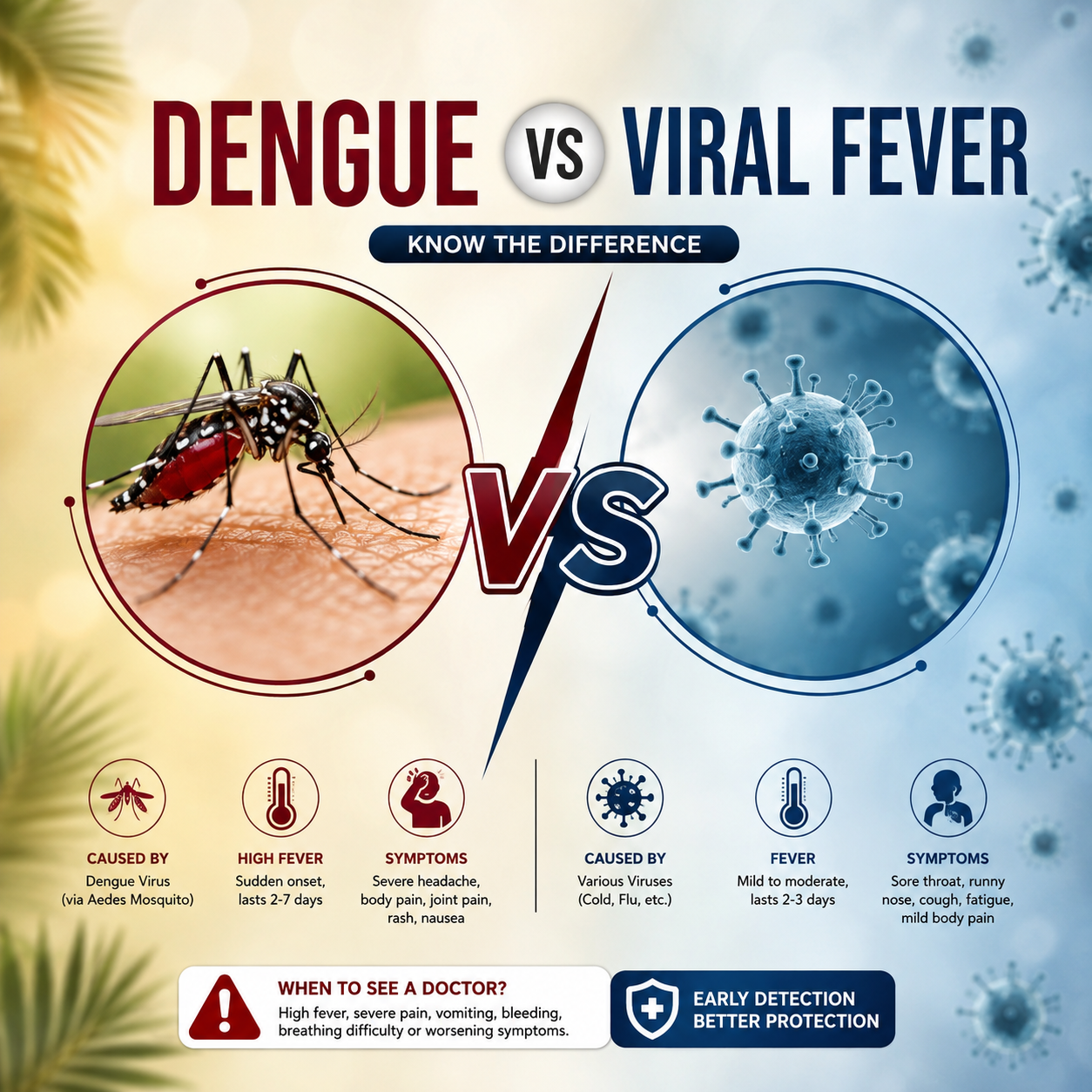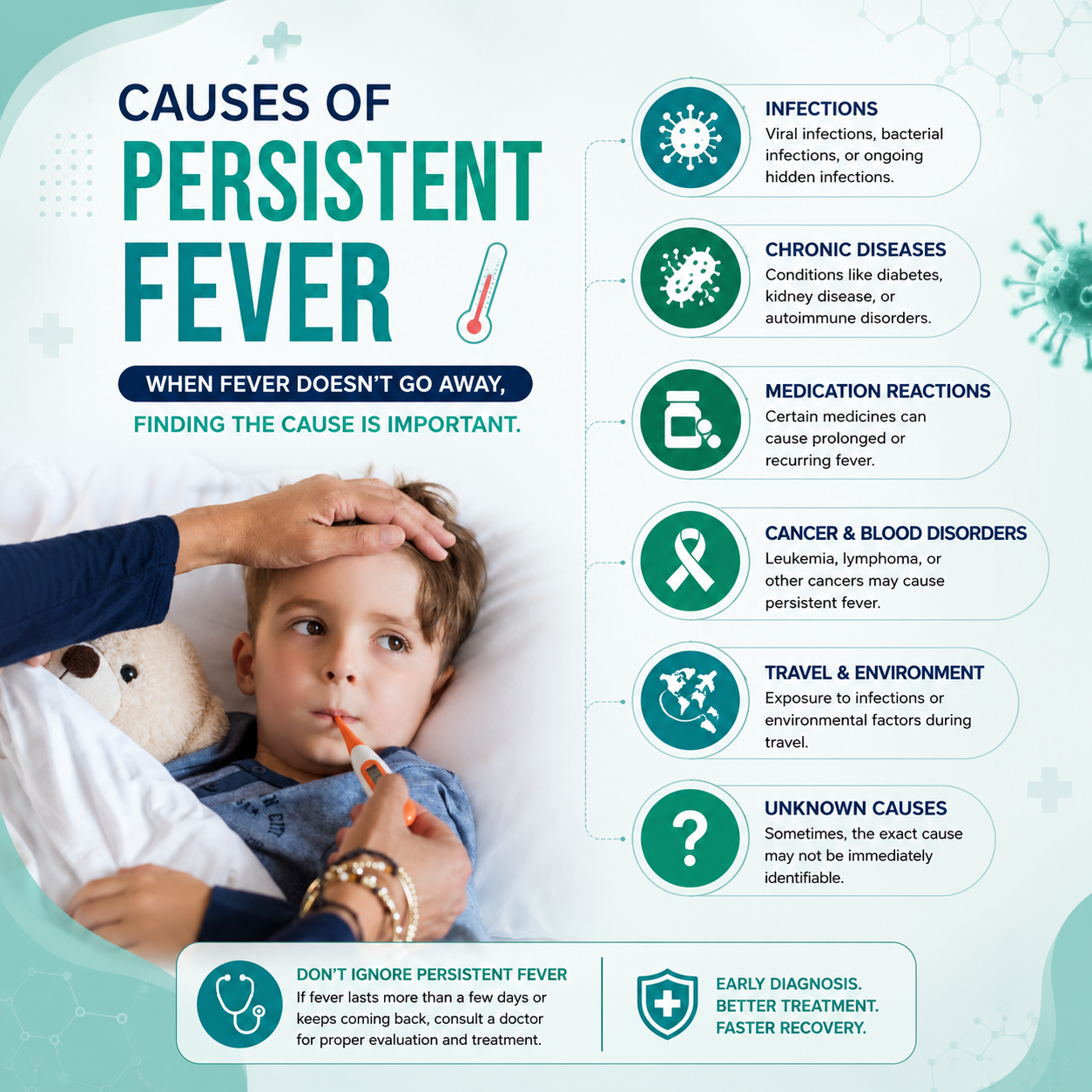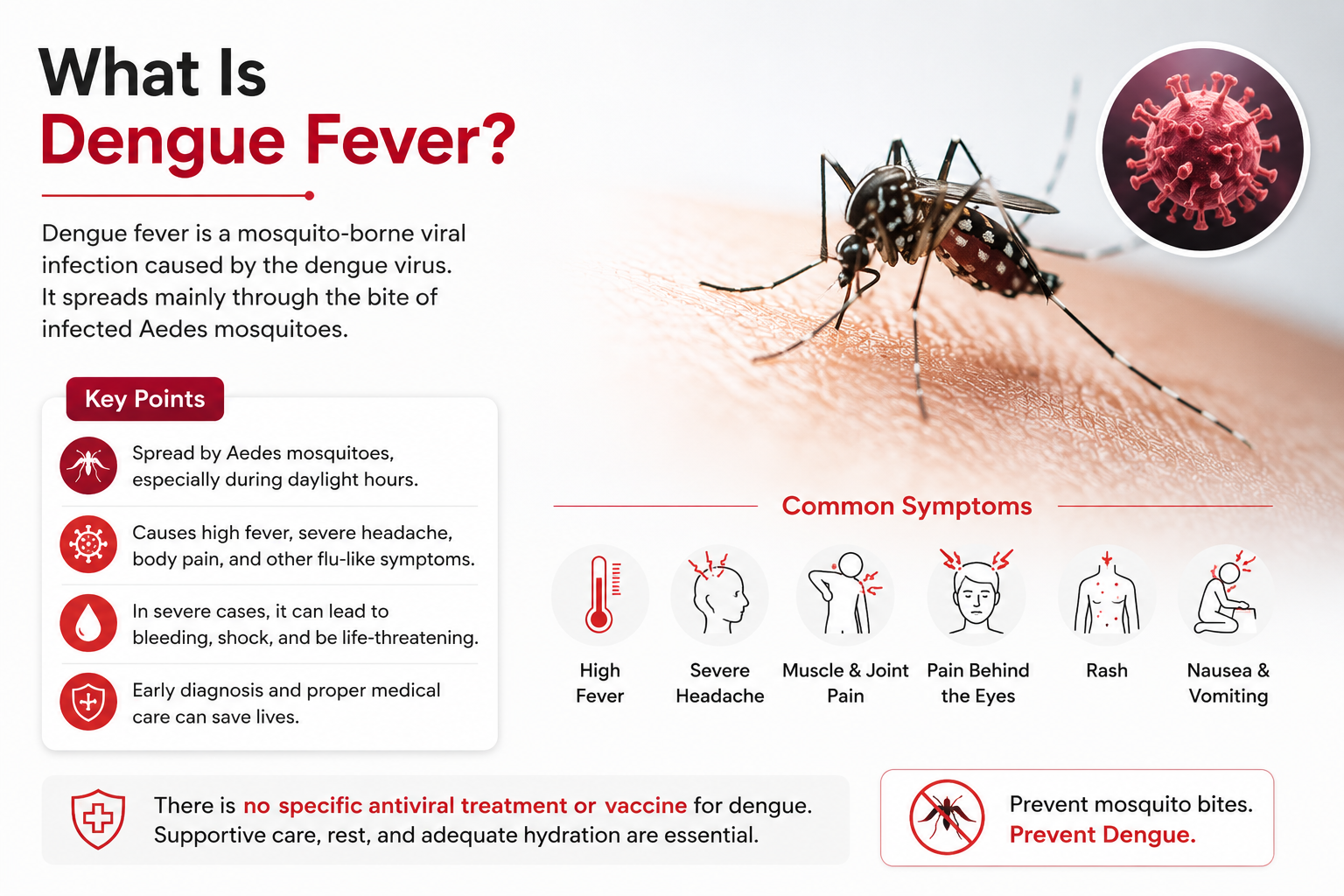
Know the Mosquito — Prevention Is Species-Specific
The most important insight in mosquito-borne disease prevention: the mosquito species determines the prevention strategy. Understanding which mosquito transmits which disease, when it bites, and where it breeds makes prevention rational and effective rather than generic and incomplete.
Aedes aegypti
The dengue and chikungunya mosquitoAnopheles
The malaria mosquitoThe Critical Insight
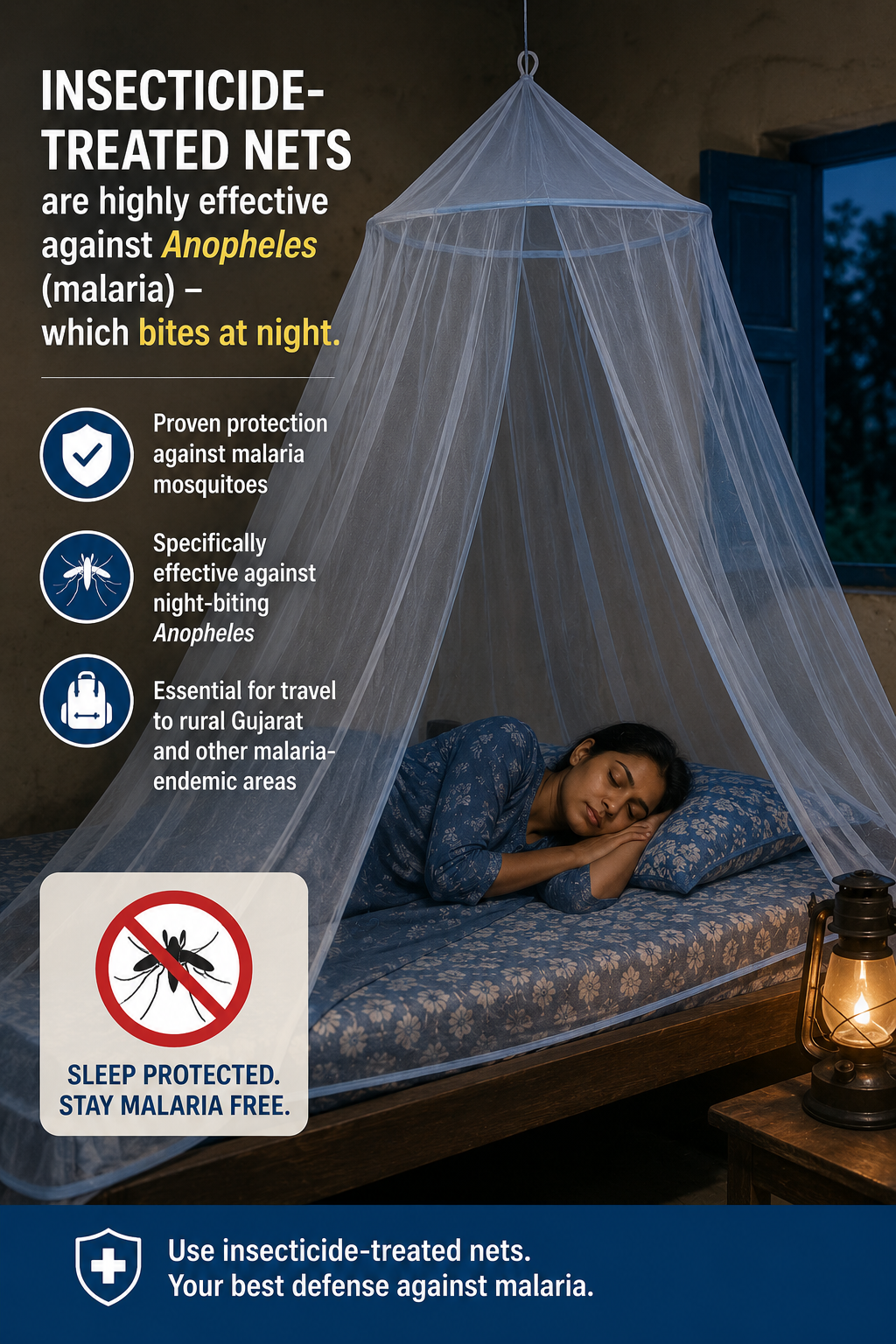
A mosquito net at night protects against malaria but not against dengue — Aedes bites during the day. A person who sleeps under a net every night is fully protected against malaria transmission but has zero additional protection against dengue. Both strategies must be applied, targeting the correct species at the correct time.
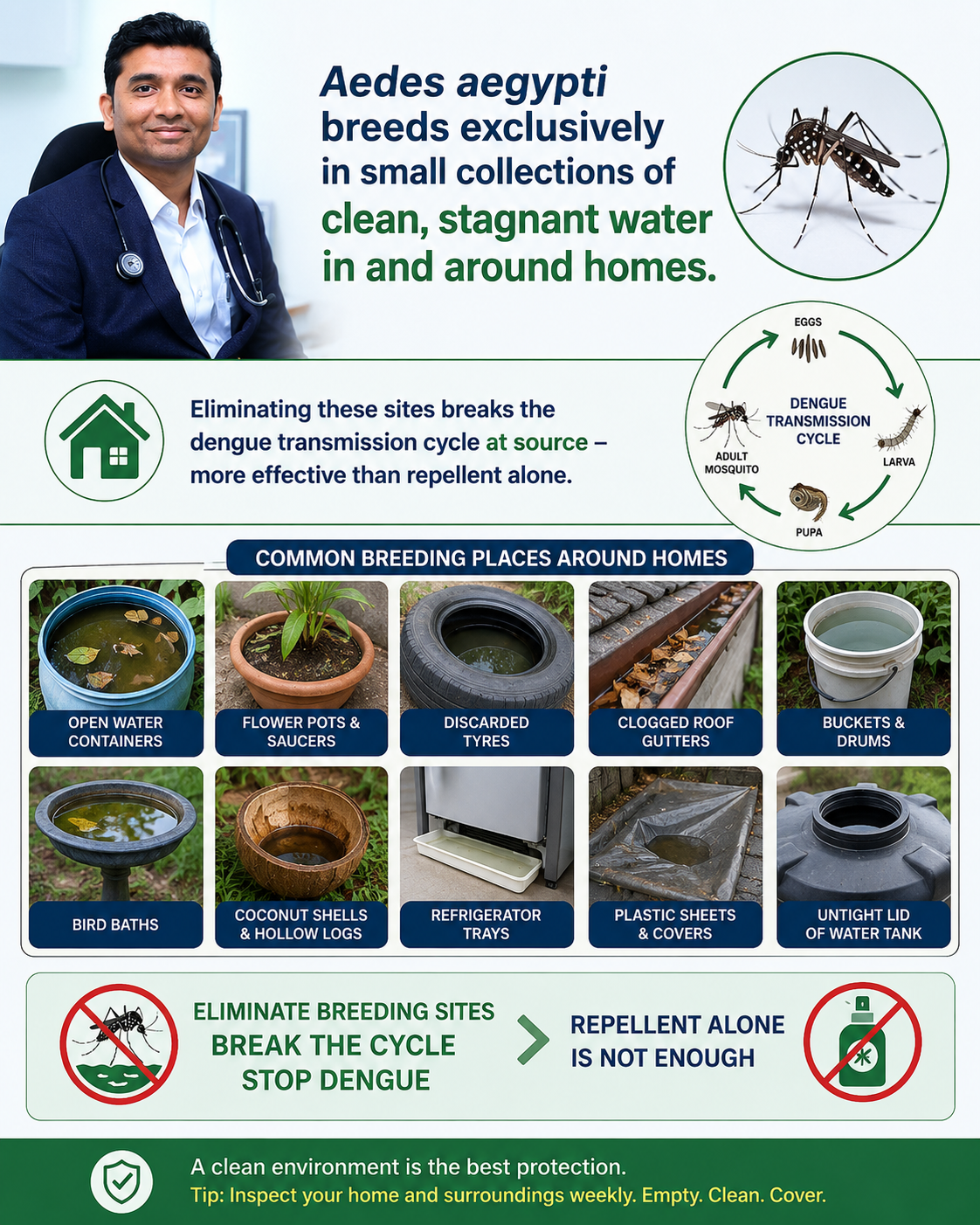
Eliminating Breeding Sites — The Most Effective Dengue Prevention
Because Aedes aegypti breeds within 100 metres of where people live — often inside the home itself — eliminating breeding sites is the highest-impact single action for dengue prevention. Repellent protects the individual; breeding site elimination protects the entire household and neighbourhood.
The critical rule: emptying alone is not enough. Aedes eggs are laid at the waterline and stick to the container wall. They can survive drying for up to 1 year and hatch when re-wetted. Containers must be scrubbed to remove eggs, not just emptied and refilled.
Cooler Trays
Most important in Surat. Drain and scrub every 3–5 days. Do not add kerosene — scrub the tray wall.
Overhead Tank
Check lid is tight-fitting with no gaps. Inspect monthly for larvae if accessible.
Flower Pot Saucers
Drain and scrub weekly. Remove completely during monsoon if possible.
Old Tyres
A major breeding site. Do not leave outdoors uncovered. Drill holes to prevent water collection.
Bird Baths & Water Features
Change water and scrub surface every 2–3 days. Add Bti larvicide if decorative feature cannot be changed frequently.
AC Drain Pipes
AC drain water creates small pools. Ensure drain pipes lead water away from collection points. Check weekly.
Unused Buckets & Containers
Empty, invert, or store under cover. Any container that can hold water must be managed.
Gutters & Drains
Clear blocked gutters monthly during monsoon. Standing water in roof gutters is a significant Aedes site.
Construction Sites
Water collecting in building materials (bricks, unused concrete moulds). Inform builders to drain weekly.
Choosing the Right Repellent
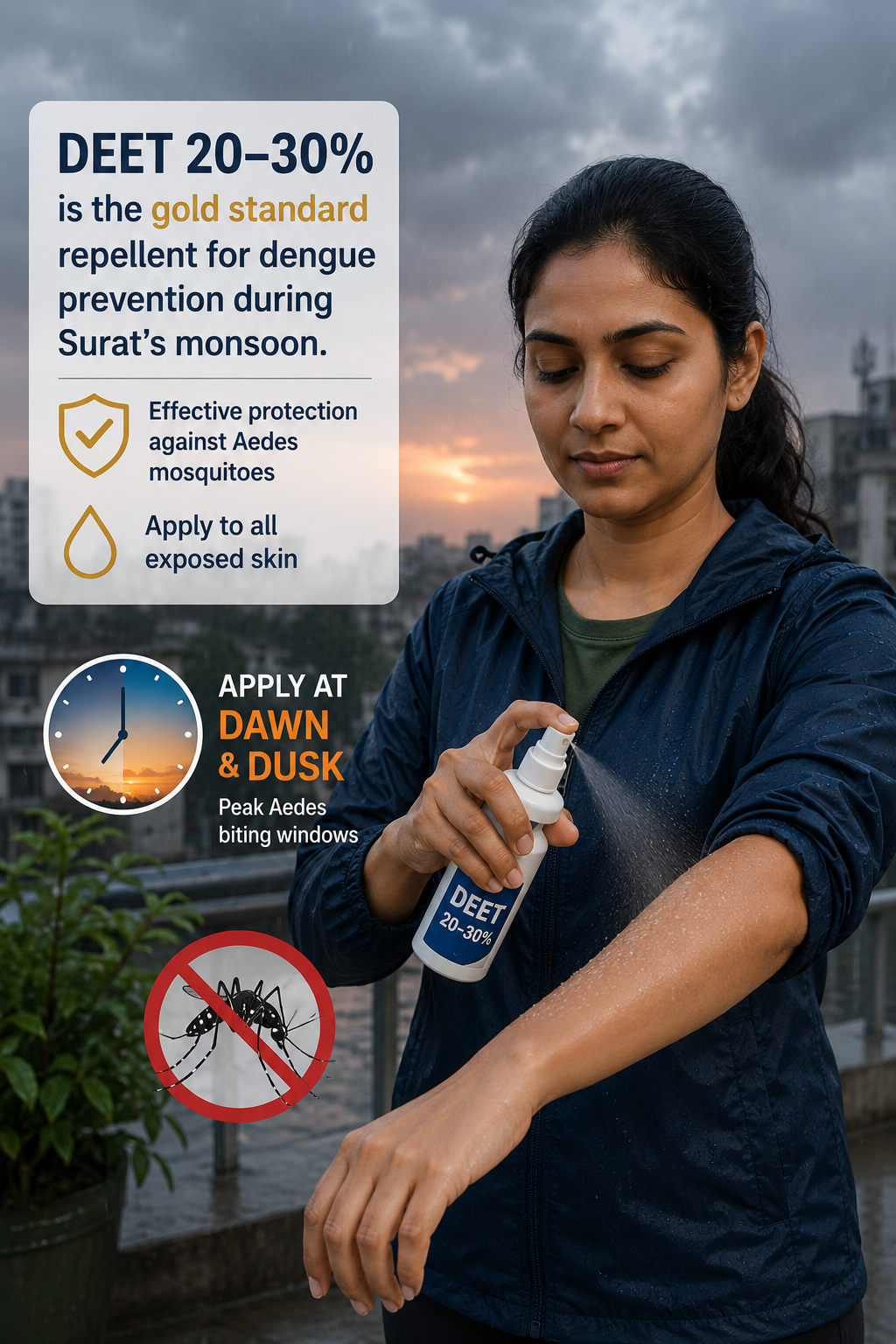
Not all repellents are equal. The active ingredient and concentration determine protection duration. During Surat’s peak dengue season (July–November), the highest-efficacy option should be used — not a plant-based product that provides 90 minutes of protection.
| Repellent | Best Concentration | Duration | Best For | Rating |
|---|---|---|---|---|
| DEET | 20–30% | 4–8 hours | Adults + children >2 months | ★ Best |
| Picaridin (Icaridin) | 20% | 4–8 hours | Adults + children — less odour than DEET | ★ Excellent |
| IR3535 | 20% | 2–4 hours | Children — milder formula | ★ Good |
| Oil of Lemon Eucalyptus (OLE) | 30–40% | 3–4 hours | Adults — plant-based, proven efficacy | ★ Good |
| Citronella-based | varies | 1–2 hours | Low-risk settings only | ★ Weak |
| Neem/herbal oils | varies | <1 hour | Not recommended for monsoon peak | Not recommended |
The 5 Pillars of Mosquito-Borne Disease Prevention
Eliminate Breeding Sites
Empty and scrub all water containers every 3–5 days during monsoon. This is the single highest-impact action for dengue prevention in Surat. Targets Aedes aegypti at source — before it becomes an adult that bites.
Apply Repellent at the Right Time
DEET 20–30% or Picaridin 20% on all exposed skin. For Aedes (dengue): apply at dawn and dusk. For Anopheles (malaria): apply at dusk and evening. Reapply after sweating or after the stated duration. Do not rely on repellent alone without breeding site elimination.
Use Mosquito Nets at Night
Insecticide-treated nets (ITN) at night provide highly effective protection against Anopheles (malaria). Less relevant for Aedes (dengue) since it bites during the day, but useful for protection during daytime rest (infants, elderly). Ensure net has no tears and is tucked under the mattress.
Protective Clothing
Long-sleeved shirts and full-length trousers during peak biting hours. Light colours are preferable (dark colours attract mosquitoes). Apply repellent over clothing as well as on skin. For Aedes: protective clothing during morning and evening hours; for Anopheles: from dusk onwards.
Window Screens & Indoor Measures
Well-fitted window and door screens prevent mosquito entry. Mosquito coils and electric repellent mats reduce indoor biting but are less effective than skin-applied repellent for outdoor exposure. Ensure screens have no gaps or tears — Aedes aegypti can squeeze through surprisingly small openings.
Seasonal Risk in Surat — When to Be Most Vigilant
Mosquito-borne disease risk in Surat is heavily seasonal. Aedes aegypti populations explode during and immediately after the monsoon — when standing water is abundant in every container, gutter, and low-lying area. Anopheles transmission is highest in rural Gujarat during and after monsoon.
If Prevention Fails — What to Do When Fever Develops
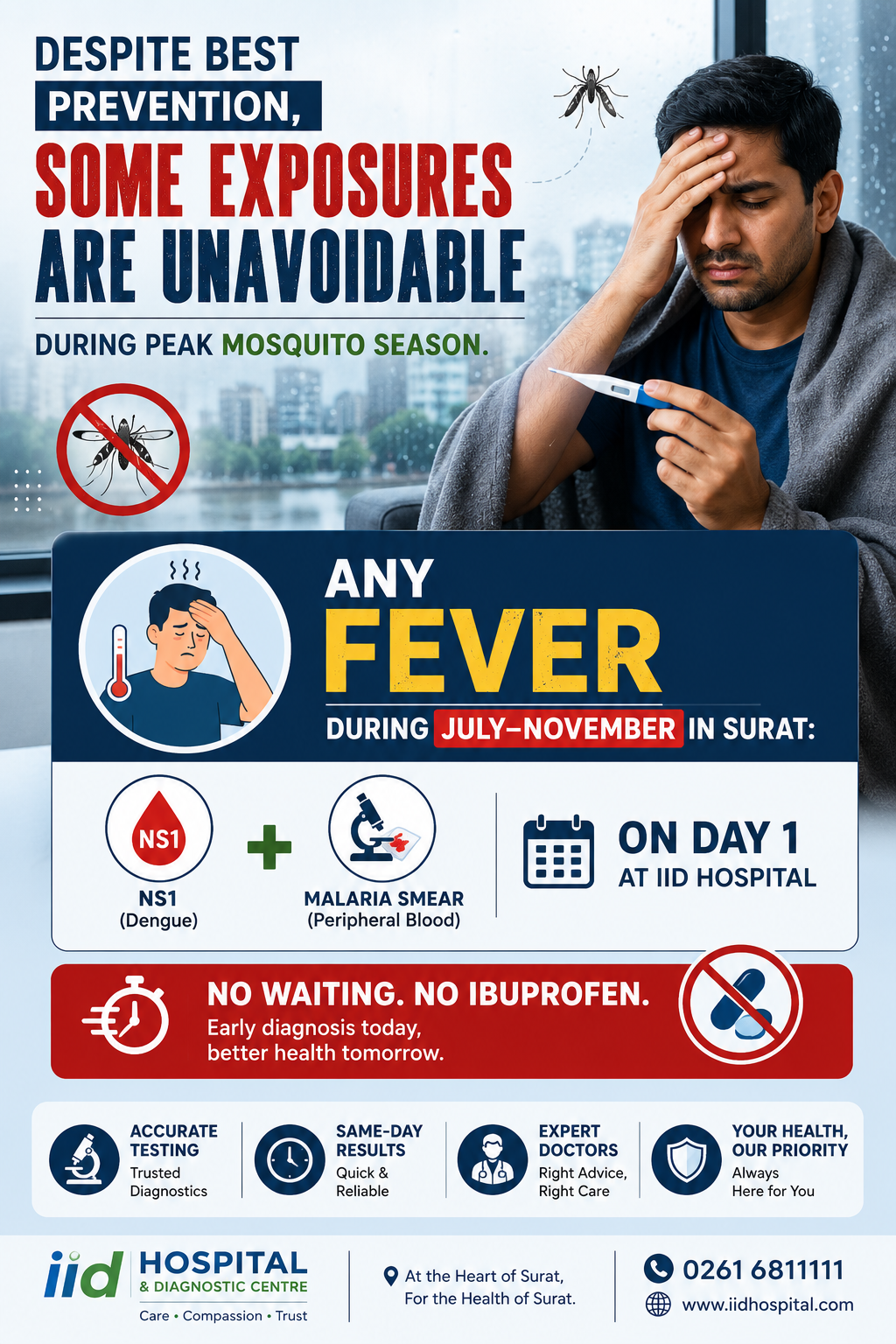
Even with rigorous prevention, some exposures are unavoidable — especially in an urban environment like Surat where neighbours’ breeding sites contribute to the local mosquito population. If fever develops during monsoon season:
Monsoon Fever Protocol — Day 1
Come to IID Hospital on day 1 of fever. Request NS1 antigen test (dengue) + blood smear and RDT (malaria) + CBC with platelet. Take paracetamol only — never ibuprofen or aspirin until dengue is excluded. Do not wait to see if the fever resolves on its own. The NS1 diagnostic window closes at day 5. Malaria — especially falciparum — requires same-day diagnosis.
The Prevention Rule for Surat Monsoon
Scrub all water containers every 3–5 days. DEET 20–30% at dawn and dusk. Mosquito net at night for malaria risk areas. Full-coverage clothing in the evenings. And if fever develops: come to IID Hospital on day 1 — paracetamol only, NS1 + malaria smear immediately. Prevention and early diagnosis together — not prevention alone.